
Please Choose Your Language


Views: 0 Author: Site Editor Publish Time: 2026-10-08 Origin: Site


Imagine stepping into your greenhouse or indoor growing space to inspect your crops, only to discover a pale, sickly leaf clinging to an otherwise robust stem. For any serious grower or facility manager, foliage discoloration triggers immediate concern. Yellowing leaves act as an early warning system. They signal severe internal metabolic distress or poor environmental conditions. Fortunately, a discolored leaf does not equate to an automatic crop failure. This comprehensive diagnostic guide dissects the exact root causes of chlorosis. We will move past generic advice and deliver actionable, agronomic solutions—ranging from precise irrigation control to the strategic application of targeted mineral amendments.
To effectively rehabilitate distressed crops, you must first understand the biological machinery operating beneath the surface. The scientific term for a plant losing its vibrant green pigmentation is chlorosis. This condition manifests when an organism fails to synthesize sufficient chlorophyll. Chlorophyll is the vital pigment responsible for capturing solar radiation and driving photosynthesis. Without it, the plant cannot manufacture the carbohydrate structures required for cellular repair, root expansion, and yield generation.
From an agronomic perspective, chlorosis is a symptom, not a standalone disease. It is a physiological response to systemic stress. The plant is visually communicating a disruption in its resource supply chain. However, you must differentiate between systemic failure and natural life cycles. As botanical specimens mature, they naturally senesce their oldest, least efficient lower leaves to redirect mobile nutrients toward aggressive new apical growth. A single fading leaf at the very base of a thriving canopy usually indicates normal biological turnover rather than an acute deficiency.
Recent agricultural data and global agronomic trends reveal a massive paradigm shift in how we manage soil health. The industry is rapidly moving away from the outdated, reactive practice of simply dumping bulk macronutrients—Nitrogen, Phosphorus, and Potassium—onto depleted soils. Modern growers recognize that high-yield farming and resilient indoor horticulture rely heavily on precision soil chemistry and microbiome management.
Current research emphasizes that optimizing the micro-nutritional profile is the absolute foundation for preventing chronic stress. Trace elements act as the chemical catalysts for nearly every enzymatic reaction within the plant. Ignoring these microscopic building blocks leads to invisible yield losses and widespread chlorosis long before physical pests arrive. Consequently, proactive trace mineral supplementation has transitioned from an optional boost to a mandatory operational standard.
Before analyzing complex soil chemistry or ordering specialized supplements, you must audit the immediate physical environment. External stressors disrupt internal vascular flow and are the leading triggers for chlorosis.
Saturated substrates represent the most common operational failure in both commercial and residential setups. When potting media remains constantly waterlogged, hydraulic pressure forces oxygen out of the microscopic soil macropores. The root system suffocates. Without oxygen, roots cannot perform active transport to absorb nutrients. They quickly decay. This dark, anaerobic environment inevitably breeds aggressive fungal pathogens like Pythium, leading to catastrophic root rot. Visually, this systemic collapse manifests on the lower canopy first. Leaves take on a sickly, pale hue and feel soft or mushy when compressed.
Conversely, inadequate irrigation forces the organism into a severe survival protocol. To conserve remaining internal moisture, the plant systematically abandons its least essential surface area. This drastically reduces transpiration rates. You will observe the margins and tips of the foliage failing first. The cellular tissue rapidly transitions from pale yellow to necrotic brown, feeling brittle and papery. Field testing the substrate will reveal a bone-dry matrix that has physically contracted away from the container walls.
Solar radiation drives the photosynthetic engine. Situated in a low-light environment, a high-energy species cannot generate enough carbohydrates to maintain its canopy mass. This results in a uniform, washed-out fading across the entire plant, typically accompanied by elongated, weak stems. In contrast, exposing shade-adapted species to intense thermal radiation physically degrades chlorophyll molecules. This phototoxicity bleaches the tissue, leaving scorched, whitish-yellow necrotic patches on the exposed surfaces.
If your irrigation protocols are sound and climate controls are dialed in, persistent chlorosis strongly indicates a nutritional lockout or depletion. Plants require a highly specific matrix of minerals to synthesize chlorophyll. Identifying the exact deficiency relies on understanding nutrient mobility within the vascular system.
| Visual Symptom | Location on Plant | Nutrient Mobility | Primary Diagnosis | Recommended Action |
|---|---|---|---|---|
| Uniform pale yellowing, stunted growth | Older, lower leaves first | Highly Mobile | Nitrogen (N) Deficiency | Apply fast-acting nitrate-based fertilizer. |
| Interveinal chlorosis, green veins | Newest, upper shoots | Immobile | Iron (Fe) Lockout/Deficiency | Adjust pH, apply high-purity Ferrous Sulfate. |
| Interveinal chlorosis, marginal curling | Older, lower leaves first | Mobile | Magnesium (Mg) Deficiency | Apply soluble Magnesium Sulfate drench. |
Iron starvation presents a highly specific visual signature. Because iron is completely immobile once integrated into cellular tissue, the plant cannot scavenge it from older growth. Therefore, the deficit appears exclusively on brand new apical shoots. The fresh leaves emerge a striking, sickly yellow, while the intricate vascular veins remain sharply dark green.
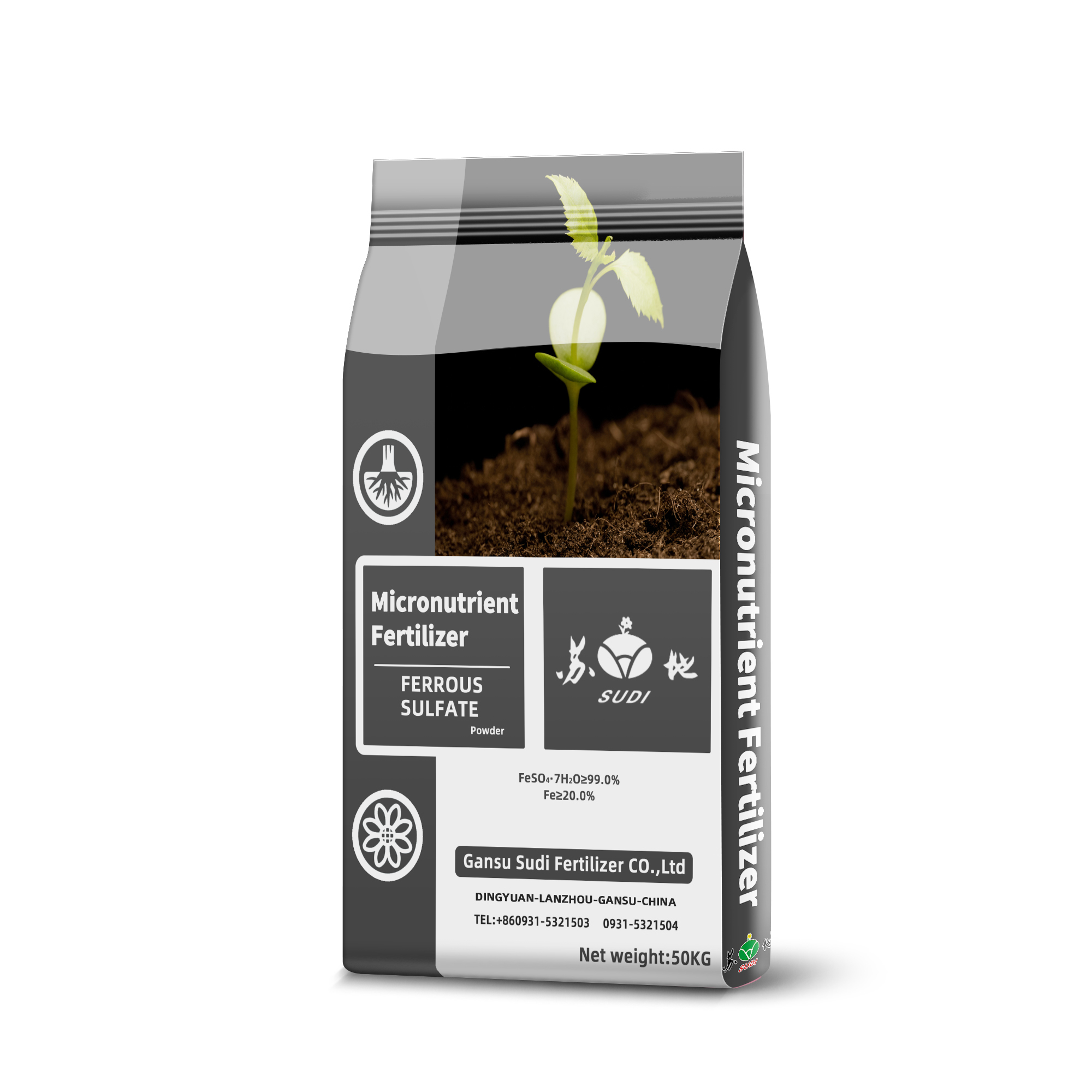
Often, the soil contains adequate iron reserves, but an alkaline pH chemically binds the mineral into an insoluble state. To break this lockout, deploying Ferrous Sulfate Agricultural Crops 99.0% Powder is the industry standard intervention. The 99.0% purity specification is critical here. It guarantees maximum solubility for immediate root uptake while minimizing heavy metal contaminants. Furthermore, the sulfate component actively works to lower the localized rhizosphere pH, unlocking residual trapped nutrients. For severe acute cases, dissolving this high-grade powder into a dilute foliar spray bypasses the root zone entirely, delivering iron directly through the stomata for rapid green-up.
Magnesium serves as the central atom in the chlorophyll molecule. Without it, green pigmentation physically cannot exist. Because magnesium is mobile, a starving plant will strip it from mature lower leaves to sustain new growth. This creates interveinal chlorosis on the bottom canopy.
When this diagnostic pattern emerges, applying high-grade Magnesium Sulfate provides an immediate metabolic reboot. This highly soluble inorganic salt bypasses the slow microbial breakdown required by raw organic inputs. Dissolving the crystalline structure into your irrigation water creates a potent drench that halts internal nutrient scavenging within days.
Reacting to acute deficiencies with targeted mineral salts is a necessary rescue tactic. However, sustainable crop management demands proactive baseline nutrition. Standard commercial blends focus heavily on vegetative expansion but ignore the microscopic elements required for complex enzymatic stability.
Integrating a comprehensive trace mineral profile acts as a fail-safe for your substrate. By understanding the Top 10 Micronutrients in Fertilizer, operators can formulate a precise feeding schedule that supplies continuous access to zinc, manganese, boron, copper, iron, and magnesium. This eliminates invisible soil depletion long before it triggers a visual chlorotic response.
Accurate diagnosis dictates the success of your intervention. Misinterpreting anaerobic root rot as a nutrient shortage and subsequently applying heavy mineral salts will instantly burn the compromised root hairs, ensuring crop death. Follow this strict diagnostic sequence.
First, execute a physical moisture audit. Bypass automated sensors and inspect the substrate core manually. If the medium is dense, heavy, and saturated, suspend all irrigation immediately. If it is dusty and hydrophobic, initiate a slow, surfactant-assisted rehydration.
Next, perform a microscopic pest inspection. Piercing-sucking insects drain cellular sap, causing localized, mottled yellowing. Inspect the abaxial leaf surfaces for spider mite webbing, aphid honeydew, or thrip damage.
Once environmental and biological threats are cleared, analyze the specific chlorosis pattern against the nutrient mobility matrix provided above. Finally, audit your input logs. Determining how often can you use organic fertilizer versus synthetic trace elements depends entirely on your crop's growth phase and substrate buffering capacity.
Rehabilitating a distressed crop protects your investment, but maintaining a vigorous canopy is the ultimate objective. Implement these rigorous field practices to ensure metabolic stability.
Identifying a yellow leaf on a high-value crop demands immediate attention, but it is a highly correctable issue when approached methodically. Whether the failure stems from compromised hydraulic conductivity in the root zone or a specific micronutrient lockout, plants possess remarkable regenerative capabilities. Stop guessing and start applying precise agronomic diagnostics. By optimizing your environmental controls and integrating high-purity nutritional amendments, you can efficiently restore your canopy to peak photosynthetic performance. For professional-grade agricultural amendments and tailored nutritional solutions, explore the specialized product lineups available at SUDI Fertilizer to secure your crop's foundation.
Yes. Once cellular tissue transitions entirely to yellow, the structural degradation is irreversible. The leaf will not regain its photosynthetic capacity. Removing this necrotic tissue with sterilized equipment prevents opportunistic fungal infections and forces the plant to redirect metabolic energy toward generating healthy new shoots.
In the vast majority of scenarios, no. There is a rare exception regarding early-stage iron or magnesium deficiencies. If you intervene rapidly with a highly soluble foliar spray, slightly pale tissue may regain a fraction of its original pigmentation. However, heavily chlorotic or necrotic leaves are permanently compromised.
Tactile inspection is the definitive test. Foliage damaged by overwatering feels unpleasantly soft, limp, and lacks turgor pressure, accompanied by a heavy, saturated substrate. Conversely, drought-stressed leaves desiccate at the margins first, feeling crispy and brittle, while the growing medium will be entirely devoid of moisture.
Absolutely. Excessive application of synthetic mineral salts causes acute fertilizer burn. High salt concentrations in the substrate reverse the osmotic gradient, literally pulling water out of the root system. This chemical dehydration manifests as sudden, aggressive yellowing and crispy brown leaf tips, often mimicking severe drought stress despite adequate irrigation.
This distinct pattern indicates a deficiency in a highly mobile macronutrient, most commonly Nitrogen or Magnesium. When the root zone lacks these essential elements, the plant actively cannibalizes its own mature, lower leaves, transporting the salvaged nutrients upward to ensure the survival of the new apical growth.

