
Please Choose Your Language


Views: 0 Author: Site Editor Publish Time: 2026-09-06 Origin: Site


Inconsistent granule size during agricultural mixing operations often leads to severe segregation during transport. This physical separation causes uneven nutrient distribution across agricultural fields. Farm operators quickly notice erratic crop growth patterns resulting from this problem.
Large-scale farming projects require precise physical parameters. You must establish exact granule thickness, size, and hardness before blending begins. Chemical ratios alone cannot guarantee optimal crop yields if physical integrity fails along the supply chain. Ensuring product dimension consistency protects crop uniformity.
This guide provides a transparent, evidence-based framework for specifying product dimensions. We will explore how physical characteristics dictate application success. You will learn how to select capable partners who meet strict agricultural tolerances. We will also detail specific handling strategies to keep complex nutrient mixtures stable from the mixing plant to the field.
Size Matching is Critical: Raw material granules must match within a 10% Size Guide Number (SGN) variance to prevent physical separation.
Specification Dictates Outcomes: Standard formulas are baselines; actual bulk blending fertilizer specifications must account for local soil deficits and application machinery limits.
Supplier Verification: A qualified bulk blending fertilizer supplier must demonstrate documented quality control against moisture (caking) and granule degradation.
Achieving agricultural success relies heavily on the physical properties of your fertilizer blend. Many buyers focus entirely on chemical formulas. They overlook granule dimensions. This oversight creates massive application issues in the field. Uniformity ensures every plant receives the exact nutrient prescription.
Industry professionals use the Size Guide Number (SGN) to evaluate granule thickness. SGN represents the median diameter of fertilizer granules expressed in millimeters, multiplied by 100. A granule measuring exactly 2.5 millimeters carries an SGN of 250. This metric creates a universal standard for comparing different materials.
Target SGN parameters typically range from 240 to 300 for broadcast applications. Broadcast spreaders distribute granules efficiently within this range. If you mix materials holding vastly different SGNs, they will separate. Best practices dictate keeping all blended components within a 10% SGN variance. A target SGN of 250 means you should only accept raw materials measuring between 225 and 275.
Average size alone fails to tell the complete story. The spread of sizes matters equally. The Uniformity Index (UI) measures this size distribution. We calculate UI by dividing the size of the 10th percentile granules by the 95th percentile granules, then multiplying by 100. A higher UI indicates a tighter, more consistent size range.
Ignoring UI brings severe consequences. Ballistic segregation occurs when spreading uneven blends. Spinner spreaders throw larger granules much further than smaller ones. This creates distinct nutrient banding in your fields. Some crop rows receive excessive nitrogen, while others receive none. High UI ratings prevent this costly ballistic separation.
Granules must survive harsh mechanical environments. They undergo severe stress during mechanical blending and auger transport. Pneumatic spreading systems subject them to further impact. Soft granules shatter into dust under these conditions.
Dust creates multiple problems. It clogs application equipment and blows away in the wind. We measure physical hardness in kilograms per granule (kg/granule). Most commercial applications require a minimum crushing strength of 2.5 kg/granule. Regular crush testing ensures materials remain intact from the blending facility to the soil.
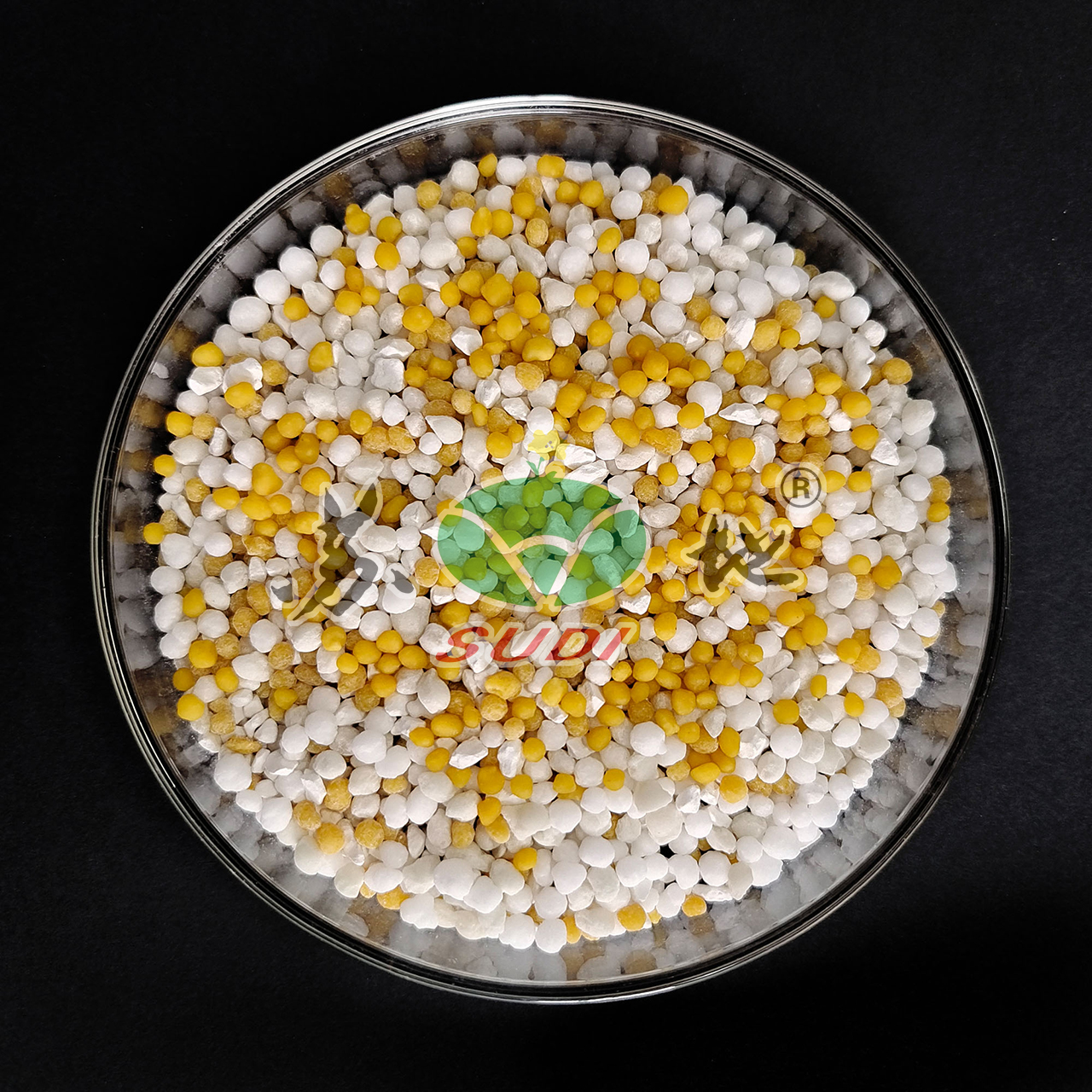
Creating a successful blend requires balancing complex variables. You must match agronomic needs alongside physical limitations. Strict bulk blending fertilizer specifications prevent reactive materials from ruining the entire batch.
Agronomists often prescribe highly specific macronutrient ratios. However, you must balance these N-P-K requirements without compromising blend integrity. Pushing too much of a specific raw material can destabilize the mixture. You should evaluate baseline formulas before customizing entirely.
Standard balanced formulas offer excellent reliability. Specifying a proven mixture like bulk blending fertilizer 18 18 18 provides a stable, predictable baseline. It delivers equal parts nitrogen, phosphorus, and potassium. Custom agronomic prescriptions make sense for highly deficient soils, but they introduce higher physical incompatibility risks.
Mixing certain chemicals causes dangerous or messy reactions. Chemical incompatibility represents a major risk. For example, mixing urea with ammonium nitrate induces extreme moisture absorption. This reaction, known as deliquescence, turns dry granules into a wet sludge.
Physical incompatibility also destroys blends. You cannot mix standard-sized Diammonium Phosphate (DAP) with micro-prilled urea. The massive size difference guarantees immediate segregation. You must consult compatibility guidelines before finalizing any formula.
Raw Material Compatibility Reference
Material A |
Material B |
Compatibility Status |
Resulting Issue |
|---|---|---|---|
Urea |
Ammonium Nitrate |
Incompatible |
Extreme moisture absorption (sludge) |
DAP (Standard) |
Potassium Chloride |
Highly Compatible |
Stable mixture |
Urea |
Superphosphate |
Limited Compatibility |
Gradual reaction; use quickly |
Ammonium Sulfate |
Standard NPK |
Compatible |
Maintains physical integrity |
Modern blends frequently utilize surface treatments to enhance performance. You must assess the need for these additions based on regional climates and storage times.
Micronutrient Coatings: These deliver essential trace elements like zinc or boron directly onto macronutrient granules.
Dust Suppressants: Oil-based treatments reduce airborne particles during handling.
Anti-Caking Agents: Essential for high-humidity regions. They prevent granules from fusing together inside storage bins.
Your production methodology directly impacts final product quality. Whether you build a facility or hire a contractor, the equipment must meet modern standards. Outdated machinery destroys raw materials.
Project scale determines the ideal equipment type. You must evaluate systems based on required tons per hour.
Batch Blenders: These include rotary, vertical, and ribbon mixers. They work well for smaller, highly customized runs. Rotary drum mixers offer gentle tumbling actions. Vertical mixers save floor space but can degrade soft granules.
Continuous Weigh-Blending Lines: These systems suit massive agricultural projects. They utilize loss-in-weight hoppers feeding onto a central conveyor. Continuous systems offer unmatched speed but require significant initial investment.
Manual mixing introduces human error. Modern facilities rely on Programmable Logic Controller (PLC) systems. PLCs maintain exact formulation accuracy across thousands of tons. They automatically adjust feed rates if a specific bin runs low.
Automation ensures every single batch meets your specified N-P-K targets. Without PLC integration, you risk regulatory fines for selling mislabeled nutrient ratios.
High-quality blending requires specialized infrastructure. Storage logistics play a crucial role. Raw material bays must feature climate-control systems to manage humidity.
Fertilizers act as highly corrosive agents. All contact surfaces within the plant should utilize stainless steel. Mild steel bins rust quickly, introducing metal flakes into the product. Proper infrastructure prevents contamination and extends equipment lifespans.
Selecting the right production partner mitigates operational risks. A poor manufacturer will ruin expensive raw inputs. You must audit their processes rigorously before signing procurement contracts. A reliable bulk blending fertilizer supplier welcomes comprehensive facility audits.
Never accept verbal promises regarding granule sizing. Demand documented proof of raw material sieve analysis before mixing begins. Sieve tests reveal the exact SGN and UI of incoming components.
Furthermore, check for post-blend SGN variance reports. The supplier should test the finished product as it leaves the mixer. This documentation proves they maintained physical integrity throughout the production cycle.
Examine how the supplier moves materials internally. Aggressive handling equipment destroys product quality. Look for facilities utilizing gentle handling elevators. Bucket elevators lift materials smoothly. Aggressive screw augers grind granules into fine dust.
Common mistakes include dropping materials from excessive heights inside the factory. High drop points shatter even the hardest nitrogen granules. Ensure the facility uses let-down ladders or inclined chutes.
Agricultural markets experience severe seasonal fluctuations. Assess the supplier's ability to secure raw nitrogen, phosphorus, and potassium inputs during peak demand. A strong partner maintains deep relationships with primary producers. They should hold enough raw inventory to buffer against global supply chain disruptions.
Follow a structured testing process before finalizing agreements. Request sample batches from your shortlisted candidates. Conduct independent physical analysis on these samples.
Perform shake tests to simulate transport vibrations.
Conduct crush tests to verify granule hardness.
Leave samples exposed to ambient humidity to gauge caking resistance.
Even perfectly mixed batches face physical hazards after leaving the plant. You must manage transport and storage logistics carefully. Understanding these risks prevents nutrient degradation before application.
Accept perfectly uniform mixtures as theoretical ideals. In reality, some shifting always occurs. Focus your efforts on keeping variance within acceptable limits during transit. Transport vibrations cause smaller particles to filter downward.
You can minimize this by filling transport trucks completely. Empty space allows materials to shift and bounce. Securing loads tightly reduces vibration impact. Utilizing any high-quality bulk blending fertilizer requires acknowledging and managing these mechanical realities.
Moisture represents the greatest threat to stored product. Every mixture holds a Critical Relative Humidity (CRH). CRH defines the specific humidity level where the mixture begins absorbing water from the air.
Combining different raw materials usually lowers the overall CRH. A blend might absorb moisture much faster than its individual components. You must monitor warehouse humidity strictly. Install industrial dehumidifiers if local climates frequently exceed the blend's CRH.
Strict handling protocols prevent downstream damage. Create clear guidelines for loading silos and transport vehicles.
Minimize drop heights at all transfer points. Never drop granules more than three meters directly onto concrete. Use telescoping spouts when loading bulk trucks. This equipment lowers the discharge point directly to the growing pile, preventing shatter. Train all loader operators to scoop materials gently rather than ramming piles at high speeds.
Managing agricultural nutrients requires rigorous physical and chemical oversight. You must align your SGN parameters carefully to prevent field segregation. Always verify chemical compatibility matrices before authorizing new formulas. Auditing your supplier's handling methodology ensures your investment survives the journey from plant to soil.
Investing time in stringent specification drafting prevents catastrophic agronomic failures. Prioritize uniform spread patterns over minor cost savings on raw inputs. Consistency drives reliable crop yields season after season.
Project managers should begin by drafting a formal Request for Proposal (RFP). This document must mandate specific SGN, UI, and CRH thresholds. Demand physical sample testing before awarding any long-term manufacturing contracts.
A: Most commercial agriculture applications target an SGN between 240 and 300, requiring all mixed components to be within 10% of the target size.
A: No. Certain chemical combinations cause rapid moisture absorption (deliquescence) or dangerous reactions. Always consult a compatibility chart.
A: It provides a balanced 1:1:1 ratio of Nitrogen, Phosphorus, and Potassium, serving as a versatile, broadly applicable baseline for various crops and soil types before specialized soil testing is conducted.
A: Control warehouse humidity below the blend's Critical Relative Humidity (CRH), minimize storage time, and specify anti-caking surface treatments from your supplier.

