
Please Choose Your Language


NPK(15-15-15)
Sudi
Granular, Free of mechanical impurities
N+P₂O₅+K₂O
N+P₂O₅+K₂O≥45.0% (15-15-15)
No
No
H₂O≤2.0%
CI¯≤3.0%
(1.00 mm~4.75 mm or 3.35 mm~5.60 mm)≥90%
GB/T 15063 -2020
50
Yes
Yes
Field crops and Various cash crops
Provide crops to grow in one season Required nitrogen, potassium elements
Base fertilizer
Ditch application, hole application, scattering 40 ~ 80KG per mu
| Quantity: | |
|---|---|


NPK 15-15-15 is a balanced or universal ternary compound fertilizer.
NPK: Represents the three most important nutrients in fertilizers.
·N-nitrogen: It promotes the growth of plant stems and leaves, making the leaves dark green, and is a fundamental building element of the plant body.
· P-phosphorus: Promotes root development, flower bud differentiation and flowering and fruiting, and enhances the stress resistance of plants.
· K-potassium: Enhances the disease resistance, lodging resistance, cold and drought resistance of plants, promotes the transportation of photosynthetic products, and improves the quality and sweetness of fruits.
15-15-15: This indicates that the mass percentages of total nitrogen, available diphosphorus pentoxide and potassium oxide in the fertilizer are all 15%.
·This means that in every 100 kilograms of fertilizer, there are approximately 15 kilograms of N, 15 kilograms of P₂O₅ (converted to phosphorus), and 15 kilograms of K₂O (converted to potassium).
·The ratio of the three elements is 1:1:1, and the nutrient ratio is very balanced.
| Major component | N + P2O5 + K2O |
| Inorganic substance content | N + P2O5 + K2O ≥ 45.0% (15-15-15) |
| Water content | H2O ≤ 2.0% |
| Granularity | (1.00mm ~ 4.75mm&3.35mm ~ 5.60mm)≥ 90% |
| Execution standards | GB/T 15063 -2020 |
| Base | Chloride-based Compound Fertilizer |
| Chloride Ion | 3%-15% |
| Aim | Field crops and various cash crops |
· Balanced nutrition: It provides equal amounts of nitrogen, phosphorus and potassium simultaneously, which can meet the basic needs of most plants for the three elements during their growth cycle and avoid growth disorders caused by the deficiency of any one element.
· Wide application range: Due to its balanced characteristics, it can be used as base fertilizer or top dressing for various crops (such as grains, vegetables, fruit trees, flowers, etc.), especially when used in the early and middle stages of plant growth, the effect is remarkable.
Easy to use
· Good physical properties: Common 15-15-15 compound fertilizers are mostly granular, have good fluidity, are not prone to caking, and are convenient for mechanical or manual application.
· Time and labor-saving: One application can supplement three elements without the need to purchase and mix individual fertilizers separately.
·Promote overall growth: Balanced nutrition can coordinate the vegetative growth and reproductive growth of plants, enabling their root systems, stems, leaves, and flowers and fruits to develop in a balanced manner.

Packaging

Granular

Packaging
According to the manufacturing process and form, NPK 15-15-15 fertilizers mainly include the following types:
Sulfur-based type: Potassium sulfate is used as the potassium source.
· Advantages: It contains sulfur and is suitable for sulfur-loving crops (such as Onions, garlic, tobacco, etc.), and is safer to use on saline-alkali land or crops sensitive to chloride ions (such as potatoes, grapes, watermelons).
· Disadvantage: The cost is usually slightly higher than that of the chlorine-based type.
Chlorine-based type: Potassium chloride is used as the potassium source.
· Advantages: It is relatively inexpensive and is the most common and economical type in the market.
· Disadvantages: It contains chloride ions and is not suitable for chlorine-sensitive crops (such as tobacco, tea, citrus fruits, tubers, etc.). Long-term and excessive use may cause soil compaction.
Nitro type: It contains nitrate nitrogen and can be quickly absorbed by plants.
· Advantages: Quick effect, especially in low-temperature environments, the absorption efficiency is higher than that of ammonium nitrogen.
· Disadvantages: Relatively high price, prone to leaching, suitable for top dressing.

Vegetables

tomatoe
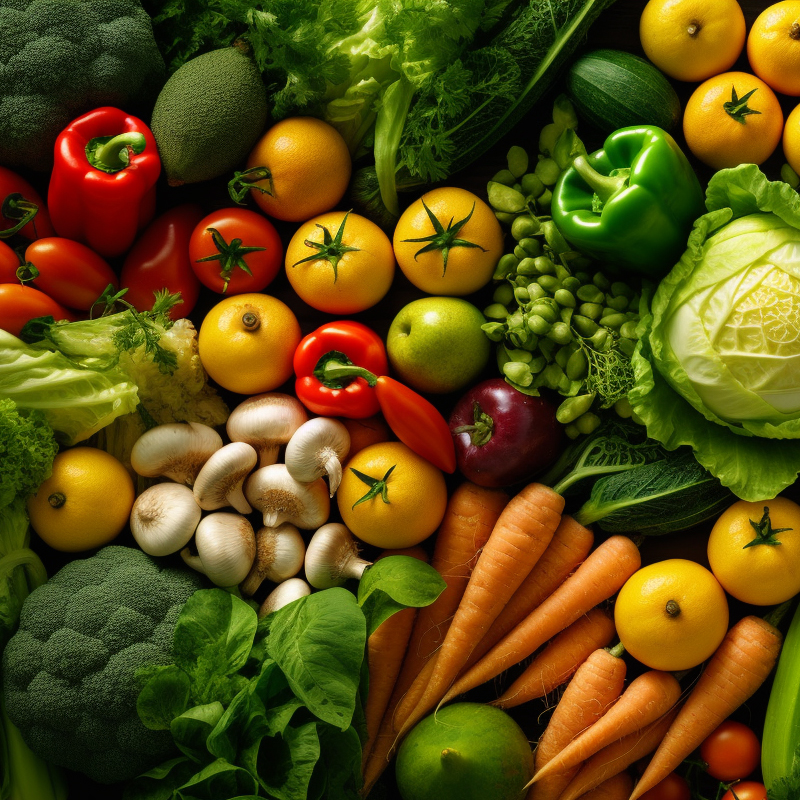
Vegetables
·Field crops such as rice, wheat and corn can be used as base fertilizer and top dressing during the tillering and jointing stages.
· Vegetables: Leafy vegetables (such as Chinese cabbage, spinach), fruit vegetables (such as tomatoes, cucumbers, peppers), etc., can promote the growth of stems and leaves as well as flowering and fruit setting in a balanced way.
· Fruit trees: apples, citrus fruits, pears, peaches, etc., used as spring bud fertilizer and postpartum fertilizer after fruit harvest to restore tree vigor.
· Cash crops: cotton, rape, peanuts, etc.
· Flowers and garden plants: Provide comprehensive nutrition for lawns, hedges and flowering and foliage plants.
· Home gardening: It can be used as a slow-release fertilizer for potted plants during their growing season (the amount should be controlled).
Special note: For crops with special preferences (such as flowering plants that require high phosphorus during the flowering period or fruit trees that need high potassium during the fruiting period), it may be necessary to use high-phosphorus or high-potassium fertilizers in combination at specific growth stages to achieve the best resul.
Application method:
· Base fertilizer: Before sowing or transplanting, evenly spread the fertilizer on the soil surface and then plough it into the soil to distribute it around the crop roots. This is the main application method.
· Topdressing: During the growth period of crops, dig furrows or holes beside the plants to apply fertilizer, then cover the soil and water to avoid direct contact between the fertilizer and the root system.
· Flushing application: Dissolve the fertilizer in water and apply it along with the irrigation water. This method works quickly, but attention should be paid to solubility. Some compound fertilizers with poor processing will leave residues after dissolution.
· Control dosage: Be sure to follow the principle of "small amounts frequently". Refer to the packaging instructions and make adjustments based on soil fertility, crop type and growth stage. Excessive use can lead to fertilizer damage (root and seedling burning) and environmental pollution.
· Application location: Avoid direct contact with seeds or plant roots. Keep a certain distance (for example, apply in holes 10-15 centimeters away from the root system) to prevent seed and seedling burning.
· Deep application and soil covering: Whether it is base fertilizer or top dressing, it is recommended to apply it deeply and cover it with soil. This can reduce the volatilization loss of nitrogen and improve the utilization rate of fertilizers.
· Select the type based on the crop: Be sure to distinguish between sulfur-based and chlorine-based types to ensure that the selected type is suitable for your crop and avoid damage caused by chloride ions to chlorine-sensitive crops.
· Combined with organic fertilizers: Long-term single use of compound fertilizers will lead to a decline in soil organic matter and intensify soil compaction. It is recommended to use it in combination with well-rotted organic fertilizer to improve the soil and enhance the fertilizer efficiency. · Pay attention to element complementarity: NPK 15-15-15 does not contain trace elements such as calcium, magnesium, iron, zinc, etc. When growing crops that are sensitive to trace elements, one should pay close attention and supplement them in a timely manner.
NPK 15-15-15 is an "all-round player". With its balanced nutrient ratio, wide application range and convenient usage method, it has become an indispensable basic fertilizer in agricultural production and horticultural planting.
| Q:Are you trading company or manufacturer? | |
| A:We are a Chinese fertilizer factory established in 2002 with more than 20 years experience in producing fertilizer. | |
| Q:How does your factory do regarding quality control? | |
| A:Quality is priority. Our people always attach great importance to quality. Controlling from the production beginning to the end. We have well-trained and professional workers and strict QC system in each production link. And each product has to be 100% inspected before shipment. | |
| Q:What are the terms of payments? | |
| A:We accept T/T etc. | |
| Q:What's the factory capacity? | |
| A:Our capacity is 200000 ton per year. | |
| Q:What's your delivery time? | |
| A:In general,the delivery time is within 30 days after payment. We'll make the delivery as soon as possiable with the guaranteed quality. |


