
Please Choose Your Language


Views: 0 Author: Site Editor Publish Time: 2026-10-08 Origin: Site


Agronomic success requires striking a delicate balance between rapid growth and long-term stability. Growers constantly face the challenge of achieving immediate nutrient availability during critical growth phases. You must deliver essential nutrients rapidly while avoiding systemic imbalances in your crops. This guide establishes exactly when deploying a 1:1:1 NPK ratio via solution outperforms specialized blends, slow-release granulars, or raw soil amendments. We will explore the precise operational scenarios where a balanced water soluble fertilizer becomes the most effective tool in your agronomic arsenal. Readers will learn the strict evaluation criteria necessary for selecting a high-quality product. You will also discover the potential implementation risks associated with these programs. By understanding these variables, you can confidently integrate soluble nutrition into your existing fertigation setup to drive robust plant health and maximize daily operational efficiency.
Modern horticulture demands efficiency. You must optimize both plant performance and daily operations. Choosing a balanced nutrient ratio provides specific advantages across various growing scenarios.
Water-soluble formats bypass the lengthy breakdown processes required by granular options. Granular products rely heavily on soil temperature and microbial activity for nutrient release. Soluble formulations deliver dissolved minerals directly to the root zone. Roots and foliage absorb these dissolved nutrients almost instantly. This rapid uptake gives growers immediate control over plant nutrition. You do not have to wait for favorable weather conditions to see a physiological response in your crop.
A 1:1:1 ratio supplies equal parts nitrogen, phosphorus, and potassium. We use this blend as a reliable general health maintenance tool. It works perfectly when specific crop demands are not heavily skewed toward one single macronutrient. Some stages of plant development require extreme nutrient shifts. However, during general growth, a balanced formulation prevents extreme deficiencies. It feeds the plant evenly without pushing it into unwanted physiological responses like premature blooming or excessive stretching.
Managing a mixed-crop operation requires immense logistical flexibility. Nurseries, commercial greenhouses, and large indoor farms often handle dozens of plant varieties simultaneously. Stocking a single, stable, multi-purpose fertilizer provides a significant operational advantage. You avoid purchasing multiple hyper-specific blends for every distinct plant variety. Consolidating your fertilizer inventory reduces storage complexity. Furthermore, your irrigation staff makes fewer mixing errors when handling a universal baseline formula.
Applying the right fertilizer at the wrong time wastes resources. Strategic timing maximizes your return on investment and minimizes environmental runoff.
Young plants need strong structural support before they transition to flowering. Balanced formulas encourage uniform root branching, sturdy stem development, and broad leaf expansion. They prepare the physical architecture of the plant for the heavy demands of the reproductive phase. You should apply these equal ratios consistently throughout the vegetative period. Stop using them just before the plant shifts into a phosphorus-heavy or potassium-heavy bloom stage.
Environmental stress severely limits natural root foraging behaviors. Drought, extreme heat, pest damage, and transplanting shock often halt normal nutrient uptake entirely. The immediate availability of dissolved nutrients helps re-establish plant vigor quickly. You can bypass stressed root systems effectively through gentle foliar applications. Alternatively, a low-concentration root drench provides readily accessible energy for recovery.
Visual symptoms like chlorosis, yellowing leaves, or stunted growth demand fast action. Sometimes, you cannot wait several weeks for comprehensive soil test results to return from the laboratory. Deploying a balanced blend serves as a rapid, broad-spectrum corrective measure. It stabilizes the crop immediately. This temporary fix buys you valuable time while you investigate the underlying agronomic issue.
Hydroponic systems and highly porous potting mixes lack natural nutrient retention capabilities. Frequent watering schedules leach minerals out of the root zone rapidly. You must address this inherent nutrient depletion continuously. Soluble fertilizers allow you to replenish these substrates accurately during every single irrigation cycle. They ensure your media never becomes entirely devoid of essential plant food.
Not all fertilizers perform equally in commercial settings. You must evaluate potential products against strict purity and chemical standards.
High-quality fertilizers must dissolve completely and rapidly in ambient water. You must assess the dissolution rate and inspect tanks for any residue left behind. Undissolved particulates will inevitably clog delicate drip emitters and spray nozzles. You should also verify the total absence of heavy metals. Premium formulations exclude unnecessary filler materials like chlorides and excess sodium. These cheap contaminants damage delicate root hairs and ruin soil structure over time.
Macronutrients alone cannot support optimal commercial yields. You must evaluate formulas featuring chelated trace elements. Chelated iron, manganese, zinc, and copper remain available across fluctuating pH ranges. They work alongside primary macronutrients to ensure complete physiological support. Look for labels explicitly stating the specific chelation method used, such as EDTA, DTPA, or EDDHA. These organic molecules protect the metal ions from precipitating out of your solution.
The specific nitrogen form directly impacts plant growth rates and media pH. You must analyze the ratio of ammoniacal, nitrate, and urea nitrogen within your chosen formulation. Match these nitrogen sources to your ambient soil temperature and specific crop uptake preferences.
Nitrogen Source Characteristics Comparison
| Source Type | Uptake Speed | Temperature Dependency | Impact on Media pH |
|---|---|---|---|
| Nitrate Nitrogen | Very Fast | Low (Works in cool soils) | Raises pH slightly over time |
| Ammoniacal Nitrogen | Moderate | Moderate | Lowers pH significantly |
| Urea Nitrogen | Slow to Moderate | High (Requires warmth) | Minimal initial impact |
Injecting nutrients directly into irrigation lines introduces specific agronomic risks. You must manage these variables to protect your crop.
Soluble fertilizers function essentially as mineral salts. You face the absolute necessity of monitoring EC levels in the root zone constantly. High EC indicates toxic salt accumulation in the media. This buildup literally pulls water out of plant roots through reverse osmosis, causing severe wilting. You must measure both the input EC and the runoff EC daily. Always leach the media thoroughly if the runoff EC climbs beyond your crop's established tolerance threshold.
Human error during solution preparation creates severe agronomic risks. Pouring overly concentrated solutions directly onto plants causes instant phytotoxicity and tissue death. You must mitigate this risk by utilizing calibrated dosatron units or automated fertigation injection systems.
Dissolved nutrients are highly mobile in soil profiles. We must acknowledge this mobility to protect local ecosystems from pollution. Establishing strict watering protocols prevents groundwater contamination. Limit your irrigation volume to minimize excessive nutrient runoff. Environmental compliance relies entirely on keeping the fertilizer strictly within the active root zone. Use precise drip irrigation instead of overhead sprinklers whenever possible.
Powdered soluble fertilizers readily absorb moisture from the surrounding air. This hygroscopic nature leads to hard clumping and chemical degradation over time. You must implement strict best practices for facility storage. Keep all bags tightly sealed in climate-controlled environments. Store them elevated off the ground on wooden pallets to block concrete condensation. Once a bag is opened, transfer any remaining powder into an airtight plastic drum.
Selecting the exact formulation dictates your entire application strategy. Let us compare the baseline choices available on the market.
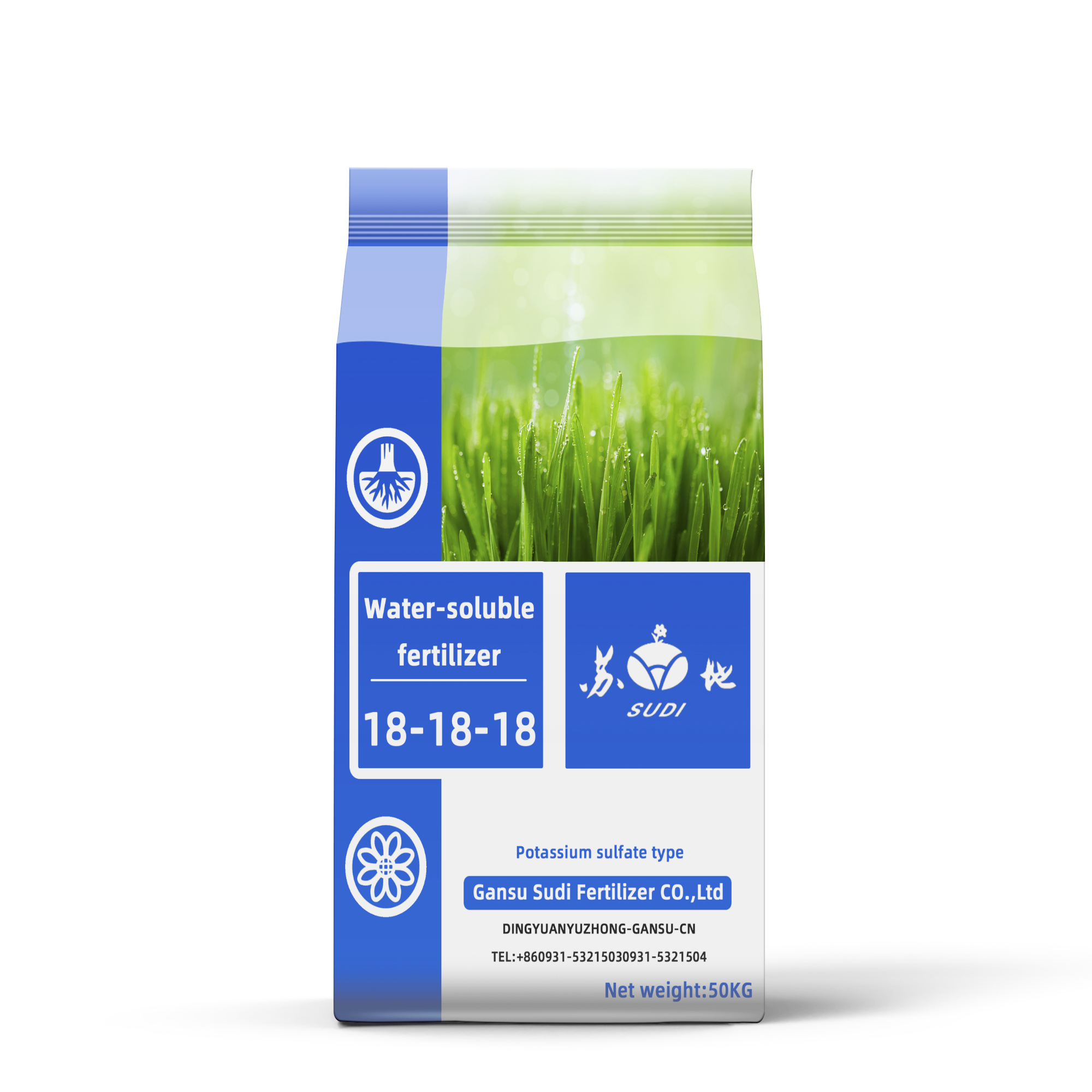
Both options offer an identical 1:1:1 NPK ratio. However, the minor concentration differences matter significantly for sensitive crops. A 20-20-20 blend packs more raw nutrients per pound, which is great for heavy feeders. Conversely, 18-18-18 water-soluble fertilizer carries a slightly lower salt index. This lower index makes it highly preferable for young seedlings, delicate ornamentals, or drought-stressed plants. It provides a safer margin against accidental fertilizer burn during extreme heat waves.
Choosing between these formats requires a clear decision matrix based on your labor availability and crop duration.
A balanced formula excels during standard vegetative growth. However, you must transition away from it when a crop enters intensive flowering or fruiting stages. Plants naturally require more phosphorus to build blooms and more potassium to size up fruit. Continuing a 1:1:1 ratio during late reproductive stages encourages excessive, leafy vegetative growth at the direct expense of your harvest yield.
Never purchase industrial quantities blindly without testing the chemistry first. Follow these operational steps before integrating a new product.
Treat soluble nutrition as a precision agronomic tool designed for immediate impact, rather than a set-and-forget passive feeding strategy. You must actively manage your fertigation systems to unlock the full potential of these products. Calibrate your injection equipment weekly to maintain exact dilution ratios and prevent accidental crop damage. Base all deployment schedules strictly on your specific crop life-cycles, shifting away from balanced ratios once intense flowering begins. Finally, confirm your baseline nutritional requirements routinely through systematic soil and tissue testing protocols to ensure you never over-apply expensive nutrients.
A: Application frequency depends heavily on your growing media and feeding strategy. For constant-feed programs in hydroponics or soilless mixes, apply a highly diluted solution during every single irrigation event. If you use periodic feeding in traditional soil, apply a stronger concentration every one to two weeks. Always monitor the electrical conductivity of your runoff to adjust frequency appropriately.
A: Yes, you can use it for foliar applications to correct deficiencies rapidly. However, you must dilute it significantly more than a standard root drench to prevent severe leaf burn. Apply the spray during early morning or late evening when plant stomata are open and temperatures remain cool.
A: No. A balanced formula primarily supplies the three macronutrients: nitrogen, phosphorus, and potassium. While premium formulations often include chelated trace elements, plants also require secondary macronutrients like calcium, magnesium, and sulfur. You must usually supplement these secondary nutrients separately to prevent precipitation in your stock tanks.
A: Once mixed with water, the solution remains chemically stable for several weeks. However, biological growth poses a severe risk. Algae and bacteria thrive in nutrient-rich water exposed to light and warm temperatures. To prevent degradation, only mix what you plan to use within a seven-day window and keep the tank covered.

