
Please Choose Your Language


Views: 0 Author: Site Editor Publish Time: 2026-06-23 Origin: Site


Agricultural distributors and large-scale farm operators face a constant, high-stakes balancing act. You must continually optimize crop yield and product quality against aggressively rising input costs. Striking this precise balance dictates your season’s ultimate profitability and market competitiveness. A core conflict often arises during the bulk procurement phase. While specific chemical formulations offer significant upfront cost savings, applying them incorrectly can devastate high-value yields. Poor choices also degrade soil health over multiple growing seasons. Buyers often struggle to accurately weigh immediate financial savings against long-term agronomic consequences. This article provides a transparent, agronomic, and commercial evaluation framework. We will help you make evidence-based procurement decisions. You will learn exactly how crop tolerance, soil health risks, and accurate margin calculations should guide your next fertilizer purchase. By mastering these principles, you ensure sustainable growth for both your crops and your business operations.
Crop Tolerance is the Primary Filter: Sulfur-based compound fertilizer is strictly required for chlorine-sensitive crops (e.g., tobacco, citrus, potatoes) to prevent toxicity and yield loss.
Cost vs. Value: Chloride-based fertilizers are typically 15-20% cheaper to source, making them ideal for high-tolerance commodity field crops (e.g., rice, wheat, corn).
Soil Risk Management: Long-term application of chloride-based formulas in arid regions or greenhouses accelerates soil salinization; sulfur-based options support long-term soil pH balance.
Nutrient Synergy: Sulfur acts as the "fourth essential nutrient," actively improving nitrogen use efficiency and crop protein synthesis.
We must establish a clear chemical baseline before making bulk procurement decisions. Every fertilizer blend interacts uniquely within the soil profile. Understanding these core molecular differences prevents costly application mistakes later in the season.
Manufacturers produce these premium blends using potassium sulfate fertilizer (commonly known as SOP). Standard agricultural grades feature extremely low chloride content. Quality formulas keep chloride levels strictly below the 3% threshold. Pure grades drop this even lower. This formulation provides a powerful dual-nutrient delivery system. It supplies foundational nitrogen, phosphorus, and potassium. It also delivers vital sulfur directly to the root zone.
Agronomists increasingly recognize sulfur as the fourth essential macronutrient. It actively fuels aggressive root development. It also plays a mandatory role in synthesizing plant proteins and specific amino acids. This biochemical synergy drastically improves overall nitrogen use efficiency.
In contrast, factories derive chloride-based compound fertilizer primarily from potassium chloride (MOP). This chemical compound boasts excellent solubility in water. It releases its nutritional payload rapidly into the surrounding soil. However, it carries a notably high salt index. This high salt index introduces specific agronomic risks.
Neither fertilizer category is inherently defective. The scientific consensus emphasizes strategic environmental matching. Authoritative entities like The Sulphur Institute highlight a critical agronomic principle. You must align your chosen chemistry with existing crop biology. You must also account for baseline soil conditions. Procurement should never rely on price evaluations alone.
Best Practice: Always perform baseline soil salinity tests before selecting your seasonal formulation.
Common Mistake: Assuming highly soluble formulations universally benefit all plant species regardless of their specific chemical makeup.
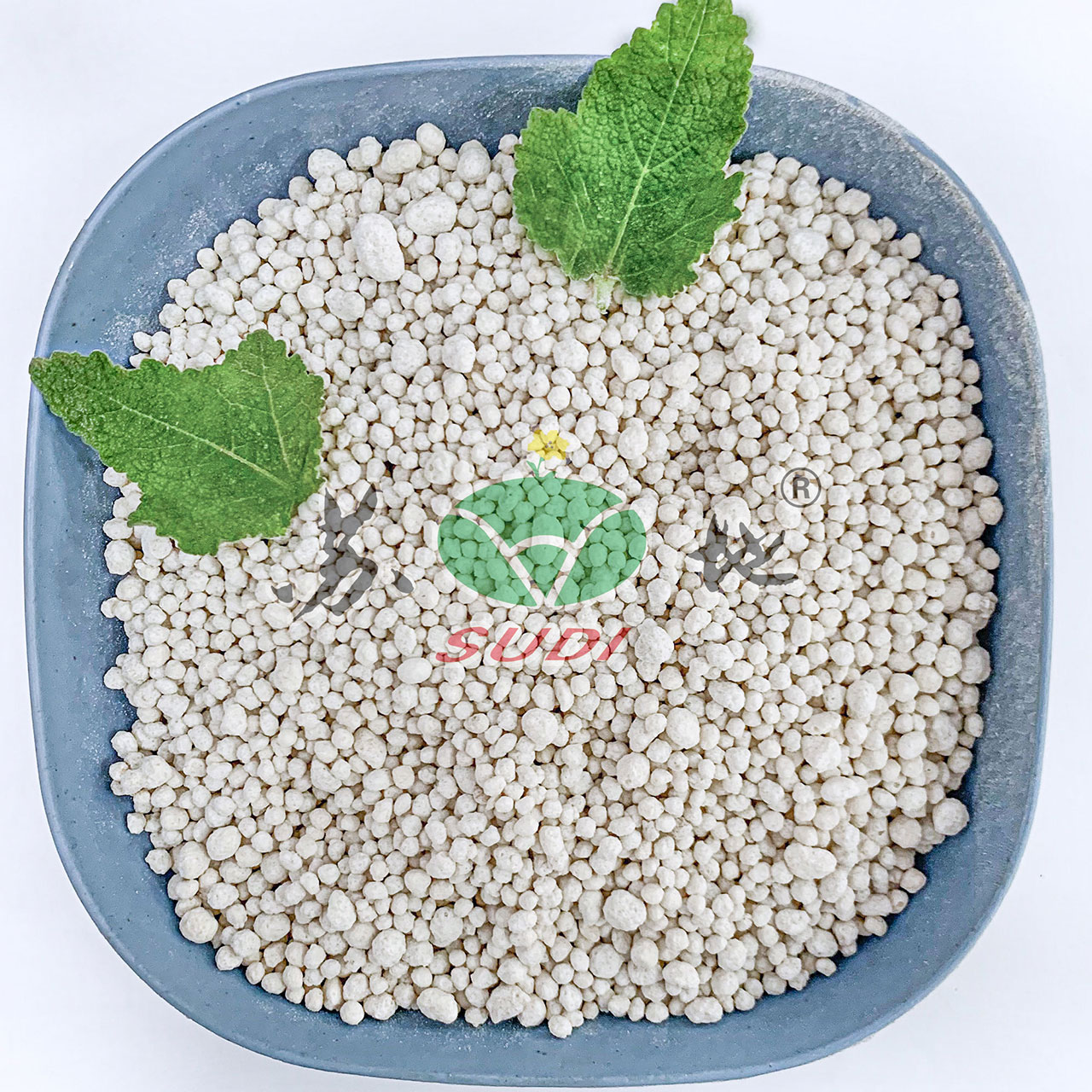
Crop biological tolerance dictates your primary procurement filter. Misaligning your fertilizer chemistry with your crop portfolio invites commercial disaster.
Certain agricultural investments require absolute chloride management. You must apply sulfur based NPK fertilizer to chlorine-sensitive crops. This vulnerable category includes high-value cash crops. Tobacco, tea bushes, grapevines, potatoes, and watermelons fall firmly into this group. Most orchard fruit trees also demand low-chloride environments to thrive.
Applying sulfur-dominant formulas yields tangible commercial benefits. It actively enhances starch accumulation inside root vegetables. It notably increases the final sugar content (Brix levels) in harvested fruits. It drastically improves post-harvest transport and shelf life. Most importantly, it completely prevents "chlorine burn." This toxic reaction destroys delicate leaf margins and ruins aesthetic crop grades.
Conversely, many broad-acre operations thrive on MOP formulas. Chlorine-tolerant field crops process these nutrients efficiently. Rice, corn, wheat, cotton, and hemp perform exceptionally well under these regimens. Interestingly, moderate chlorine applications actually suppress specific diseases. Agronomists frequently note reduced stem rot in treated rice paddies.
The primary outcome here is operational efficiency. You meet all essential macronutrient requirements. You also achieve maximum budget realization. You secure strong harvest yields without paying unnecessary chemical premiums.
You must acknowledge one severe operational risk. Applying high-chloride products to sensitive plants destroys market value. Short-term procurement savings vanish immediately. You will face stunted vegetative growth and highly unmarketable crop grades.
Crop Category | Ideal Formulation | Agronomic Rationale | Yield Impact |
|---|---|---|---|
Tobacco & Tea | Sulfur-Based | Prevents leaf margin necrosis | Maintains premium visual grading |
Potatoes & Tubers | Sulfur-Based | Boosts heavy starch synthesis | Enhances industrial processing quality |
Rice & Wheat | Chloride-Based | High tolerance to chemical salt index | Maximizes input budget efficiency |
Orchard Fruits | Sulfur-Based | Avoids osmotic root stress | Increases final fruit sugar content |
Your fertilizer chemistry permanently alters the underground environment over time. Short-term harvest goals must never compromise long-term land viability. Proper chemistry preserves topsoil integrity.
Application environments drastically alter fertilizer performance profiles. You must adapt your strategy based on ambient climate conditions.
Greenhouses and Polytunnels: These controlled spaces lack natural rain leaching. High evapotranspiration pulls water up, leaving salts behind. Chloride buildup becomes a severe operational risk rapidly. You cannot easily wash excess salts out of the root zone. Therefore, sulfur-based options become strictly mandatory here. They actively prevent secondary soil salinization.
Open Fields with Heavy Rainfall: Natural precipitation completely changes the chemical equation. Chloride ions leach very easily through the deeper soil profile. Frequent rain prevents toxic surface accumulation. This dynamic makes chloride formulas highly viable for broad-acre farming. You avoid long-term topsoil compaction issues entirely.
Chemical additions constantly alter the delicate biological balance underground. Sulfur applications contribute to a slight, gradual soil acidification. This natural reaction proves highly beneficial in alkaline soils. It helps unlock tied-up micronutrients (like iron and zinc) for immediate plant uptake. Beneficial Thiobacillus bacteria facilitate this entire oxidation process.
Conversely, excessive chloride applications disrupt normal microbial activity. High salt loads inhibit beneficial soil bacteria populations. Continual MOP use increases the soil's electrical conductivity (EC). Elevated EC levels trigger osmotic stress. Plant roots struggle to absorb surrounding moisture, even in wet dirt. These levels can eventually reach toxic thresholds if left unmonitored.
Smart agricultural procurement requires precise financial modeling. You must carefully evaluate upfront chemical costs against projected harvest premiums. Numbers dictate the final decision.
We must acknowledge a core market reality regarding manufacturing. A true sulfur-based compound fertilizer commands a distinct price premium. Manufacturing potassium sulfate demands complex, energy-intensive chemical reactions. Potassium chloride simply requires direct mining and basic refinement. This fundamental manufacturing difference directly dictates bulk market pricing. Buyers typically see a 15-20% cost reduction when choosing chloride options.
Let us examine two distinct commercial farming scenarios to illustrate ROI.
Scenario A (High-Value Produce): You grow premium export grapes. The initial cost premium of SOP formulas seems excessively high on paper. However, it is easily offset during the autumn harvest. You typically see a 10-15% volume increase in grade-A marketable yields. Better fruit coloration and higher sugar content command top-tier market prices. The final financial ROI strongly favors the sulfur blends.
Scenario B (Commodity Grains): Your operation focuses entirely on standard field wheat. Applying a premium sulfur blend here offers negligible financial return. Wheat easily tolerates standard chloride inputs without suffering yield penalties. Paying a premium for SOP merely reduces your operational margins unnecessarily. MOP blends remain the only commercially sound choice here.
Warehouse conditions actively affect your procurement strategy. Hygroscopicity refers to a granule's tendency to absorb ambient moisture. Every fertilizer has a critical relative humidity (CRH) threshold. Chloride formulas tend to possess a lower CRH. They absorb ambient moisture rapidly. They may cake faster and harder in humid storage environments. Purely sulfur-based granules generally maintain their physical flowability longer. You must absolutely factor local warehouse climate control into your bulk buying decisions.
Navigating the global fertilizer market requires strict due diligence. You need a systematic approach to verify physical product quality. Mastering compound fertilizer selection actively protects your massive agronomic investments.
You must know exactly how to read the industrial fertilizer bag. Look for strict, clearly stated chloride content thresholds. A standard sulfur formulation should definitively state "Cl < 3%". Premium pure grades will often proudly guarantee "Cl < 1.5%". Do not accept vague packaging claims or missing documentation.
Understand exactly how the manufacturer physically built the granule.
Chemical Synthesis: Advanced manufacturers create these through controlled high-tower melting or chemical pipe reactions. They offer highly uniform, identical nutrient distribution. Every single granule contains the exact same prescribed nutrient ratio.
Physical Blending: These represent simple mechanical bulk blends. Manufacturers mechanically mix different raw dry granules together. They carry a much higher risk of nutrient segregation during rough transport.
Chemically compounded SOP fertilizers consistently deliver superior, even field performance. They prevent uneven crop striping.
Hold your manufacturing partners strictly accountable. Ensure they readily provide batch-specific laboratory testing documentation. Request current heavy metal analysis reports, specifically targeting cadmium and arsenic. Demand accurate, independent chlorine content verification. These vital steps guarantee environmental compliance for sensitive agricultural zones. They also protect your farm's pristine reputation.
Best Practice: Establish a continuous QA relationship with a third-party agronomic laboratory.
Common Mistake: Procuring uncertified spot-market loads based solely on heavy price discounting.
The choice between sulfur and chloride formulations goes far beyond basic chemical quality. It remains entirely a matter of strategic agronomic alignment. Matching the exact right chemistry to the right crop secures your final profit margins. Chloride options deliver unmatched budget efficiency for hardy grains. Sulfur options provide mandatory insurance for delicate, high-value produce.
We strongly advise your field managers to execute a specific action plan today. Conduct thorough baseline soil salinity tests across all fields. Meticulously audit your entire seasonal crop portfolio. Review local rainfall patterns and greenhouse irrigation methods. Complete these specific steps before signing your next bulk procurement contract. Smart, data-driven planning prevents catastrophic agricultural mistakes and guarantees long-term farm viability.
A: Yes, you physically can. However, doing so completely negates the low-chlorine benefit of the premium sulfur-based fertilizer. You are simply reintroducing harmful salts into the blend. Agronomists strongly advise against this practice if you are applying the mixture to any chlorine-sensitive crops.
A: While laboratory testing remains definitive, burning a tiny sample offers clues. Sulfur-based granules often emit a distinct, pungent sulfur dioxide smell when heated. Chloride-based granules melt entirely differently without that specific odor. Note: Always advise professional laboratory testing over field tricks to ensure commercial safety.
A: It proves highly effective in neutral to alkaline soils due to its slight acidifying effect. However, in already highly acidic soils, it carries minor risks. Continuous heavy application without proper lime amendments can lower pH too far. You should monitor highly acidic fields closely.

