
Please Choose Your Language


Views: 0 Author: Site Editor Publish Time: 2026-10-11 Origin: Site


Potatoes are notoriously heavy nutrient feeders. They pull more from the soil than almost any other vegetable crop. Imagine investing months of labor into field preparation, only to harvest watery, golf-ball-sized tubers. Many growers inadvertently ruin their crop quality using the wrong nutrient formulations. They remain completely unaware that a hidden physiological sensitivity is destroying their yield from the inside out. Specifically, chloride toxicity devastates tuber density. This renders the crop useless for commercial processing or long-term winter storage.
In this technical guide, we break down how to select the right nutrient blends for your fields. We will explore safe macronutrient ratios, uncover why managing potassium and sulfur is critical, and explain why avoiding chloride is the ultimate secret to a profitable bumper crop.
Global agricultural markets are experiencing a definitive shift in crop nutrition strategies. Commercial processing plants now enforce strict demands for higher specific gravity and flawless fry colors. Meanwhile, unpredictable weather patterns subject crops to increased environmental stress. Consequently, progressive farm operations are rapidly moving away from traditional high-chloride inputs. The modern agronomic standard demands low-chloride, sulfur-rich nutrition programs. These advanced formulations protect internal tuber quality while ensuring extended storability under volatile climate conditions.
Growing premium potatoes requires a highly specialized nutrient management strategy. Unlike deep-rooted crops like corn or alfalfa, potatoes possess a shallow and inefficient root system. They cannot forage deeply for sustenance. Nourishment must be placed precisely where the active root zone can access it. A generic broadcast approach often leads to poor yields, misshapen tubers, and increased disease pressure.
To build a successful crop, field operators must understand how the three primary macronutrients function during distinct life cycles.
Nitrogen: Nitrogen acts as the primary driver of early canopy growth. A robust leafy canopy serves as the biological solar panel for the plant, generating the photosynthetic energy required for tuber production. However, agronomic studies show that timing is everything. Applying too much nitrogen late in the season delays tuber bulking. The plant remains stuck in a vegetative state, resulting in a harvest of undersized potatoes with fragile skins.
Phosphorus: Phosphorus is vital for early root establishment and the initial cellular division that dictates tuber set. Because potato roots are delicate, phosphorus must be placed close to the seed piece at planting. Adequate phosphorus ensures a higher number of tubers are initiated per plant, directly raising your overall yield potential.
Potassium: Potassium is the most heavily consumed nutrient by the potato plant. It regulates water movement, enzyme activation, and the critical transportation of starches. Mastering potassium application is undeniably the most important factor in tuber agronomy.
Field data consistently reveals that potatoes extract massive quantities of potassium from the earth. A healthy, high-yielding commercial crop can remove upward of 300 pounds of potassium per acre. This immense physiological requirement makes potassium the undeniable engine of any effective nutrient program.
Potassium serves as the internal transport vehicle for the plant. As broad leaves undergo photosynthesis, they produce sugars. Potassium moves these sugars from the foliage down into the underground stolons where they develop into tubers. Once there, these sugars convert into starch.
This biological process dictates the specific gravity of the potato. Specific gravity is the industry measurement of dry matter. For commercial growers supplying the chipping or french fry industries, high specific gravity is non-negotiable. Potatoes with optimal potassium nutrition exhibit higher density. They fry perfectly golden and absorb significantly less oil.
When a plant lacks sufficient potassium, the visual cues are distinct. Field scouts walking the rows in mid-summer must monitor the lower canopy. Older leaves will take on a dark, bronzed, or purplish appearance. Shortly after, the leaf edges turn brown and dry out. This margin necrosis eventually causes the leaves to curl downward. Below ground, this deficiency manifests as drastically stunted tubers that fail to bulk up before harvest.
While understanding the volume of potassium required is crucial, the chemical source of that potassium is where many operations make a catastrophic error. In agronomic science, potatoes are strictly classified as a chloride-sensitive crop. They simply lack the biological mechanisms to safely process and expel high concentrations of chloride ions.
The most common and affordable potassium fertilizer on the global market is Muriate of Potash, chemically known as potassium chloride. Because it is highly cost-effective, standard commercial agricultural blends rely heavily on it.
Furthermore, applying this compound introduces massive, toxic amounts of chloride into the soil profile. As roots absorb the desperately needed potassium, they are forced to uptake the chloride alongside it. This leads to acute toxicity. Excess chloride accumulates in plant tissues, restricting vital water uptake and disrupting enzymatic functions. The metabolic energy the plant should use to grow large tubers is instead wasted on surviving severe osmotic stress.
The most devastating consequence of chloride toxicity is its hidden effect on internal quality. High chloride levels force the tuber to retain excess water to dilute the internal salts. This artificial hydration plummets the specific gravity.
For the culinary end-user, this translates to a watery potato that turns to mush when boiled or burns dark brown when fried. In commercial practice, tubers burdened with high water content are highly vulnerable to mechanical bruising during harvest. They also carry a drastically higher risk of rotting while sitting in winter storage bins.
To avoid the disastrous effects of chloride toxicity while aggressively meeting massive crop demands, agronomists strongly recommend a premium alternative. The ultimate solution for high-yield farming is potassium sulfate. This refined compound delivers a highly concentrated dose of potassium with absolutely zero chloride.
By switching to this refined source, growers can heavily feed their crops during the critical bulking phase without triggering chemical burn. Beyond simply avoiding harm, it actively solves two nutritional challenges simultaneously. The sulfate component provides a highly available, water-soluble form of sulfur. Potatoes require substantial amounts of sulfur to thrive, making this an incredibly efficient dual-action ingredient.
While nitrogen, phosphorus, and potassium get the majority of the attention, sulfur is widely recognized by agronomists as the fourth macronutrient. Any high-quality nutrient management plan must include a reliable sulfur component to ensure maximum crop resilience.
Sulfur is a fundamental building block for plant life. It is strictly required for the synthesis of essential amino acids, which build the structural proteins of the plant.
In addition, sulfur dictates overall nitrogen efficiency. If a field is deficient in sulfur, the plant cannot properly metabolize the nitrogen applied earlier in the season. This leads to wasted fertilizer investments and weak canopy growth. Adequate sulfur ensures every unit of nitrogen is effectively converted into productive green biomass.
One of the most valuable agronomic benefits of sulfur is its direct influence on soil chemistry. Potatoes thrive in slightly acidic soils, ideally preferring a pH between 5.0 and 6.0.
A devastating bacterial disease known as common potato scab causes unsightly corky lesions on the tuber skin, rendering them unsellable for the fresh market. This resilient pathogen thrives in alkaline soils. The routine application of sulfur-based fertilizers helps gently acidify the micro-environment directly around the root zone. This localized drop in soil pH creates a hostile environment for the scab bacteria, serving as a highly effective natural method of disease suppression.
Selecting the correct commercial blend requires a deep understanding of your specific soil profile and the current growth stage of your crop. Nutrient application should never be a guessing game. By understanding the functional differences between specific ratios, you can tailor your approach to optimize yield.
| Feature | 15-5-5 Formulation | 15-13-12 Formulation |
|---|---|---|
| Best Growth Stage | Early vegetative phase | Full-season baseline |
| Primary Benefit | Rapid canopy expansion | Balanced tuber development |
| Ideal Soil Condition | High residual phosphorus & potassium | Standard or depleted soils |
| Sulfur Integration | Included for basic pH control | High sulfur for active scab suppression |
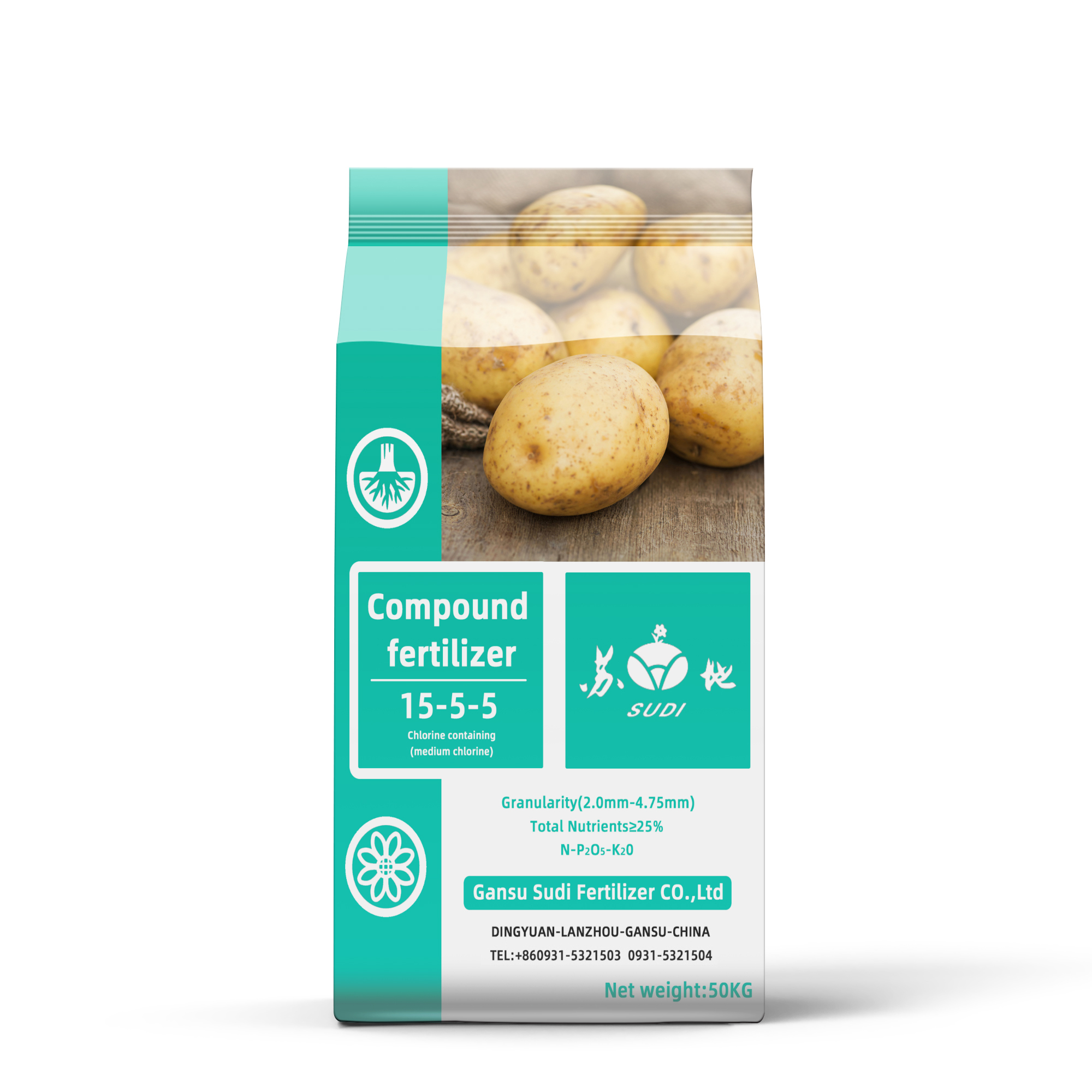
A formulation with a high nitrogen content relative to its phosphorus and potassium levels is designed for specific agronomic scenarios. Deploying a 15-5-5 potato fertilizer is most effective when utilized as an early-season starter on soils that have been heavily amended in previous years.
If a comprehensive soil analysis indicates that your baseline mineral levels are already optimal, applying a fully balanced mix could lead to nutrient lockout. In such cases, the crop primarily requires a targeted nitrogen boost to stimulate early canopy growth. This ratio provides the necessary nitrogen without overloading the dirt with redundant minerals. However, relying solely on this blend throughout the entire summer will inevitably lead to a severe potassium crash during the bulking phase.
For the vast majority of cultivation scenarios, a much more balanced approach is required to support the plant from root establishment all the way to final maturation.
A comprehensively formulated 15-13-12 sulfur-based potato fertilizer is widely considered an ideal nutritional baseline. The fifteen percent nitrogen supports robust vegetative development without unnecessarily delaying tuber initiation. The thirteen percent phosphorus is critical for early cellular division and maximizing the total number of tubers set per plant. Finally, the twelve percent potassium drives the massive translocation of carbohydrates into the tubers, directly increasing size and starch content. Integrated sulfur rounds out the package by managing soil pH and suppressing scab.
Applying the right product is only half the equation. Precise timing and application methodology dictate how efficiently the plant absorbs those nutrients. Because roots do not forage widely, nutrients must be placed exactly where they can be accessed without risking chemical burn.
Professional cultivation begins weeks before the first seed hits the dirt. A comprehensive soil test is the foundational step. This test reveals the baseline pH, cation exchange capacity, and existing nutrient loads. If your soil analysis indicates a severe potassium deficit alongside high pH levels, pre-plant broadcasting of potassium sulfate may be necessary to correct the base chemistry before planting begins.
The most critical fertilization event occurs at the exact time of planting. Broadcast applications are highly inefficient during this early stage. Instead, agronomic standards demand the banding method.
Field operators must calibrate the mechanical disc openers to place the fertilizer in a concentrated band approximately two inches to the side and two inches below the seed piece. This precise placement prevents concentrated salts from coming into direct contact with delicate emerging shoots, which causes severe chemical burns. As primary roots grow downward and outward, they naturally intercept this nutrient-rich band.
Potatoes are voracious feeders. The initial at-planting application is rarely enough to carry the crop through the intensive bulking phase. Mid-season side-dressing is required to replenish nitrogen and potassium just as the plant's metabolic demands peak.
Side-dressing should occur during the hilling stage, typically four to six weeks after planting. Granular fertilizer is applied to the sides of the rows and immediately covered with soil by the hilling discs. This incorporates the nutrients directly into the expanding root zone and protects the nitrogen from evaporating into the atmosphere.
Even experienced growers can severely compromise their harvest by falling victim to common execution errors. Understanding the physiological sensitivities of the plant is key to avoiding these costly troubleshooting pitfalls.
One of the most frequent errors made by small-scale commercial growers is repurposing standard turf fertilizers for their potato plots. Lawn products are engineered specifically to produce massive amounts of green grass. They feature exceptionally high nitrogen ratios and utilize cheap potassium chloride. Applying this to your field results in gigantic, lush green bushes above ground, but severely stunted, chloride-damaged, watery tubers below ground.
Potatoes are highly specific regarding their environmental pH requirements. While many garden vegetables prefer a neutral pH, potatoes demand an acidic environment. If you attempt to grow them in alkaline soil, essential micronutrients like zinc and iron become chemically locked in the soil. Furthermore, a high pH practically guarantees a severe infection of potato scab. Always monitor pH and utilize sulfur to maintain necessary acidity.
Nitrogen management requires strict discipline. While essential early on, applying nitrogen after the tuber bulking phase has begun disrupts the plant's biological clock. Excess late-season nitrogen signals the plant to remain in a vegetative state, forcing it to redirect energy away from expanding the tubers and back into creating new leaves. This delays crop maturity, results in poor skin set, and significantly lowers overall yields.
Cultivating top-tier, heavy-yielding potatoes requires moving far beyond basic, generic fertilizers. You must strictly avoid chloride to protect your crop's internal quality, specific gravity, and storage life. Always embrace sulfur and balanced nutrient ratios to ensure the best possible harvest. A proper, well-rounded blend supports healthy development from emergence to harvest. Take the time to test your soil before the next planting season begins. For specialized, low-chloride formulations tailored to your operation, explore the professional product lines at SUDI Fertilizer (https://www.sudifertilizer.com) to maximize your yield and profitability this season.
The optimal choice depends on your baseline soil conditions, but generally, a balanced, chloride-free fertilizer rich in potassium and sulfur is ideal. A comprehensive formulation provides the necessary nitrogen for canopy growth, phosphorus for root establishment, and safe potassium for tuber bulking, without risking chloride toxicity.
Potatoes are agronomically classified as chloride-sensitive crops. Potassium chloride introduces high levels of toxic chloride into the soil, which restricts the plant's water uptake, induces physiological stress, and significantly lowers the specific gravity of the tubers. Potassium sulfate provides the massive amounts of potassium the plant requires while simultaneously delivering beneficial sulfur, completely avoiding the harmful effects associated with chloride.
A high-nitrogen, low-phosphorus, and low-potassium ratio is best deployed during the early vegetative growth stages. It is also highly effective in specific agronomic scenarios where recent soil testing confirms that the earth is already excessively saturated with phosphorus and potassium from previous crop cycles. It prevents nutrient toxicity while providing the nitrogen needed for early leaf expansion.
Yes, sulfur plays a highly critical role in disease management. Elemental sulfur and sulfur-based fertilizers actively lower the pH of the soil, creating a slightly acidic micro-environment. The bacteria responsible for causing common potato scab cannot easily survive or reproduce in acidic soils, thereby naturally suppressing the disease and improving tuber skin quality.
Nutrient requirements vary based on soil tests, but a commercial potato crop typically requires between 150 to 200 pounds of nitrogen, 100 to 150 pounds of phosphorus, and 250 to 300 pounds of potassium per acre throughout the growing season. This total volume should be split between an at-planting banded application and a mid-season side-dress to maximize absorption efficiency.
While chicken manure is rich in nutrients, it must be used with extreme caution in potato farming. Raw or improperly composted chicken manure is highly alkaline and releases rapid bursts of nitrogen. This alkaline spike creates the perfect breeding ground for potato scab, while the excess late-season nitrogen can delay tuber bulking. If used, it must be fully composted and applied months before planting.
No, direct contact between concentrated fertilizer salts and the potato seed piece will cause severe chemical burns to the delicate emerging roots and shoots, often leading to complete crop failure. Agronomic best practices require fertilizer to be banded precisely two inches to the side and two inches below the seed piece, allowing roots to safely grow into the nutrient zone as they develop.

