
Please Choose Your Language


Views: 0 Author: Site Editor Publish Time: 2026-06-29 Origin: Site


Growers face a fundamental dilemma every planting season. Pure synthetic fertilizers offer rapid plant growth. However, they consistently deplete underlying soil health over time. Conversely, purely organic options rely heavily on slow microbial action. They often fail to deliver the fast nutrient spikes required during peak growing seasons. This forces a difficult choice between immediate harvest yields and long-term land sustainability. A strategic compromise easily solves this issue. We highly recommend blending the two approaches. An organic-inorganic fertilizer bridges the performance gap perfectly. It offers both immediate ion availability and long-term soil conditioning. This guide serves as a pragmatic, evidence-based evaluation tool. You will learn to select, calculate, and apply hybrid formulations safely. We will help you optimize specific crop yields without overspending. You can achieve healthier harvests season after season.
Dual-Action Efficiency: Organic-inorganic compound fertilizers provide immediate synthetic nutrients (quick availability) while using a carbon-based organic carrier to build soil structure.
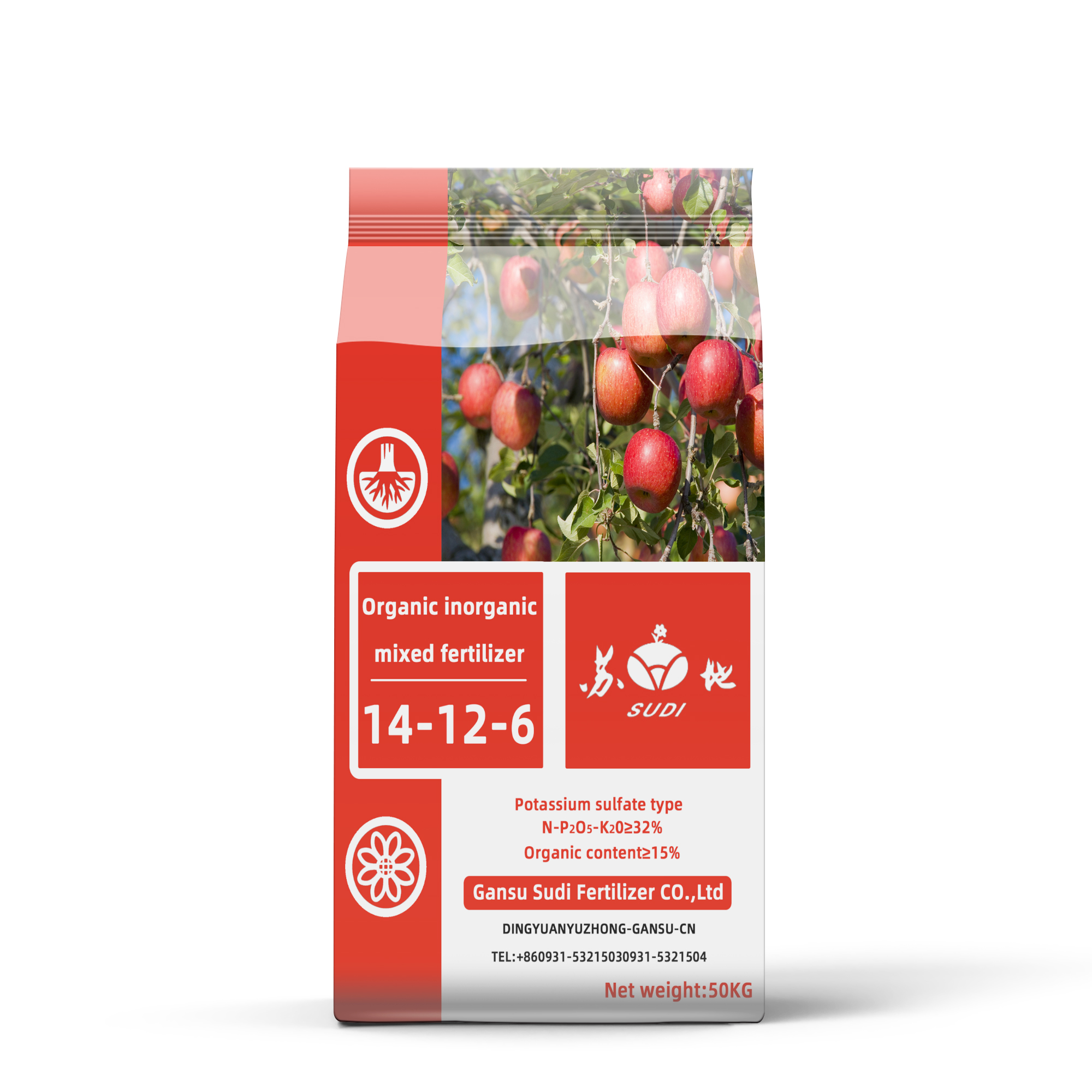
Crop-Specific Ratios: Vegetables require high nitrogen for rapid vegetative growth, whereas mature fruit trees demand balanced N-P-K (like a 14-12-6 fertilizer) to support root expansion and fruit set without over-stimulating fragile winter shoots.
True Cost Metric: Fertilizer value should be calculated by the cost per pound of actual nutrients, not bag weight.
Risk Management: Even organic-blended products carry salt-burn risks and must be applied precisely based on soil testing or physical plant diagnostics.
Pure organic materials rely entirely on active soil microbiology to function. Ingredients like bone meal, blood meal, or raw compost need warm temperatures to break down properly. In cold spring soils, this biological process remains too slow. High-demand crops starve while waiting for nutrients to mineralize. Conversely, purely synthetic options dissolve rapidly upon application. They are highly prone to leaching during heavy spring rains. This washes valuable nutrients away from the root zone entirely. Leaching leads to severe water pollution. It also results in entirely wasted input costs for your farming operation.
You can eliminate both problems simultaneously. An organic inorganic compound fertilizer uses a highly effective dual-action delivery mechanism. First, it provides immediate release. Synthetic ions bypass the slow microbial breakdown phase completely. Plants absorb nitrates and phosphates instantly for rapid vegetative push. Second, it ensures long-term soil health below the surface. The carbon-heavy organic base acts as a reliable soil improvement fertilizer. It actively feeds the microbiome. It heavily enhances water retention, especially in loose, sandy soils. It also increases the overall cation exchange capacity (CEC). A higher CEC means your soil holds onto crucial nutrients much longer.
You should apply a skeptical lens to garden marketing claims. Many amateur growers debate organic versus synthetic materials endlessly. However, plants do not distinguish between them at the root level. Roots only absorb basic chemical ions. They do not care where the ion originated physically. They only care about immediate availability and precise timing. The hybrid model optimizes this timing beautifully.
Vegetables are extremely rapid growers. They demand fast nutrient availability constantly throughout their short lifecycles. You must select a proper vegetable fertilizer based specifically on the crop type. Not all vegetables eat the same way. You must map the formulation carefully to the plant's intended output.
Leafy greens focus entirely on above-ground foliage growth. Crops like cabbage, lettuce, and spinach need much higher nitrogen ratios to thrive. Root crops behave differently. Potatoes, carrots, and radishes grow primarily below ground. They require supplementary potassium applications. Adequate potassium prevents stunted growth and ensures proper tuber development. Growers must learn physical diagnostic tips to adjust feeding on the fly. Plants communicate their needs visually.
Nitrogen deficiency shows as distinct yellowing on the lower, older leaves first.
Phosphorus deficiency creates noticeable purplish or reddish tints on older foliage.
Potassium deficiency causes brown, scorched edges along mature leaf margins.
Fruit trees operate on a completely different biological schedule. They require sustained, highly balanced feeding. They must support wood, leaf, and fruit development simultaneously. You need a targeted fruit tree fertilizer to meet these complex physiological demands safely.
We highly recommend formulas like a 14-12-6 fertilizer as an ideal baseline. Let us break down the simplified N-P-K logic for orchards. Nitrogen drives canopy expansion and early spring green-up. Phosphorus establishes strong feeder roots and supports heavy flower set. Potassium improves systemic water flow throughout the trunk. It also boosts critical winter cold hardiness.
Do not rely purely on soil tests every single year. Introduce the branch measurement rule instead. This proven physical testing method saves time and money. Measure last year's branch growth on a mature apple or pear tree. Did it grow between 12 and 18 inches? If yes, your baseline nutrition remains perfectly adequate. Did it grow less than 12 inches? This indicates a severe need for targeted nitrogen application.
Evaluating cost and efficiency matters greatly for your budget. Marketing fluff often tricks buyers into overpaying for heavy bags of filler material. You must calculate the true value of your purchase accurately. We use a simple cost-per-pound formula to evaluate real worth.
Do not judge a bag by its total physical weight. Judge it strictly by actual nutrient content. Use this exact formula to find the real value: (N% + P% + K%) × Total Bag Weight = Total Pounds of Actual Nutrients. You then divide the retail bag price by this final number. This reveals the true cost per pound of usable plant food.
Product Type | Bag Weight (lbs) | N-P-K Ratio | Actual Nutrients (lbs) | Retail Price ($) | Cost Per Pound of Nutrient ($) |
|---|---|---|---|---|---|
Brand A (Hybrid Compound) | 50 | 14-12-6 | 16.0 | 40.00 | 2.50 |
Brand B (Pure Organic) | 50 | 5-5-5 | 7.5 | 30.00 | 4.00 |
Release speed affects environmental compliance directly. Check the product label carefully before buying. Look specifically for the percentage of Slow-Release Nitrogen (SRN). Higher organic matter ratios naturally slow down nutrient leaching. This keeps your farming operations fully compliant with local runoff regulations. It actively prevents harmful algal blooms in nearby community lakes and streams.
Weed-and-feed products pose severe risks to specialty crops. We strongly advise against buying fertilizers pre-mixed with chemical herbicides. Never use them in orchards or raised vegetable beds. Application timings for weed control rarely align with optimal crop feeding windows. You will either feed the plant too late or apply dangerous herbicides too early.
Application rates determine your overall success or failure. The golden rule applies clearly to heavy feeders in the garden. Vegetables typically require roughly 3 lbs of actual nitrogen per 1,000 square feet annually. You need a reliable calculation formula to scale this safely. How do you adjust this for different bagged products? Use the following mathematical steps:
Determine your recommended nutrient pounds based on the golden rule or a recent soil test.
Locate the specific fertilizer percentage on the bag label.
Divide that percentage by 100 to get a workable decimal.
Divide the recommended pounds by this decimal.
This simple math gives you the exact total fertilizer required in pounds. It prevents severe underfeeding and dangerous over-application.
Apply fruit tree nutrients very early in the spring. Do this right before bud swell begins. Emphasize the drip line method heavily for maximum absorption. Start applying the product 12 inches away from the trunk base. Spread it evenly outward until you reach the very edge of the tree canopy. Never apply nitrogen in late summer. Late applications push fragile new leaf growth right before winter freezes. This guarantees severe frost damage to your trees.
Dispel a dangerous safety myth immediately. Many growers believe "organic-based" means the product cannot burn delicate plants. This is entirely false. Rapid-release inorganic salts reside inside the hybrid compound. Over-applying them causes intense osmotic stress in the roots. We call this phenomenon fertilizer burn. Always water the soil deeply after application to mitigate this salt risk.
Safety wait periods protect your health and your community. Does the organic component contain uncomposted animal manure? You must follow standard safety compliance rules strictly. Wait 90 to 120 days before harvesting any crops touching the treated soil. This eliminates harmful pathogen risks completely.
Shortlisting logic simplifies the purchasing decision immensely. Advise your team to baseline the soil every two to three years. Match the N-P-K ratio directly to the crop's specific life cycle. Use a balanced formulation for orchard growth and high-nitrogen blends for leafy greens. Always calculate your input costs based on actual nutrient weight rather than bag size.
Take action before the next growing season begins. Audit your current garden inputs closely. Measure your fruit tree shoot growth from the previous season to determine baseline health. Finally, set up a dedicated control bed. Test a high-quality hybrid formulation there and carefully record your yield improvements.
A: No. Lawn fertilizers are formulated with excessively high nitrogen for leafy growth and minimal phosphorus. Using them on fruit trees will result in excessive foliage at the expense of blossoms and fruit yield. Avoid these products in your garden entirely.
A: A 14-12-6 offers a slightly higher nitrogen kick for initial spring growth while reducing potassium if soil tests show an abundance. It is more specialized than a generic 10-10-10 equivalent. This tailored approach prevents nutrient lockout and supports targeted canopy expansion perfectly.
A: This typically indicates a nitrogen deficiency or leaching. Nitrogen is mobile; the plant pulls it from older leaves to support new growth. If using a pure organic fertilizer, the cold soil may be preventing microbial breakdown, which is why an organic-inorganic blend resolves this timing issue.
A: Rarely. Blossom end rot in vegetables like tomatoes is almost always a watering inconsistency issue that prevents calcium transport, rather than an actual lack of calcium in the soil. Consistent irrigation is the true fix, not simply applying more fertilizer.

