
Please Choose Your Language


Views: 0 Author: Site Editor Publish Time: 2026-10-11 Origin: Site


Got your seasonal soil data back from the lab but feel totally lost? You are certainly not alone. Picture standing at the edge of your field right after harvest, holding a fresh laboratory printout. Staring at rows of parts-per-million and base saturation percentages often feels like deciphering a foreign language. Many seasoned growers still struggle to translate these raw numbers into a practical field strategy.
Guessing your nutrient needs based on historical habits introduces massive risks to both your crop yield and your operational budget. In this comprehensive guide, you will learn the exact steps required to implement an effective soil test fertilization strategy. We will break down complex agronomic data into simple, actionable farm management practices. This means you can finally stop guessing and start growing with absolute precision.
Modern agricultural success demands concrete data. Relying on gut feeling is no longer viable. Applying amendments without thoroughly understanding the chemical composition of your land introduces significant financial and environmental risks. Blind fertilizing frequently results in the over-application of unnecessary elements. Consequently, this practice can damage the local ecosystem, pollute waterways, and dramatically inflate your seasonal operational costs.
The return on investment of a professional soil analysis is substantial. A proper test directly prevents the costly over-application of nutrients your soil already possesses in abundance. Furthermore, it highlights hidden deficiencies that might be bottlenecking your crop's true genetic potential. For instance, spending thousands of dollars on nitrogen is financially inefficient if a severe sulfur or zinc deficiency is actually the limiting factor preventing proper plant growth. By identifying these exact parameters, farm managers can allocate their input budget strictly to what the crop will actually utilize.
Precision agriculture is the scientific practice of matching fertilizer inputs directly to the specific deficits shown on your laboratory results. Instead of relying on generic regional recommendations, this approach treats your specific acreage as a unique chemical environment. By establishing an accurate baseline, you transition from reactive problem-solving to proactive nutrient management. As a result, the soil ecosystem remains balanced and productive year after year.
Before looking at nitrogen, phosphorus, or potassium, you must evaluate the soil's physical and chemical environment. These foundational metrics act as the master valves of your field. They dictate exactly how well your soil can hold and release nutrients to the root zone.
Think of soil pH as the master switch for nutrient uptake. It measures the acidity or alkalinity of your soil on a scale from 0 to 14, with 7.0 being perfectly neutral. This metric is absolutely critical because it directly controls chemical availability. If the soil is too acidic, macronutrients like phosphorus become chemically locked and unavailable to the plant roots. In contrast, if the soil is too alkaline, micronutrients like iron and manganese become tied up in insoluble compounds.
Most reports also list a Buffer pH. While the active pH tells you the current state of the soil, the buffer pH measures the soil's resistance to change. Specifically, this secondary number is what laboratories use to calculate exactly how much agricultural lime is required to neutralize severe soil acidity.
Cation Exchange Capacity, commonly referred to as CEC, measures the soil's ability to hold onto positively charged nutrients such as calcium, magnesium, and potassium. You can visualize CEC as the soil's built-in bank account or a parking lot for nutrients.
Clay particles and organic matter carry a negative charge. This naturally attracts and holds positive cations. Therefore, soils with a high CEC have a massive bank account. They can hold large amounts of nutrients and require less frequent, but heavier, fertilizer applications. Conversely, sandy soils have a very low CEC. They feature a tiny parking lot, meaning nutrients leach out quickly during heavy rains. Low CEC soils demand smaller, more frequent fertilizer applications to prevent severe nutrient loss.
Organic Matter represents the percentage of decomposed plant and animal residues present in the soil. Even though it typically makes up only a small fraction of the soil volume, it is the true engine of soil fertility. High organic matter vastly improves water retention, prevents hardpan compaction, and provides a thriving habitat for beneficial microbial life. In addition, as this matter mineralizes, it acts as a natural, slow-release source of nitrogen and sulfur throughout the entire growing season.
Once you understand the soil's capacity to hold nutrients, the next phase is to decode the specific elemental levels. These are typically measured in parts per million or pounds per acre.
These primary elements are required in the largest quantities for plant survival and robust growth.
While needed in slightly smaller amounts, secondary macronutrients are absolutely vital for structural integrity and biological function.
Trace elements including Zinc, Iron, Manganese, Copper, and Boron are required in microscopic amounts. However, crop yield is always dictated by the scarcest nutrient, not the most abundant. A severe deficiency in just a few ounces of boron per acre can completely bottleneck the yield of an otherwise perfectly fertilized field. Your report will clearly indicate if these trace minerals are present in sufficient quantities to support high-yield agriculture.
Raw numbers mean very little without proper agronomic context. Agronomists translate these raw figures into an actionable status to guide your purchasing decisions.
Most reports feature graphical bars categorizing each nutrient into specific ranges. If a nutrient is marked as Deficient, applying fertilizer will almost certainly result in a profitable yield increase. When a nutrient reaches the Optimum level, fertilizer is only applied at maintenance rates to replace what the harvested crop removes.
More is not always better. Excessive levels of one nutrient can cause severe chemical antagonism. This physically blocks the plant roots from absorbing other nutrients. For example, excessive phosphorus can lock out zinc, causing severe deficiencies even if plenty of zinc is actually present in the soil profile.
Base saturation is an advanced metric calculating the percentage of the CEC parking spaces occupied by specific cations. Plant roots prefer to absorb nutrients in highly specific ratios. If the ratios are unbalanced, plant health suffers, and soil structure degrades rapidly. By adjusting base saturation to ideal percentages, growers naturally improve soil tilth, water infiltration, and overall nutrient availability.
Analyzing current industry shifts reveals a massive global pivot toward hyper-targeted nutrient mapping and variable-rate technology. Commercial operations are rapidly abandoning traditional, blanket-rate broadcast methods. Recent agronomic market data indicates that climate-smart agriculture relies heavily on precise soil diagnostics. Farms utilizing data-driven soil analysis to formulate targeted nutrient prescriptions are seeing up to a 20% reduction in wasted input costs. At the same time, this methodology drastically reduces chemical runoff, protecting local watersheds and ensuring long-term land sustainability.
Once the required nutrient volumes are calculated in pounds per acre, the next critical decision involves selecting the physical form of the fertilizer. Agronomists generally choose between two primary categories of granular fertilizers to meet their field requirements.
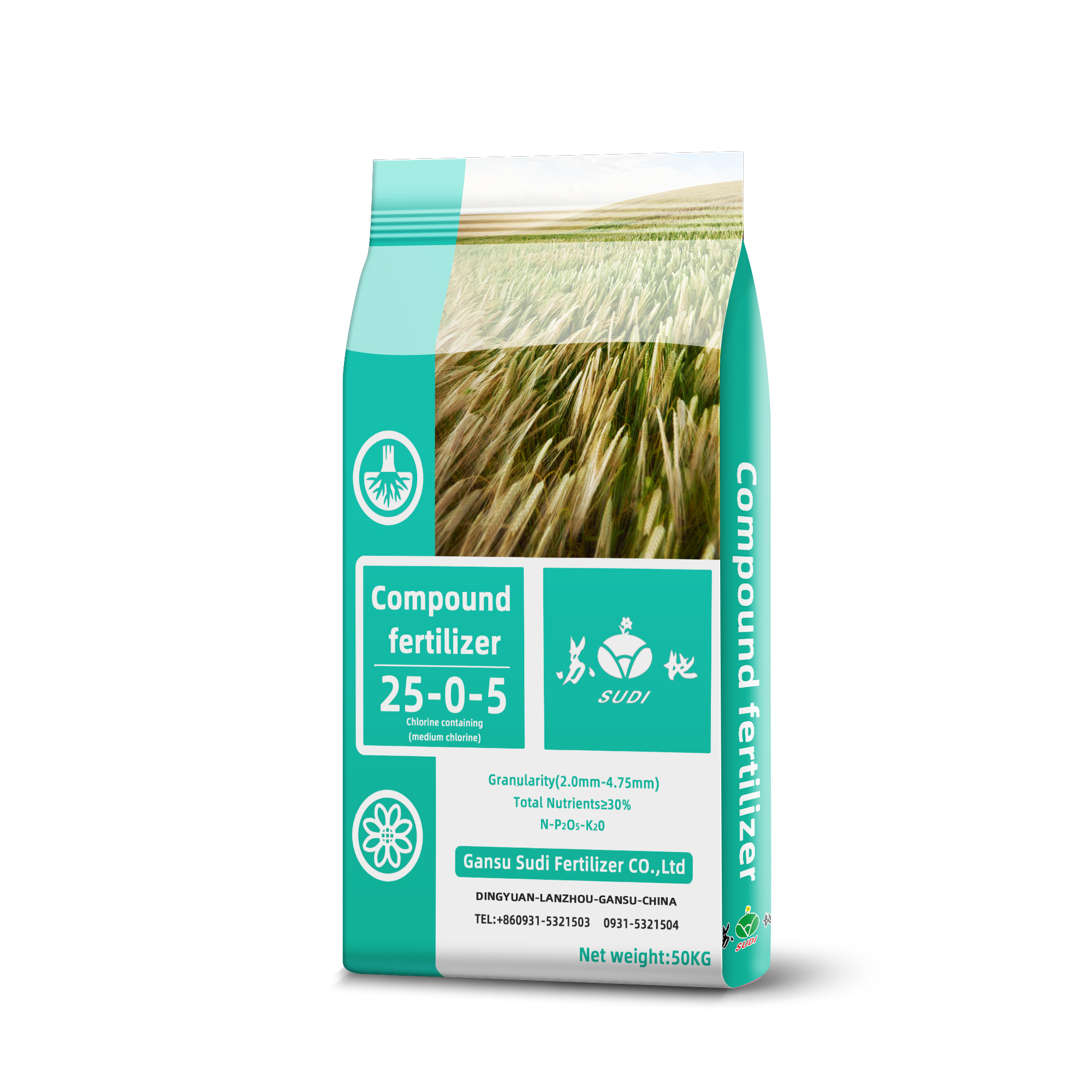
Manufactured through a complex chemical granulation process, a compound fertilizer ensures every single pellet contains the exact same ratio of nutrients. For instance, if you look at a high-quality 25-0-5 NPK formulation, each individual granule delivers a massive nitrogen payload alongside essential potassium, completely excluding phosphorus. This specific product is perfect for rapid vegetative growth phases where phosphorus is already abundant in the soil.
These options are highly effective for general maintenance on soils that already possess a balanced baseline fertility. Because every granule is identical, they offer superior distribution uniformity across the field.
In contrast, a custom blend is created by physically mixing different distinct fertilizer materials together in a specific ratio. For growers facing complex soil imbalances, utilizing a Custom Blend Fertilizer is often the most agronomically sound solution.
The primary advantage here is absolute precision. A blending facility can mix a formula that matches your exact soil requirements down to the pound. If your field does not need phosphorus, it is completely excluded from the blend, reallocating your budget to necessary inputs.
| Feature | Compound Fertilizer (e.g., 25-0-5 NPK) | Custom Blend Fertilizer |
|---|---|---|
| Nutrient Distribution | Chemically identical in every single granule | Physically mixed varied granules |
| Best Application | General maintenance, uniform baseline fertility | Correcting severe, highly specific soil imbalances |
| Formula Flexibility | Fixed ratio from the manufacturing plant | Highly customizable down to the exact pound |
| Field Spreading | Perfectly even spread, zero risk of segregation | Requires careful handling to prevent particle settling |
Even with accurate laboratory data and high-quality inputs, execution errors can severely compromise crop performance. Addressing these common operational mistakes ensures you get the maximum return on your laboratory investment.
The most expensive mistake a grower can make is applying premium fertilizer into highly acidic soil. If your pH is 5.2, a vast majority of the applied phosphorus and potassium will immediately bind to aluminum and iron in the soil. This renders the expensive fertilizer completely unavailable to the plant. Correcting soil pH with agricultural lime must always be the very first step before investing heavily in N-P-K inputs.
Laboratories report current nutrient levels in parts per million, but fertilizer recommendations are given in pounds per acre. Confusing these two metrics results in disastrous miscalculations. As a general rule of thumb for a standard 6-inch soil slice, multiplying the parts per million by two roughly equals the pounds per acre in the soil. Failing to make this vital conversion often leads growers to apply only half of the required nutrients.
Inconsistent sampling methodologies yield inconsistent and unreliable data. Nutrient stratification occurs naturally in all soils. If you sample at a 4-inch depth one year and an 8-inch depth the next, your nutrient concentrations will appear drastically different. Furthermore, nutrient levels fluctuate seasonally based on soil temperature and microbial activity. To accurately track your progress over time, you must pull your cores at the exact same depth, and during the exact same month each testing cycle.
Mastering your agronomic data transforms your entire operation. Transitioning from guesswork to data-driven decisions not only saves money but significantly improves your crop yields and long-term soil health. True agronomic success relies on exact nutrient sourcing and precise application. Take the time to understand your data, avoid the pitfalls of generic off-the-shelf products, and seek out the right tailored solutions to unlock your farm's true genetic potential.
Stop guessing and start growing. If your report reveals complex imbalances, explore professional customized fertilizer solutions tailored to your exact acreage. Sourcing the correct compound or custom blend ensures your fertilizer budget translates directly into maximum yield.
Typically, you should test your soil every one to three years. The ideal frequency depends heavily on your specific crop rotation, soil type, and whether you are actively trying to correct a severe nutrient deficiency or alter the soil pH.
It stands for parts per million. It is a standardized unit of measurement used by laboratories to quantify the concentration of a specific nutrient in the soil. Multiplying the ppm value by two roughly equals the pounds per acre for a standard 6-inch soil sample.
Accuracy starts in the field. Using a stainless steel soil probe, collect 15 to 20 core samples randomly across a uniform section of your field. Ensure you sample at a consistent depth, usually 6 to 8 inches for standard crops. Mix these cores thoroughly in a clean plastic bucket before sending a subsample to the lab.
Active pH measures the current acidity or alkalinity of the soil solution, directly affecting immediate nutrient availability. Buffer pH, on the other hand, measures the soil's resistance to a change in pH. Agronomists use the buffer pH strictly to calculate the exact tonnage of lime required to raise the active pH to an optimal level.
While physically possible, it is highly discouraged. Using standard, off-the-shelf fertilizers can lead to severe nutrient imbalances over time. Implementing precise, tailored fertilization ensures you only purchase and apply the specific nutrients your soil actually lacks, preventing toxicity and environmental runoff.
This frustrating phenomenon is usually caused by improper soil pH or nutrient antagonism. Excessive levels of phosphorus can chemically lock out zinc, making it entirely unavailable to the plant roots. Adjusting your soil pH to the optimal range is always the first step to unlocking existing soil nutrients.

