
Please Choose Your Language


Views: 0 Author: Site Editor Publish Time: 2026-10-19 Origin: Site


Does your soil test report look like a complex foreign language? Obscure chemical abbreviations and confusing index numbers often leave growers overwhelmed. Consequently, many rely on generalized off-the-shelf products. Is this a smart strategy? Absolutely not. Guessing your fertilizer application wastes valuable operational budget. It also severely hinders crop yields. A proper soil test fertilizer recommendation fundamentally solves this problem. It provides a precise empirical blueprint for your land. In this comprehensive guide, we will demystify laboratory reports step-by-step. By translating these metrics into actionable agronomic strategies, we will help you confidently choose the exact nutrient formula required to maximize plant health and profitability.
Recently, the agricultural sector has experienced a massive shift toward precision nutrient management. Volatile raw material costs and strict environmental regulations regarding watershed runoff are fundamentally changing how we farm. Modern growers can no longer afford traditional blanket application methods. Today, maximizing yield while minimizing waste requires highly accurate site-specific data. Understanding your soil report is no longer just good agronomy. It is a critical commercial necessity.
Before you even begin calculating application rates or purchasing inputs, you must understand the foundational metrics of your soil profile. When reviewing the printout on your desk, a standard agricultural laboratory report contains several primary indicators. These dictate the overall health and carrying capacity of your land.
Soil pH measures active acidity or alkalinity in the soil solution on a standard scale from 0 to 14. Most commercial crops and turfgrasses thrive in a slightly acidic environment, typically hovering between 6.0 and 7.0. If the soil pH falls outside this optimal range, macronutrients like nitrogen, phosphorus, and potassium cannot be efficiently absorbed by the root system. You could apply tons of fertilizer, and the plants would still starve.
Furthermore, you will likely see a distinct metric called Buffer pH. While the standard soil pH measures the current active state, the Buffer pH evaluates the soil's inherent resistance to pH change. Agronomists specifically use this index to calculate the exact tonnage of agricultural lime required to neutralize deep-seated soil acidity.
Cation Exchange Capacity represents the soil's fundamental ability to hold and exchange positively charged ions, such as calcium, magnesium, and potassium. In practical terms, think of this metric as the soil's nutrient gas tank.
Organic matter consists of decomposed plant residues, animal waste, and active microbial biomass. A laboratory report lists this crucial metric as a percentage of the total soil volume. Soils exhibiting a percentage below 2 percent generally suffer from poor physical structure, reduced biological activity, and severely low water-retention capabilities. Identifying a low percentage early is a strong empirical signal. It means the field requires structural amendments alongside standard chemical inputs to remain viable.
The beating heart of any soil analysis focuses heavily on the primary macronutrients. Laboratories measure and report these individual elements using different methodologies based on their unique behavior within the soil environment.
You may quickly notice that some soil test reports do not provide an exact static measurement for Nitrogen. Often, they list it simply as an estimated requirement. Nitrogen is a highly volatile, mobile element. It fluctuates rapidly due to temperature changes, heavy rainfall, microbial consumption, and atmospheric volatilization. Because actual nitrogen levels change drastically in a matter of days, laboratories base their recommendations on your specific crop yield goals rather than the fleeting amount currently present in the sample bag.
Unlike transient nitrogen, phosphorus and potassium are relatively stable and immobile in the soil profile. Laboratories chemically extract these elements and report them in parts per million or pounds per acre. These measurements are then categorized into an easy-to-read index to guide your purchasing decisions.
| Interpretation Category | Agronomic Meaning | Fertilizer Strategy |
|---|---|---|
| Low / Very Low | The soil is severely deficient. Plant growth and overall yield will be significantly restricted. | Apply higher rates of targeted fertilizer to actively build up soil reserves while meeting immediate crop needs. |
| Medium / Optimum | The soil has adequate nutrients for current growth. However, reserves will be depleted after the upcoming harvest. | Apply maintenance levels of fertilizer to replace exactly what the specific crop removes during the season. |
| High / Very High | The soil contains abundant reserves. Additional chemical inputs will not increase yield or plant health. | Reduce or completely eliminate applications to save operational capital and prevent environmental runoff. |
The most actionable and valuable section of your entire laboratory report is the fertilizer recommendation. This localized data provides the exact mathematical blueprint for your agronomic program. It completely removes the guesswork from your seasonal purchasing decisions.
Recommendations are typically presented in two distinct formats depending entirely on the scale of your growing operation. Large-scale agriculture utilizes Pounds per Acre. Turf management and commercial landscaping rely on Pounds per 1,000 Square Feet.
It is absolutely critical to understand that the lab is recommending pounds of actual pure nutrient, not pounds of bulk fertilizer product. For instance, a recommendation calling for one pound of Nitrogen per 1,000 square feet does not mean you simply spread one pound of a finished fertilizer blend over that area.
The laboratory generates its final prescription based heavily on the specific crop identified on your initial submission form. A 50-acre field of high-yield feed corn possesses a drastically different nitrogen requirement than a field of soybeans or a golf course fairway. Always ensure the crop listed at the top of the report perfectly matches your actual planting intentions for the season.
To convert the lab's recommendation of pure nutrients into the actual physical volume of fertilizer you need to purchase, you must apply a standard agronomic formula. Divide the recommended pounds of nutrient by the percentage of that nutrient in the bag, then multiply by 100.
Consider a practical scenario. Your report recommends applying 45 lbs of pure Phosphorus per acre. You are considering purchasing a fertilizer with an NPK ratio of 0-15-0, which contains exactly 15 percent Phosphorus by weight. Dividing 45 by 15 equals 3. Multiplying by 100 results in 300. You need to apply precisely 300 lbs of the bulk fertilizer product per acre to successfully meet the lab's recommendation.
Once you have accurately calculated the required volume of nutrients, the next logical step is selecting an appropriate physical product. The three prominent numbers on a fertilizer bag represent the guaranteed percentage by weight of Nitrogen, Phosphorus, and Potassium respectively.
A balanced fertilizer delivers equal parts of all three primary macronutrients. These are generally utilized when a soil test indicates universal depletion across all categories. However, the continuous unmonitored use of balanced fertilizers can eventually lead to severe nutrient imbalances, particularly the toxic over-accumulation of phosphorus.
Targeted ratios become necessary when the soil report highlights specific isolated deficiencies. If your land boasts optimum potassium levels but suffers from low phosphorus, indiscriminately applying a balanced blend will result in wasted potassium. This causes unnecessary expenses and potential soil toxicity.
Consider a real-world scenario where your lab report indicates a moderate need for nitrogen and potassium but flags a severe deficit in phosphorus. This deficit is particularly critical during the fragile early stages of planting. Phosphorus acts as the primary biological driver of root elongation and early cellular development.
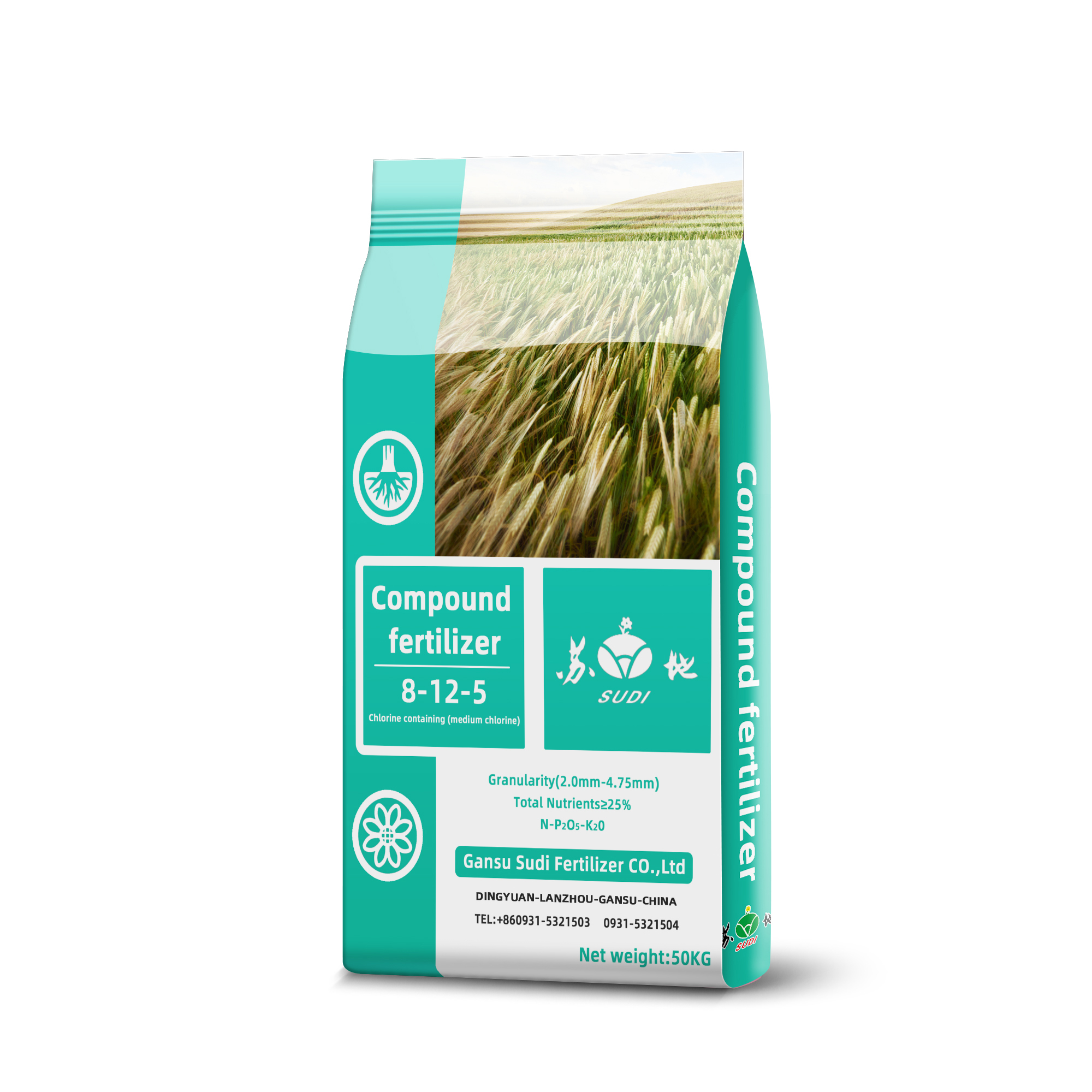
In this specific agronomic situation, utilizing an 8-12-5 soil-improvement NPK fertilizer provides a highly targeted, efficient solution. The elevated 12 percent phosphorus content directly addresses the deficit required for robust root establishment. Simultaneously, the carefully controlled 8 percent nitrogen and 5 percent potassium levels provide adequate maintenance nutrition without risking chemical fertilizer burn to young vulnerable seedlings. This type of specialized compound formula is highly effective for rapid soil remediation and early-stage crop establishment.
Off-the-shelf fertilizer blends offer undeniable convenience. Yet, they are not always the most agronomically sound or economically viable choice for every plot of land. Commercial growers and large-scale operators often discover that standard commercial ratios simply do not align with the precise data provided by their laboratory results.
A standard soil analysis might reveal highly unique nutrient imbalances. For example, your soil profile might exhibit optimum levels of phosphorus due to years of historical applications, but severely depleted potassium and nitrogen levels. If you apply a standard balanced fertilizer to this field, you will inevitably over-apply phosphorus. This wastes your limited budget and actively contributes to harmful phosphorus runoff.
When off-the-shelf ratios completely fail to match your lab’s specific guidelines, the most scientific approach is to utilize a custom NPK fertilizer. By tailoring the exact percentage of nitrogen, phosphorus, and potassium alongside necessary micronutrients like zinc or magnesium, you ensure that your plants receive exactly what they need. Not a single ounce of redundant chemical application occurs.
For large-scale agricultural operations, precision is directly tied to the bottom line. Purchasing bulk nutrients that your soil already holds in abundance is a direct avoidable drain on operational capital. Consider the economics of scale. If a soil test indicates that phosphorus application can be skipped entirely for the current growing season, a custom blend formulating a 25-0-15 ratio will cost significantly less per acre than a traditional complete fertilizer. Customization prevents the over-purchasing of expensive raw materials, reduces transport weight, and maximizes the return on investment for every pound dropped into the furrow.
A comprehensive soil test report provides much more than just chemical data. It offers a diagnostic window into the physical and biological health of your topsoil. When Organic Matter and Cation Exchange Capacity numbers are suboptimal, purely synthetic fertilizers often fail to perform efficiently. They wash away before the plant can utilize them.
Modern agronomy recognizes that feeding the plant and feeding the soil must occur simultaneously. An organic-inorganic fertilizer is specifically engineered to bridge this vital gap. This hybrid approach seamlessly combines the rapid predictable nutrient availability of chemical fertilizers with the carbon-rich biological-building properties of organic matter.
Take a 10-8-7 formulation as a prime example. Synthetic nutrients dissolve rapidly in soil moisture to provide an immediate growth response containing 10 percent nitrogen, 8 percent phosphorus, and 7 percent potassium. Meanwhile, the integrated organic components work slowly over the season. They stimulate microbial activity, improve soil aeration, and steadily build long-term structural integrity.
Agronomists generally consider an Organic Matter percentage of 3 to 5 percent to be the ideal target for most commercial crops. If your soil test report shows a level dipping below 2 percent, your field is likely struggling with severe compaction, poor water infiltration, and a distinct lack of beneficial microbial life.
In these degraded scenarios, relying solely on synthetic NPK is merely a temporary bandage. Switching to a hybrid organic-inorganic blend acts as a powerful long-term soil amendment. The added carbon helps physically rebuild the topsoil layer. This slowly increases the organic percentage over successive growing seasons and creates a significantly more resilient growing environment.
Even armed with a highly detailed lab report, simple misinterpretations can lead to disastrous purchasing decisions and eventual crop failure. Avoiding these common agronomic pitfalls is essential for successfully translating raw data into actual harvestable yield.
The single most expensive mistake a grower can make is applying premium NPK fertilizer to a field with an unbalanced pH. Soil pH acts as the biological gateway for crop nutrition. If your report shows a highly acidic pH, essential nutrients become chemically bound to soil particles. They are rendered completely invisible to plant roots. Before you spend a dime on nitrogen or potassium, you must address the Buffer pH recommendation by applying agricultural lime. Without correcting the pH first, any fertilizer applied will be largely wasted.
A persistent misconception in agriculture is that more is always better. Ignoring the highly specific application rates outlined in your lab report can lead to severe physiological consequences for the plant. Over-applying nitrogen can trigger excessive weak vegetative growth at the direct expense of fruit production. Over-applying potassium can inadvertently induce magnesium deficiencies due to nutrient root competition. Always match the product volume to the exact calculated deficit.
A professional lab report often specifies not just what nutrients to apply, but exactly when to apply them. Nitrogen is highly mobile in the soil profile. Therefore, it is frequently recommended for split applications rather than a single massive dose at early planting. Applying the entire yearly recommendation of nitrogen in the wet early spring dramatically increases the risk of leaching before the plant is mature enough to absorb it.
Deciphering a soil test report does not have to feel like an insurmountable academic exercise. Systematically verifying your soil pH first and identifying exact macronutrient deficits allows you to confidently transition from costly guesswork to precision agriculture. Adhering strictly to the laboratory's fertilizer prescription not only safeguards your operational budget but also actively mitigates the environmental impact of nutrient runoff.
The empirical data printed on your report is only as valuable as the physical product you ultimately choose to apply. Whether your land requires a highly targeted starter compound, a carbon-rich soil amendment to rebuild degraded structure, or a completely customized blend formulated for massive acreage, selecting the right manufacturer is crucial. We encourage you to visit Sudi Fertilizer at https://www.sudifertilizer.com to explore professional-grade formulations that perfectly match your soil's unique profile.
While all data points hold agronomic value, Soil pH is universally considered the most critical foundational metric. The pH level acts as the gateway for crop nutrition. If the soil is too acidic or too alkaline, macronutrients and micronutrients become chemically bound to soil particles and cannot be absorbed by plant roots. Once you have verified or corrected the pH, the soil test fertilizer recommendation section becomes the most important practical tool.
Laboratories typically recommend nutrients in pounds of actual nutrient per acre or per 1,000 square feet. To accurately calculate how many bags of bulk fertilizer you need, divide the recommended pounds of the specific nutrient by the percentage of that nutrient in the fertilizer bag expressed as a decimal. If the lab recommends 2 pounds of actual Nitrogen and you are using a 10-0-0 fertilizer, divide 2 by 0.10. The result is 20. Therefore, you need to apply exactly 20 pounds of that specific bulk product.
No single fertilizer ratio is universally perfect for all plant species and all soil types. An 8-12-5 blend is specifically formulated with a higher concentration of phosphorus. This makes it highly effective for environments that test low in phosphorus or for specific agricultural use cases such as establishing new root systems, germinating seeds, or transplanting young crops. You should only deploy this specific ratio if your recent soil test confirms a definitive need for elevated phosphorus.
Standard fertilizers are mass-produced with pre-set rigid nutrient ratios designed to provide a generalized baseline of nutrition for average soils. Conversely, a custom formulation is manufactured precisely to order. Agronomists utilize your specific soil test report to seamlessly blend the exact percentages of nitrogen, phosphorus, potassium, and trace micronutrients your land requires. This tailored approach ensures zero chemical waste and prevents hazardous nutrient runoff.
If your lab results indicate that your soil suffers from persistently low organic matter or exhibits a very low Cation Exchange Capacity, standard synthetic fertilizers will likely wash away before the plants can utilize them. A hybrid blend is highly recommended in these degraded situations. It provides immediate plant nutrition through its water-soluble inorganic components while simultaneously utilizing carbon-rich organic matter to rebuild the soil's biological structure.
Commercial growers should conduct a comprehensive soil analysis every two to three years to maintain a baseline. However, high-yield cash crops or fields undergoing active soil remediation benefit greatly from annual testing. Consistent monitoring ensures your nutrient strategy evolves alongside your changing soil profile, preventing both nutrient depletion and toxic over-accumulation.
Yes, temporarily. If your index level reads very high, adding more phosphorus will not increase yield or plant health. In fact, excessive phosphorus can induce severe micronutrient deficiencies by locking up essential elements like zinc and iron in the soil. You should switch to a zero-phosphorus formulation until the crop naturally draws down the existing reserves.

