
Please Choose Your Language


Views: 0 Author: Site Editor Publish Time: 2026-09-23 Origin: Site


Misinterpreting fertilizer labels carries heavy operational stakes for commercial growers. A simple calculation error often leads to wasted input costs, dangerous nutrient runoff, and suboptimal crop yields. Modern farming cannot afford these margins of error. We must move beyond basic textbook definitions to real-world commercial applications. Agronomic managers face the daily challenge of translating numbers on a bag into actionable, cost-effective crop nutrition plans. They need reliable methods to bridge the gap between soil science and farm budgets. A well-planned application strategy shields your bottom line from volatile market prices. Our objective here is to equip you to make these exact calculations confidently. We will provide a structured framework to evaluate your specific NPK fertilizer ratio. You will learn to assess various nutrient sources accurately and avoid common application traps. Finally, we will help you shortlist the right fertilizer formats based purely on hard agronomic data.
Commercial farming currently faces immense pressure from global supply chains. Rising fertilizer input costs constantly clash against the need to hit aggressive, specific yield targets. You cannot afford to apply nutrients blindly across thousands of acres. Every pound of applied nitrogen, phosphorus, or potassium must deliver a measurable return. A successful crop nutrition plan does exactly this. It maximizes nutrient use efficiency (NUE) across your entire acreage. Simultaneously, it minimizes environmental leaching and long-term soil degradation. These criteria define true agronomic success in today's highly competitive agricultural sector.
Let us look closely at cost-to-yield analysis in practice. Buying an inappropriate formulation inflates budgets artificially. Imagine your soil already holds optimal phosphorus levels. However, you buy a balanced 10-10-10 blend strictly to meet your nitrogen needs. You are paying for excess phosphorus. The crop will not use it. Rain might wash it away into local waterways, causing algae blooms. Instead, you should source a targeted NPK fertilizer ratio like 32-0-0 or 46-0-0. This approach isolates the exact nutrient deficit. It stops you from purchasing unnecessary elemental weights. Your financial resources stay focused strictly on what the crop actually requires to grow.
Farmers often glance at the three big numbers on a bag and stop there. However, commercial procurement demands much deeper scrutiny. You must read the Guaranteed Analysis panel carefully. This section breaks down the exact chemical makeup required by compliance and regulatory standards. It tells you exactly what forms of nutrients exist inside the bag.
Nutrient sources determine bioavailability. They dictate how quickly plants absorb the applied elements.
Beyond the primary N, P, and K, check for secondary elements. Calcium, Magnesium, and Sulfur inclusions drastically alter crop quality. A label showing added sulfur often justifies a slightly higher price point. Sulfur helps vital amino acid formation in plants. You should always cross-reference these secondary additions against your recent soil tests.
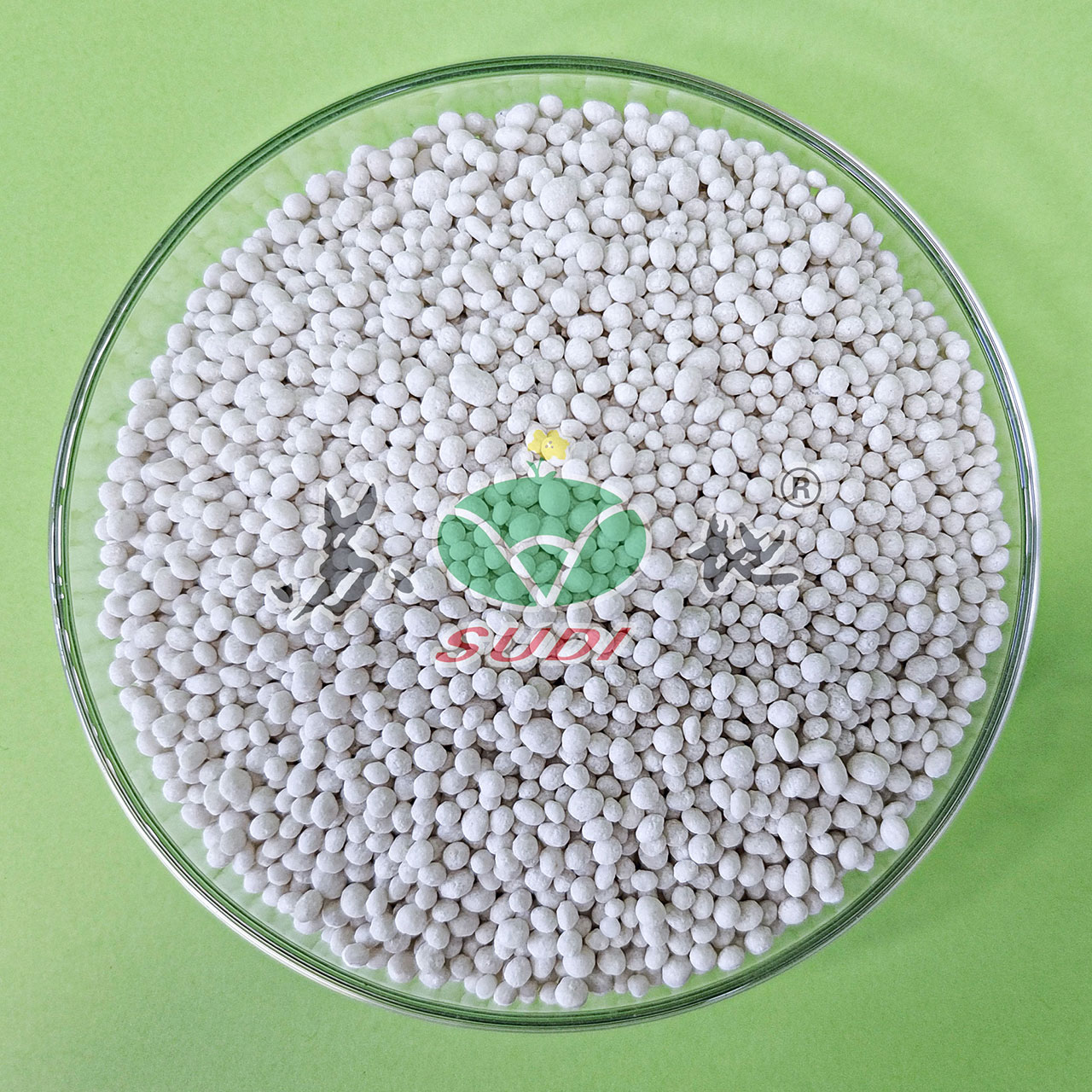
Agronomic managers constantly debate between physical blends and chemically homogeneous granules. Both categories serve distinct operational purposes on the farm. Physical bulk blends simply mix individual nutrient granules together in a large pile. A true compound NPK fertilizer is entirely different. It chemically fuses all three primary nutrients into every single pellet.
You must evaluate these formats across three core dimensions before purchasing:
Table: Quick Comparison of Bulk and Compound Fertilizer Formats
| Feature | Physical Bulk Blend | Compound Homogeneous Granule |
|---|---|---|
| Nutrient Segregation | High risk during transport and mechanical spreading | Zero risk; identical chemical makeup in every pellet |
| Application Efficiency | Often requires multiple field passes to balance nutrients | Highly efficient single-pass application saves time |
| Upfront Purchase Cost | Generally lower per ton due to simple mixing | Premium pricing due to complex manufacturing process |
Choosing numbers randomly invites agronomic failure. You must establish strict, data-driven shortlisting criteria. Comprehensive soil tests are non-negotiable prerequisites. You should combine these tests with historical yield data. Together, they reveal what the soil actually lacks. This data dictates your baseline ratio selection.
Crop demands shift dramatically during the season. Phase-specific planning ensures you apply nutrients when plants need them most. During the vegetative stage, crops focus on rapid biomass accumulation. They grow extensive leaves and stems. Here, you should prioritize nitrogen-heavy ratios. Nitrogen drives chlorophyll production and cellular expansion. It builds the solar panels of the plant.
Later, plants enter the root and bloom stage. They stop growing leaves and start making flowers. Energy transfer and fruiting become the primary focus. You must transition to higher phosphorus and potassium ratios. Phosphorus fuels the energy transfer processes within plant cells. Potassium regulates water and moves sugars directly into the fruit. It improves crop sizing and weight.
Always practice rigorous assumption checking. A common mistake is over-relying on generic crop recommendations. You might see a bag labeled standard tomato formula. Ignore the marketing hype. You must adjust this generic advice for your specific field. Existing soil nutrient lock-up changes everything. High or low pH imbalances can render applied nutrients entirely useless. Always tailor the ratio to your exact field conditions.
Even the perfect ratio fails if you cannot apply it correctly. You must evaluate application compatibility before finalizing your purchase. How will the chosen product format interact with your existing farm equipment? If you use fertigation systems, you need highly soluble powders. Undissolved granules will quickly clog your expensive drip tape lines. Conversely, if you use broadcast spinners, you need dense, dust-free granules. Poor spread patterns create striped fields of uneven, patchy growth.
Storage and handling present another massive logistical hurdle. Fertilizers carry significant hygroscopic risks. They absorb moisture from the surrounding air rapidly. In high-humidity environments, this causes severe caking issues. A solid block of hardened fertilizer breaks application machinery. You must store these materials in climate-controlled, dry facilities. If you lack good storage, buy only what you can apply immediately.
Finally, consider environmental and compliance risks. Local regulations increasingly dictate commercial farming practices. Many regions enforce strict nitrogen application limits per acre. They also mandate rigorous phosphorus runoff mitigation plans. Applying heavy doses right before a massive rainstorm invites heavy fines. It also damages local water ecosystems. You must factor these legal constraints into your seasonal planning. Always document your application rates diligently to prove regulatory compliance.
Reading an NPK ratio is an economic calculation as much as an agronomic one. The numbers on the bag directly dictate your ultimate profitability. Every nutrient application must generate a clear return on investment. The right ratio must align perfectly with precise soil deficits. It must also match your farm's operational capabilities and equipment constraints seamlessly.
Do not guess your field's nutritional requirements. We highly recommend you schedule an updated soil audit immediately. Take accurate core samples across different management zones. Next, consult with a certified agronomist. They will help you match your soil findings with specific compound or blended formulations. Taking these exact steps ensures a profitable, efficient, and fully compliant growing season.
A: The NPK grade refers to the exact guaranteed percentages of nitrogen, phosphorus, and potassium in the bag, like 10-20-10. The NPK ratio simplifies these numbers down to their lowest common denominator. For a 10-20-10 grade, the actual ratio is 1:2:1, showing the relative proportion of nutrients.
A: Multiply the bag's total weight by the percentage of each nutrient. For a 50-pound bag with a 10-20-10 grade, multiply 50 by 0.10 to get 5 pounds of nitrogen. Multiply 50 by 0.20 to find 10 pounds of phosphorus. You apply this math to each element.
A: Yes. Fertilizers consist of mineral salts. Applying a very high concentration, especially of fast-acting nitrogen or potassium, increases soil salinity rapidly. This pulls water out of plant roots, causing fertilizer burn. Always follow soil test recommendations and apply high-concentration products carefully to avoid root damage.
A: It depends on the specific product formulation. While all compound fertilizers guarantee chemically uniform distributions of primary N, P, and K, many premium options also integrate secondary macronutrients and micronutrients. Always check the Guaranteed Analysis label to verify if zinc, boron, or iron are included.
A: You should adjust ratios to match primary growth stages. Typically, growers shift ratios two to three times per season. Start with nitrogen-heavy ratios for early vegetative growth. Transition to higher phosphorus and potassium formulations during the blooming and fruiting stages to support energy transfer and yield quality.

