
Please Choose Your Language


Views: 0 Author: Site Editor Publish Time: 2026-06-21 Origin: Site


Large-scale farming demands constant balance. You must manage volatile input costs while consistently hitting ambitious target yields. This daily procurement challenge often forces agronomists to rethink traditional nutrient strategies. The 12-8-5 ratio offers a highly specific utility for modern agriculture. It provides high nitrogen for robust vegetative growth. It delivers moderate phosphorus to ensure strong root establishment. Finally, it supplies a lower potassium dose for essential baseline maintenance. Selecting the right formulation prevents massive wasted spending. Our goal is to guide you through this complex procurement process. We provide farm managers and agronomists an evidence-based framework. You will learn how to evaluate, shortlist, and purchase reliable 12-8-5 NPK compound fertilizer. We help you cut through exaggerated manufacturer claims to secure genuine agronomic value for your operation.
Targeted Application: The 12-8-5 ratio is optimized for early-to-mid vegetative stages in specific field crops, avoiding unnecessary expenditure on excess potassium.
Formulation Matters: Distinguishing between chloride-based compound fertilizer and sulfate-based alternatives is critical to prevent crop toxicity.
Physical Quality: True procurement value is measured not just by chemical composition, but by granular integrity, solubility, and minimal dust content.
Risk Mitigation: Reliable vendor selection requires auditing supply chain transparency, batch consistency, and compliance with national agronomic standards.
Many farm managers routinely order standard 15-15-15 blends out of habit. This habit often leads to overpaying for unneeded nutrients. If your soils already test adequate for potassium, extra applications waste your budget. Using an NPK 12-8-5 fertilizer solves this problem directly. It shifts the financial focus back to nitrogen and phosphorus. Staple crops like corn, wheat, and rice demand heavy nitrogen early in their life cycles. The 12-8-5 formula reduces per-acre input costs significantly. It meets specific crop demands without over-applying expensive potassium resources.
You must establish firm baseline assumptions first. Do not guess your soil profile. Choosing this targeted blend requires recent, accurate soil testing. Soil tests must confirm a primary need for nitrogen and phosphorus. Applying a lower potassium blend to deficient soil harms yield potential. Agronomists recommend testing every two to three years.
Consider these three critical steps before finalizing your procurement plan:
Pull composite soil samples from multiple field zones before planting begins.
Analyze the current potassium parts-per-million (ppm) to confirm baseline adequacy.
Match the crop’s early vegetative nitrogen requirement to the 12% nitrogen concentration in the blend.
By following this agronomic assessment, you align your spending with actual soil needs. You stop paying for nutrients your crops do not require. This targeted strategy improves your overall return on investment.
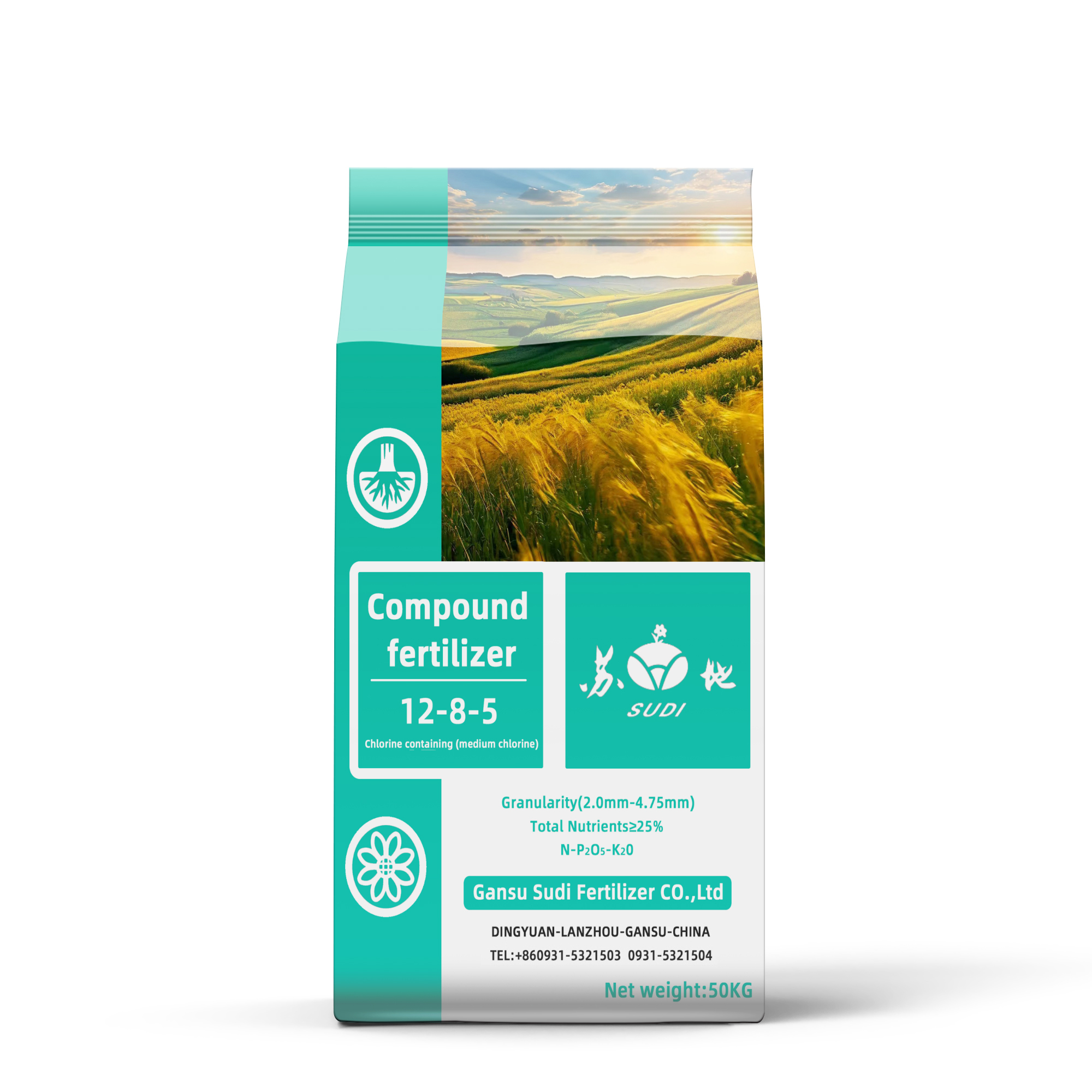
Potassium chloride (MOP) serves as the primary potassium source in many standard formulations. It brings massive cost advantages to large-scale farming operations. Extracting and processing MOP costs less than manufacturing sulfate alternatives. A chloride-based compound fertilizer works perfectly for highly tolerant field crops. Maize, sorghum, and cotton handle chloride exceptionally well. They thrive on this cost-effective nutrient delivery system. You save money while maintaining robust crop yields. For vast acreage where input costs dictate profitability, chloride formulations represent the smartest financial choice.
Not all plants tolerate chloride well. You must identify chloride-sensitive crops early in your planning phase. Tobacco, specific tree nuts, and certain potato varieties suffer from severe chloride toxicity. Leaves may curl and burn. Starch content drops. Yields can decline significantly. When growing these sensitive varieties, transition to sulfate-based (SOP) alternatives. SOP acts as a premium cash crop fertilizer. It protects sensitive yields from chemical stress, ensuring high market value.
You must also watch out for soil salinity buildup. Continuous chloride application in arid regions poses serious agronomic risks. Without sufficient rainfall to leach salts away from the root zone, soil health degrades over time. Plants struggle to absorb water. Always rotate formulations if your region experiences prolonged drought or relies heavily on saline irrigation water.
Formulation Comparison Guide | ||||
Formulation Type | Primary K Source | Best Fit Crops | Economic Profile | Salinity Risk |
|---|---|---|---|---|
Chloride-Based (MOP) | Potassium Chloride | Maize, Cotton, Sorghum | Highly Economical | Moderate to High |
Sulfate-Based (SOP) | Potassium Sulfate | Tobacco, Tree Nuts, Potatoes | Premium Pricing | Low |
Chemical composition only tells half the story. Physical quality dictates actual field performance. Uniform granular NPK fertilizer is mandatory for mechanized broadcasting. Irregular shapes cause highly uneven spread patterns. You must evaluate the crush strength of the granules during vendor selection. Weak granules break apart easily under pressure. They create excessive dust during bulk transport and silo storage. Dust blows away in the wind, wasting your financial investment. It also clogs spreader mechanisms, forcing costly downtime during critical planting windows.
Crops need nutrients at specific growth stages. You must assess water solubility rates carefully. High solubility ensures immediate nutrient availability for fast-growing crops. However, it also increases the risk of leaching during heavy spring rains. Finding the right physical balance is crucial. Many manufacturers market "slow-release" capabilities to justify higher prices. Evaluate these claims skeptically. True slow-release mechanisms require certified polymer or sulfur coating technologies. Uncoated compound blends usually dissolve quite quickly. Do not pay price premiums for unverified slow-release promises.
Ambient moisture ruins bulk fertilizer rapidly. The industry standard threshold for moisture sits strictly below 2%. Anything higher invites immediate trouble. High moisture leads to severe caking. Granules fuse into massive, unusable blocks inside your storage bins. Evaluate the manufacturer's specific use of anti-caking agents. Good anti-caking treatments coat each individual granule thoroughly. They repel ambient moisture effectively. This simple chemical barrier prevents massive inventory loss, especially in humid or tropical climates.
Keep these quality checks in mind when sampling products:
Squeeze a handful of granules tightly to test basic physical crush strength.
Submerge a measured sample in water to observe the exact dissolution rate.
Review technical spec sheets for strict moisture limits (guaranteed under 2%).
Inspect the bag bottoms for excessive fine dust accumulation.
Buying the right fertilizer blend is just the beginning. Field application introduces entirely new challenges. You must recalibrate your broadcast spreaders specifically for this new blend. Every fertilizer has a unique bulk density. The 12-8-5 blend differs from a standard 15-15-15 density. Skipping recalibration guarantees uneven application across your fields. Some areas will burn from excess nitrogen. Other areas will suffer from severe nutrient deficiency. Take the time to adjust the power take-off (PTO) speed and gate openings accordingly.
Strategic rollout planning maximizes your return on investment. Determine if you will use the product as a basal application or a top-dressing. Basal applications establish early root zones right at planting. Top-dressing pushes vegetative growth later in the season. Base this strategic decision on seasonal rainfall patterns and crop growth cycles. Heavy spring rains might wash away early basal applications. Wait for stable weather windows to protect the nitrogen content from volatilization.
Warehousing bulk field crop fertilizer requires strict operational protocols. Poor storage environments degrade chemical stability quickly. Prevent hygroscopic moisture absorption over long winter months. Keep the product entirely off bare concrete floors. Use wooden pallets and thick polyethylene moisture barriers. Ensure the warehouse maintains excellent cross-ventilation. Proper storage preserves granule integrity and flowability until planting season finally arrives.
Choosing a trustworthy manufacturer removes major operational risks. You need a rigorous procurement checklist to vet potential suppliers properly.
Batch Consistency
Never rely on a single marketing sample. Request historical Certificate of Analysis (CoA) documentation from the supplier. This paperwork verifies the actual N-P-K ratio. It proves the blend strictly adheres to the 12-8-5 claim across multiple production runs. Consistent manufacturing processes yield consistent CoAs. Fluctuating ratios indicate poor factory quality control.
Heavy Metal Compliance
Safety standards protect your land and your future market access. Ensure the fertilizer passes strict regulatory limits for heavy metals. Cadmium, lead, and arsenic levels must remain extremely low. This compliance is critical for long-term soil health. It also ensures crop marketability in highly regulated global export markets. Ask for independent third-party lab results.
Supply Chain Reliability
A great product means nothing if it arrives late. Evaluate the vendor’s delivery capacity thoroughly. They must perform well during chaotic peak planting seasons. Discuss their pricing structures transparently. Compare the benefits of spot buying versus forward contracting. Forward contracting locks in prices and secures your supply early, protecting you from sudden market price spikes.
Red Flags
Learn how to spot unverified agronomic promises. Avoid vendors who guarantee specific percentage yield increases. Crop yield depends heavily on unpredictable weather and changing soil conditions. Honest suppliers discuss realistic potentials, not impossible guarantees. If a salesperson promises a 30% yield bump regardless of drought, walk away immediately.
Vendor Evaluation Criteria | ||
Checklist Item | What to Verify | Risk if Ignored |
|---|---|---|
CoA Documentation | Consistent 12-8-5 ratios across past batches | Applying incorrect nutrient volumes to fields |
Heavy Metals Test | Cadmium and Lead below national safety limits | Soil contamination and rejected crop yields |
Delivery Capacity | Proven logistics track record during spring rush | Missed planting windows and lost revenue |
Anti-Caking Additives | Presence of quality organic or amine coatings | Severe product clumping inside storage silos |
Selecting the right 12-8-5 formulation demands careful thought and rigorous evaluation. You must constantly balance crop tolerance, granular quality, and vendor reliability. Focusing purely on the chemical ratio is a common mistake. Physical properties, crush strength, and supply chain transparency matter just as much. Protect your fields by matching the right chloride or sulfate base to your specific crops.
Take decisive action today to secure your upcoming planting season. First, review your most recent soil test data to confirm your exact nitrogen and phosphorus gaps. Next, request standardized CoAs from a shortlist of two to three thoroughly vetted suppliers. Finally, compare their anti-caking treatments and delivery schedules. By applying this evidence-based approach, you will optimize your fertilizer investment and drive healthier, more profitable crop yields.
A: No, it is not universally applicable. You must match it to specific soil baselines and crop tolerances. It provides excellent vegetative growth for nitrogen-heavy crops like corn and wheat. However, chloride-based versions can harm sensitive plants. Always check your soil's existing potassium levels before widespread application.
A: The industry standard benchmark for moisture content is strictly below 2%. Anything higher drastically increases the risk of caking. Excess moisture degrades granular integrity during transport and storage, causing the product to clump and ultimately clog your mechanized broadcasting equipment.
A: Shelf life depends heavily on anti-caking treatments and your storage environment. High-quality blends stored in dry, well-ventilated silos can last over a year. However, high humidity environments degrade untreated granules within a few months. Always use strong moisture barriers and wooden pallets.
A: Typically, no. High-value crops like tobacco, tree nuts, and specific potatoes are highly sensitive to chloride toxicity. While standard field staples tolerate chloride well, sensitive cash crops require premium sulfate-based (SOP) alternatives to prevent leaf burn and protect overall crop marketability.

