
Please Choose Your Language


Views: 0 Author: Site Editor Publish Time: 2026-08-30 Origin: Site


Agriculture is experiencing a critical shift. Standard NPK applications are no longer enough. Atmospheric sulfur depletion forces us to rethink crop nutrition. Clean air regulations have successfully reduced acid rain. However, they also removed a free source of atmospheric sulfur for your fields. Now, growers face a distinct purchasing challenge.
You must select a formula aligning with immediate crop uptake requirements. You want to avoid causing severe soil acidification. You must also prevent expensive leaching losses. Finding this balance requires a strategic approach to agronomy and procurement.
This article provides a rigorous, evidence-based framework. We will help you evaluate sulfur based compound fertilizer specifications thoroughly. You will learn how to assess operational compatibility for your farm. We will also show you how to verify supplier credibility. By applying these standards, you ensure optimal plant health and maximize your return on investment.
You cannot purchase the right fertilizer without understanding your soil constraints first. Applying the wrong sulfur source wastes money. It also risks damaging your soil profile over time.
Your current soil pH dictates your ideal choice of sulfur. Soils rely on organic matter mineralization to supply natural sulfur. However, cold or excessively wet soils slow this microbial process down. This creates temporary nutrient deficiencies in early spring.
You must monitor soil acidification risks. Low-pH soils are particularly vulnerable. When you apply certain elemental sulfur compounds, they oxidize. This biological process releases hydrogen ions into the soil. These ions lower your soil pH further. If your fields already test below 6.0 pH, you must choose your formulations carefully. Relying heavily on elemental forms requires compensatory lime applications.
Different crops demand drastically different sulfur volumes. You must match your application strategy to these biological realities. Agronomists divide crops into two primary categories based on sulfur needs.
You must align application timing with peak vegetative growth phases. Late applications fail to influence yield in high-demand crops.
Sulfate is highly mobile in the soil profile. It behaves much like nitrate. Sandy soils and high-rainfall environments elevate your leaching risks significantly. Water moves sulfate down past the active root zone easily.
You must establish a clear financial threshold for application strategies. A single pre-plant application works well in heavy clay soils. However, sandy soils often demand split applications. You might apply a portion at planting. You then side-dress the remainder during the rapid growth phase. This split method prevents costly nutrient loss and protects local waterways.
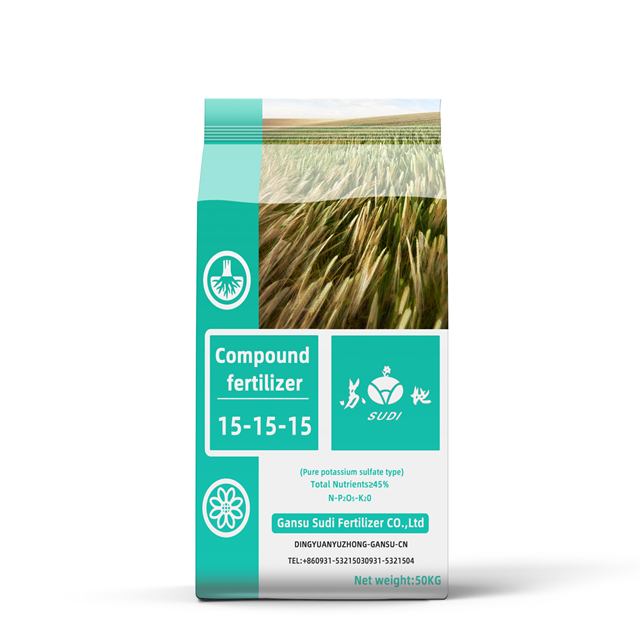
Not all fertilizers perform equally. You must evaluate the chemical and physical traits of any sulfur based compound fertilizer before purchasing. These features directly dictate field outcomes.
The chemical state of your fertilizer determines how fast plants feed. You generally choose between two primary forms.
Sulfate-sulfur is immediately plant-available. Roots absorb it without biological conversion. It works perfectly for spring applications. You use it to correct visible deficiencies rapidly. If your tissue tests show immediate stress, sulfate is your best response.
Elemental sulfur acts differently. Plants cannot absorb it directly. Soil microbes must oxidize it into sulfate first. This process requires warm, moist soils. It acts as a natural slow-release source. Elemental forms suit fall applications beautifully. They also support long-season crops by feeding them gradually.
Common Mistake: Applying elemental sulfur in cold, early spring soils to fix an active deficiency. The microbes are too sluggish to convert it in time.
Balanced formulations streamline your operations. Applying a compound fertilizer 15 15 15 sulfur allows single-pass applications. You provide baseline nitrogen, phosphorus, and potassium alongside essential sulfur. This synergy saves fuel and reduces field compaction.
Agronomists emphasize the nitrogen-to-sulfur (N:S) ratio strongly. Most crops target an N:S ratio between 10:1 and 15:1. Plants need sulfur to metabolize nitrogen efficiently. If sulfur is missing, nitrogen remains unused in the plant tissue. This stalls protein synthesis and depresses final yield grades.
Chemical composition means nothing if the physical granule fails. You must demand high physical specifications from manufacturers.
Below is a summary chart comparing the two primary sulfur forms.
| Chemical Form | Availability Speed | Best Application Season | Leaching Risk | Soil pH Impact |
|---|---|---|---|---|
| Sulfate-Sulfur | Immediate | Spring / In-Season | High (in sandy soils) | Neutral / Negligible |
| Elemental Sulfur | Slow (Microbial) | Fall / Pre-plant | Low | Lowers pH over time |
Buying the right fertilizer is only half the battle. You must apply it efficiently. Field realities often complicate perfect agronomic plans.
You must assess corrosion risks carefully. High-sulfur materials frequently degrade standard application gear. Sulfate salts attract moisture, which accelerates metal oxidation. You should wash spreaders daily when running these products. Upgrading to stainless steel hopper components often yields a strong return on investment.
Bulk density matters for calibration. You must ensure the fertilizer bulk density matches your existing calibration charts. A product that is too light or too heavy ruins your spread pattern. Whether broadcasting or banding, inaccurate rates destroy yield consistency.
Poor storage ruins premium fertilizer. You must address hygroscopicity proactively. Many compound formulas absorb moisture from the air readily. You must specify climate-controlled or heavily tarped bulk storage. This prevents severe caking in the bin.
Handling safety requires strict protocols. Elemental-heavy blends pose specific risks. Elemental sulfur dust is highly combustible. You must control dust generation in enclosed spaces. Eliminate sparks, prohibit smoking, and ensure aggressive ventilation in your storage facilities.
Many operations mix compound fertilizers on-site. You might blend them with additional urea, DAP, or MAP. You must review chemical incompatibilities first. Mixing urea with certain high-sulfur compounds can trigger rapid moisture release. The pile turns to soup within hours. Always perform a small jar test before mixing large bulk batches.
Best Practice: Ask your agronomist for a documented compatibility matrix before blending new compound fertilizers with standard nitrogen sources.
You face immense risks if your supplier fails. Agronomic success relies on a trustworthy supply chain. You must vet any sulfur based compound fertilizer supplier rigorously.
Demand absolute transparency on heavy metal limits. Fertilizers derived from mined sources often carry trace impurities. You must monitor Cadmium and Arsenic levels closely. Ensure the product complies with strict regional agricultural regulations. Excess heavy metals pollute your soil permanently.
Look for recognized manufacturing standards. ISO certifications indicate controlled production environments. Equivalent domestic standards provide similar peace of mind. Quality assurance prevents toxic surprises.
Bulk blends often segregate in transit. Smaller, denser granules sink to the truck bottom. This ruins your field application uniformity. You must avoid this physical segregation.
Verify how the manufacturer builds the product. The supplier should guarantee uniform nutrient distribution within each granule. A true chemical compound ensures every pellet contains identical N-P-K-S ratios. This "every batch" test guarantees predictable field performance.
A good product means nothing if it arrives late. You must evaluate the supplier's logistical resilience. Ask about minimum order quantities (MOQs). Ensure their MOQs fit your storage capacity.
Analyze lead times during peak spring and fall seasons. Delays cost you critical planting windows. Investigate their inventory buffers. Do they rely entirely on imported raw materials? Domestic production or heavy domestic warehousing mitigates global shipping disruptions.
Avoid suppliers selling vague yield promises. Prioritize partners offering tangible technical support. They should provide comprehensive soil-to-fertilizer matching data. They must understand how their product interacts with your specific soil type.
Look for custom blending options. A superior supplier adapts to your changing field data. Request hard field-trial evidence. Independent agronomic data proves product efficacy far better than marketing brochures.
Choosing the right crop nutrition requires a strict decision matrix. You must accurately match your soil deficiency data with precise specifications. Evaluate both the chemical form and the physical granule integrity. Ignoring these details compromises plant health.
Remember, the cheapest per-ton option rarely represents the best value. Substandard products often incur heavy hidden costs. You will pay for nutrient leaching, uneven field application, and severe equipment corrosion eventually.
Take action today to protect your yields. Contact your shortlisted suppliers immediately. Request a guaranteed analysis sheet for their products. Ask for a physical sample to test granule hardness and solubility. Rigorous vetting now secures profitable harvests later.
A: Sulfate-sulfur is immediately available for plant roots to absorb. It corrects active deficiencies rapidly. Elemental sulfur requires biological conversion. Soil microbes must oxidize it into sulfate first. This process takes time, making elemental sulfur a slow-release nutrient source better suited for early fall applications.
A: You should use this blend for foundational pre-plant fertility. It excels when your soil requires a balanced dose of nitrogen, phosphorus, and potassium. The added sulfur ensures plants metabolize the nitrogen efficiently. It provides an excellent, single-pass nutrient baseline for early vegetative growth.
A: Yes, but it depends on the chemical form. Elemental sulfur actively lowers soil pH over time. Microbial oxidation releases hydrogen ions, increasing soil acidity. Conversely, sulfate forms have negligible acidifying effects. You must monitor low-pH soils closely if using elemental products heavily.
A: You must request several critical documents before purchasing. Ask for the Guaranteed Analysis to verify exact nutrient percentages. Demand Heavy Metal Test Results to ensure regulatory compliance. Always secure the Safety Data Sheet (SDS) for handling protocols. Finally, request crush-strength and solubility specifications.

