
Please Choose Your Language


Views: 0 Author: Site Editor Publish Time: 2026-10-10 Origin: Site


Precision agriculture requires exact nutrient delivery. Generic blends often fail to fix specific soil deficiencies. This leaves crops undernourished and yields flat. Buyers frequently face delayed quotes and misaligned products because of vague procurement specifications. How do you structure your request for custom agricultural inputs effectively? Let us break this down from a production engineering perspective.
Looking at the global agricultural sector, a massive shift toward prescription-based crop nutrition is underway. Driven by volatile raw material costs and strict environmental runoff regulations, commercial farms are abandoning one-size-fits-all commodities. Instead, agronomic teams now demand high-efficiency, tailored inputs designed to maximize yield per hectare while minimizing ecological impact. This industry evolution means procurement managers must act as technical liaisons. You must translate raw field data into precise chemical manufacturing briefs.
Commercial agricultural procurement demands absolute precision. For regional distributors and large-scale farming enterprises, the request for quote process is the foundational step in securing high-quality inputs. However, a persistent bottleneck in the global supply chain remains the submission of incomplete formulation briefs to production facilities.
Accurate upfront communication prevents catastrophic manufacturing mistakes. From my years observing factory floors, a missing parameter often means a ruined batch. Picture a scenario where a buyer simply requests a standard 20-20-20 blend without detailing the nutrient sources, physical state, or water solubility requirements. In this vacuum of information, the supplier is forced to make assumptions. These operational guesses can result in a custom NPK compound fertilizer that clogs expensive drip irrigation systems, alters soil pH unfavorably, or completely fails to meet local heavy metal import regulations.
Commissioning a bespoke formula differs fundamentally from purchasing standard catalog products. It is a highly collaborative engineering process. A meticulously detailed brief accelerates the quoting phase and drastically reduces back-and-forth email chains. By providing comprehensive data, buyers empower the factory to act as a technical consultant. This ensures the final chemical makeup aligns perfectly with both agronomic targets and strict commercial budgets.
The most fundamental piece of intelligence any fertilizer manufacturer requires is the exact nutritional breakdown of the desired product. This requirement goes far beyond standard percentages. It delves deeply into the specific chemical sources of each individual element.
The macronutrient ratio dictates the primary biological function of the blend. Buyers must format their request clearly, typically utilizing the standard N-P-K sequence like 15-15-15 or 12-24-12. Yet, merely stating the ratio is only the starting line. Specifying the raw material source is equally critical for determining accurate pricing and ensuring field performance.
For nitrogen, the buyer must articulate whether the element should be derived from urea, ammonium sulfate, or ammonium nitrate. While urea remains highly cost-effective, it is prone to rapid volatilization in hot climates. Conversely, ammonium sulfate provides an excellent secondary source of sulfur and proves highly beneficial for neutralizing alkaline soils. When it comes to phosphorus, common sources include monoammonium phosphate and diammonium phosphate. Agronomists frequently prefer monoammonium phosphate for maintaining a slightly lower, more favorable soil pH immediately surrounding the dissolving granule. Finally, the choice of potassium is arguably the most critical decision in custom formulation. It directly impacts long-term crop safety.
Intensive farming rapidly depletes soils of vital secondary macronutrients. If regional soil tests indicate historical deficiencies, the procurement brief must detail the required percentages of calcium, magnesium, or supplementary sulfur. Incorporating magnesium is absolutely crucial for robust chlorophyll production in leafy greens. Meanwhile, adequate calcium levels prevent devastating physiological disorders like blossom-end rot in commercial tomato operations.
Although trace elements are required in seemingly microscopic quantities, they are indispensable for overall plant resilience. Buyers must explicitly list requirements for zinc, iron, boron, copper, manganese, and molybdenum. Furthermore, identifying the chemical state of these elements is vital. In highly alkaline soils, trace elements frequently need to be chelated using agents like EDTA or EDDHA. This chemical protection prevents them from becoming locked in the soil matrix and rendered unavailable to the root system.
| Nutrient Category | Common Elements | Preferred Chemical Sources | Primary Agronomic Function |
|---|---|---|---|
| Primary NPK | Nitrogen, Phosphorus, Potassium | Urea, MAP, DAP, SOP, MOP | Vegetative growth, root mass development, fruiting |
| Secondary | Calcium, Magnesium, Sulfur | Calcium Nitrate, Magnesium Sulfate | Cell wall structural integrity, enzyme activation |
| Trace Elements | Zinc, Iron, Boron, Copper | EDTA-Chelates, Borax, Sulfates | Hormone synthesis, natural disease resistance |
Helping the production facility understand the required physical and chemical architecture ensures the finished product performs exactly as intended. This applies to both mechanical field application and prolonged warehouse storage.
Procurement managers must clearly state their preference regarding the underlying manufacturing methodology. This choice heavily influences both the final invoice and the uniformity of nutrient distribution across the acreage.
A true compound fertilizer is synthesized through a complex chemical reaction or an advanced granulation process like rotary drum granulation. In this highly controlled format, every single granule contains the exact specified ratio of nutrients. This guarantees highly uniform nutrient distribution across the field and effectively prevents localized deficiency pockets. While it represents the gold standard for precision agriculture, it generally carries a higher manufacturing overhead.
In contrast, a BB fertilizer consists of a physical mix of distinct individual nutrient granules. Imagine mixing white urea pearls with brown diammonium phosphate and red potassium chloride chunks. While this physical blending method is incredibly cost-effective and allows for the rapid turnaround of small custom batches, it introduces a risk of segregation during long-haul transport. Lighter granules may gradually separate from heavier ones due to road vibrations. Buyers must carefully weigh their operational budget against strict uniformity requirements.
The selection of the base potassium material serves as a non-negotiable safeguard against widespread crop toxicity. Certain high-value cash crops including premium tobacco, potatoes, vineyard grapes, and citrus fruits are notoriously sensitive to chloride ions.
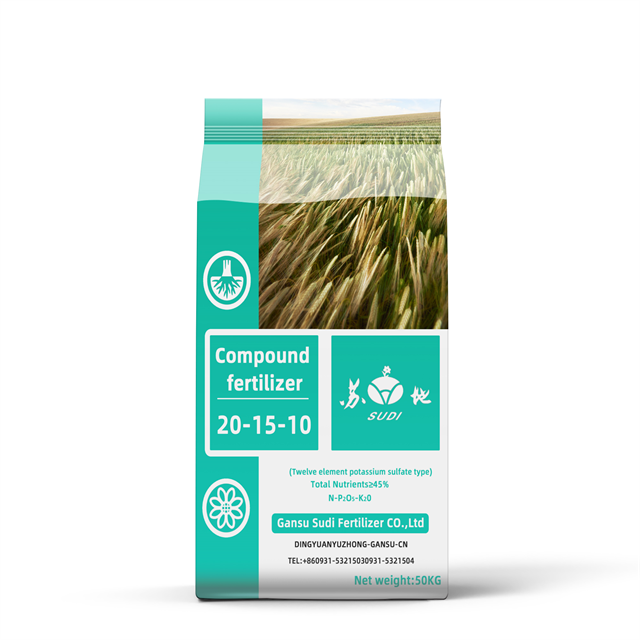
Take a 20-15-10 formulation as an industry benchmark. If a buyer's brief lacks specific instructions, factories will almost certainly default to using potassium chloride simply because it is significantly cheaper on the global commodities market. Applying a standard chlorine-based product to sensitive orchards can trigger severe chloride toxicity. This manifests as scorched leaf edges, stunted yields, and degraded fruit quality. To circumvent this disaster, buyers operating within these high-stakes agricultural sectors must explicitly demand a sulfur-based compound fertilizer formulated with potassium sulfate. A 20-15-10 sulfur-based mix not only eliminates the chloride threat but simultaneously provides a highly bioavailable source of sulfur to naturally enhance protein synthesis within the plant.
The physical characteristics of the agricultural input dictate how it handles during maritime transport and how it interacts with heavy farming machinery. Ultimately, it determines how efficiently it dissolves into the soil matrix.
To avoid equipment blockages, buyers must specify the exact physical state required for their intended application method. Granular forms ranging from 2 to 4 millimeters in diameter serve as the industry standard for mechanical broadcasting. They offer exceptional flowability and resist wind drift effectively. Prilled versions are smaller and smoother, dissolving slightly faster. This makes them ideal for rapid top-dressing. Meanwhile, crystalline or powder forms are reserved almost exclusively for fertigation or foliar spraying due to their instantaneous dissolution rates.
Specifically, operational briefs should define requirements for crush strength measured in Newtons. When a warehouse worker stacks 50-kilogram bags on a pallet, a low crush strength means the bottom bags will turn to dust before they ever reach the tractor. We recommend a minimum crush strength of 15 to 25 Newtons for standard mechanical broadcasting. For shipments destined for humid tropical climates, mandating the addition of anti-caking treatments is absolutely essential. Oil-based coatings or inert talc powders prevent the cargo from hardening into unusable solid blocks during oceanic transit.
If the end-user plans to inject the nutrients through delicate drip irrigation tapes or advanced hydroponic systems, the buyer must explicitly state that the formula must be completely water-soluble. Standard field-grade inputs contain insoluble carrier clays and impurities. These will rapidly clog fine irrigation emitters and lead to catastrophic system failures. Specifying a water-soluble grade legally binds the manufacturer to utilize only highly refined, impurity-free raw materials.
Providing the manufacturing partner with robust agronomic context transforms a standard transaction into a highly valuable consultative partnership. While factories will execute the requested chemical formula, understanding the ultimate end-use allows their internal agronomists to suggest highly beneficial adjustments.
Different plant species exhibit vastly different nutrient uptake curves throughout their lifecycles. Leafy greens require sustained nitrogen availability to maintain vegetative growth. Fruiting vegetables like peppers demand massive potassium spikes during their reproductive stages. Furthermore, clarifying the intended application stage is vital. An input intended for basal dressing applied deep into the soil before planting greatly benefits from a slower release profile. Conversely, a top-dressing formula applied during peak summer growth demands immediate nutrient availability.
Soil chemistry heavily dictates actual nutrient availability. By sharing regional soil test results, the buyer enables the manufacturer to fine-tune the formula. For heavily acidic soils, the research and development team might suggest substituting acidic nitrogen sources with alkaline alternatives. In saline or coastal soils, deliberately avoiding raw materials with high salt indexes becomes a top priority to prevent inducing osmotic stress on fragile root hairs.
The mechanical reality of how the farmer will physically deploy the product dictates several physical tolerances. These must be communicated clearly to the production facility.
In agricultural zones plagued by heavy seasonal rainfall or characterized by highly porous sandy soils, standard water-soluble nitrogen can easily wash below the root zone. This leaching leads to both severe financial loss and downstream environmental pollution. Consequently, buyers should specify if their environment necessitates slow-release technologies. This might involve polymer-coated urea, sulfur-coated urea, or the precise chemical incorporation of nitrification inhibitors. These advanced technologies guarantee a prolonged, steady release of nutrients that perfectly matches the biological demand curve of the crop.
The specific type of machinery utilized for application directly dictates the necessary physical durability of the granules. Drone application requires highly uniform, perfectly spherical granules with a specific bulk density to ensure accurate software calibration. Dust must be kept to an absolute minimum to protect sensitive drone rotors. Tractor-mounted broadcasters demand exceptionally high crush strength to withstand the violent mechanical force of spinning spreader discs without shattering. Pneumatic seeders demand strict moisture control and premium anti-caking properties to prevent disastrous blockages inside the air tubes.
Commercial and logistical parameters are just as critical to a successful transaction as the chemical formula itself. These specific variables directly influence the final pricing provided in the official quotation.
Custom formulations require factories to completely halt standard production lines. Operators must meticulously clean heavy equipment to prevent cross-contamination and recalibrate machinery for a brand-new recipe. As a result, minimum order quantities for custom blends are strictly enforced by all reputable suppliers. Buyers should clearly state both their initial trial order size and their projected annual volume. Forecasting a substantial annual volume often provides significant leverage for negotiating better per-ton pricing.
Agricultural packaging must be tough enough to withstand harsh environmental exposure and incredibly rough manual handling. Buyers must detail their exact bag size preferences. Options typically include 9.9-kilogram, 25-kilogram, 50-kilogram, or 1000-kilogram flexible intermediate bulk containers. Interestingly, the 9.9-kilogram size is frequently requested specifically to bypass strict local labor laws regarding maximum manual lifting limits.
Regarding materials, the global industry standard is polypropylene woven bags equipped with an internal polyethylene liner acting as a critical moisture barrier. For branding, buyers must supply high-resolution artwork and specific language requirements for the bag printing. Local agricultural ministries often mandate that specific agronomic warnings and guaranteed analysis charts be printed prominently in the native language of the region.
| Packaging Type | Typical Weight | Best Use Case | Container Capacity 20ft FCL |
|---|---|---|---|
| Small Woven Bags | 10kg - 25kg | Retail distribution, smallholder farms, manual labor | 25 - 27 Metric Tons |
| Standard Woven Bags | 50kg | Commercial farms, standard warehouse handling | 25 - 27 Metric Tons |
| Jumbo Bags | 1000kg - 1200kg | Mechanized handling, large estates, bulk transport | 20 - 24 Metric Tons |
International trade in agricultural chemicals is heavily monitored to protect both environmental ecosystems and human health. Ensuring the final product can legally and smoothly cross international borders is the final, yet most critical, step in the formulation brief.
The long-term soil accumulation of toxic heavy metals is a pressing global concern. Different nations enforce wildly varying, strict limits on heavy metals such as cadmium, lead, arsenic, chromium, and mercury. For instance, the European Union maintains notoriously stringent regulations regarding cadmium limits in phosphate-based inputs. Buyers must provide their specific local regulatory limits to the manufacturer upfront. Armed with this data, the supplier will carefully select raw materials that strictly comply with these legal thresholds.
Clearing customs quickly often requires a stack of specific documentation far beyond a standard commercial invoice. Buyers must outline their exact documentation needs during the initial quoting stage. This typically includes Certificates of Analysis provided by the internal laboratory of the factory. More importantly, it often requires third-party inspection reports from trusted international auditing firms like SGS or Bureau Veritas. These agencies independently confirm the nutrient content and cargo weight before the goods are loaded onto the vessel.
When placing a bulk order for a highly specific agricultural input, selecting the right manufacturing partner is just as critical as perfecting the formulation itself. A reliable supplier acts as a direct extension of your agricultural business. B2B buyers must critically evaluate potential suppliers across several strict operational dimensions to mitigate the heavy risks associated with poor quality control or non-compliance with local agricultural laws.
The foundation of a premium agricultural input lies entirely within the research infrastructure of the supplier. You are not simply buying off-the-shelf goods. You are commissioning a precise chemical mix tailored to highly specific agronomic contexts. An elite production facility employs dedicated chemical engineers capable of reviewing your soil data. They should be proactive in catching potential errors before production begins. Furthermore, their laboratory facilities must be equipped to develop small-batch trial samples. This allows you to physically verify water solubility and granule integrity before committing substantial capital to mass production.
Agricultural timelines are notoriously unforgiving. Missing a narrow planting window due to supply chain delays can result in devastating yield losses. Therefore, procurement teams must rigorously audit the annual production capacity and specific equipment capabilities of the factory.
It is essential to confirm whether the facility is actually equipped for the specific type of product you require. Producing a true chemical compound requires advanced reaction towers or massive rotary drum granulation systems. This complex process demands sophisticated, computerized temperature and moisture controls. If the factory relies on outdated manual mixing, the resulting dust levels and inconsistent granules will ultimately fail in the field.
Quality control cannot be treated as an afterthought when dealing with potent agricultural chemicals. Substandard blends can lead to severe soil toxicity or widespread crop death. Buyers should always request detailed documentation of internal testing protocols.
Key testing parameters must include High-Performance Liquid Chromatography to confirm the exact percentages of nitrogen, phosphorus, potassium, and trace elements. Physical properties must be tested via crush strength machines to ensure granules survive mechanical broadcasting. Finally, strict contaminant screening for heavy metals is non-negotiable.
A well-prepared procurement manager secures significantly better pricing, faster quotes, and a vastly superior final product. By providing precise nutrient ratios and detailed trace element requirements, you eliminate costly manufacturing guesswork. Deliberately choosing the right base materials protects your most valuable cash crops from chemical toxicity. Furthermore, outlining clear packaging details and compliance limits ensures smooth global logistics and uninterrupted delivery to the farm gate. Whether you need a specialized sulfur-based mix or a large-scale bulk blending run, partnering with an experienced factory is non-negotiable. Ready to optimize your crop yields? Visit https://www.sudifertilizer.com to explore our full range of customizable agricultural solutions and submit your detailed request today.
The minimum order quantity for customized agricultural nutrients heavily depends on the complexity of the requested formula and the specific production methods utilized by the factory. Generally, reputable industrial facilities set the threshold between 20 to 50 metric tons. This volume roughly equates to one or two standard 20-foot shipping containers. To manufacture a custom chemical compound, the facility must completely halt existing production lines, thoroughly clean the rotary drums to prevent cross-contamination, and recalibrate the machinery for your specific ratios. For purely physical bulk blends, the requirement might be slightly lower, occasionally starting at 10 to 15 metric tons.
The production timeline is typically divided into two distinct operational phases: formulation approval and mass manufacturing. During the initial phase, which usually takes 7 to 14 days, the engineering team analyzes your requirements and produces a lab-scale sample for testing. Once the buyer officially approves the physical sample and the Certificate of Analysis, mass production commences. This second phase generally requires 2 to 4 weeks. Buyers should always factor in an additional 2 to 3 weeks for international ocean freight and customs clearance.
Yes, requesting a pre-production sample is a standard and highly recommended best practice in B2B procurement. Any credible factory will readily accommodate this request to ensure mutual alignment on all product specifications. Typically, the laboratory will produce a small batch ranging from 1 to 5 kilograms of your exact formula. This physical sample allows your agronomists to conduct independent inspections to assess the granule size distribution and verify the effectiveness of the applied anti-caking coating.
The decision hinges entirely on your operational budget, application method, and the specific agronomic needs of the acreage. A bulk blended product is created by physically mixing individual granules together. This method is highly cost-effective and offers unparalleled flexibility for smaller custom batches. However, buyers must be aware of potential nutrient segregation during mechanical broadcasting. Conversely, a chemically reacted compound ensures that every single granule contains the exact same ratio of nutrients. This offers superior field uniformity but at a noticeably higher manufacturing cost.
Failing to specify the correct base material can have severe agronomic and financial consequences. In standard manufacturing, potassium chloride is frequently used as the default potassium source simply because it is more affordable. However, many high-value cash crops are highly sensitive to chloride. If a standard chlorine-based product is applied to these crops, it can induce severe chlorine toxicity. Symptoms include leaf burn, premature yellowing, and significantly diminished yields. To prevent this, buyers managing sensitive crops must explicitly instruct the factory to formulate using potassium sulfate.
Achieving uniform distribution of micronutrients like zinc, boron, and iron is one of the most complex engineering challenges in custom production. Because these elements are required in minute quantities, simply dumping them into a physical mix leads to severe field inconsistencies. Elite factories solve this through advanced coating technologies or direct chemical incorporation. In a chemical compound process, the trace elements are completely dissolved into the liquid slurry before granulation. In physical blending, advanced facilities utilize liquid binder systems to adhere powdered micronutrients directly to the outer surface of the larger macronutrient granules.
From a strict cost-per-unit perspective, standard granular urea remains the most economical nitrogen source globally. It contains a high concentration of nitrogen at 46 percent, meaning you pay less for shipping carrier weight compared to other sources. However, cost-effectiveness must be weighed against field efficiency. If you are farming in a hot, dry climate where urea is prone to rapid volatilization, blending in ammonium sulfate or utilizing polymer-coated urea might offer a better return on investment by ensuring the nitrogen actually reaches the root zone.
Anti-caking agents are absolutely necessary if your shipment will cross the equator, face prolonged oceanic transit, or be stored in a humid warehouse environment. Certain raw materials, particularly urea and ammonium nitrate, are highly hygroscopic. This means they actively pull moisture out of the air. Without a proper oil-based coating or inert powder dusting, these granules will fuse together under the weight of the stacked bags, turning a 50-kilogram sack into a solid, unusable rock.

