
Please Choose Your Language


Views: 0 Author: Site Editor Publish Time: 2026-08-30 Origin: Site


Transitioning from standard watering to automated nutrient delivery marks a critical upgrade for ambitious growers. You likely want to feed your plants efficiently without damaging your existing drip infrastructure. Enter "fertigation." It remains the proven industry standard for combining daily irrigation and fertilization into one streamlined process. Executed correctly, this method maximizes root nutrient uptake. It also boosts overall crop yield significantly. Conversely, poor execution creates serious problems for any farm or garden. You risk severe chemical precipitation and permanently clogged emitters. You might even cause devastating crop burn if nutrient concentrations spike unexpectedly. We wrote this comprehensive guide to help you navigate these risks safely. Throughout this article, we will explain the exact mechanics of injecting dissolved nutrients directly into your water line. You will discover how to evaluate fertilizer solubility grades accurately. We will also help you select the proper injection hardware for your specific flow rates. Finally, you will learn to implement robust maintenance routines.
Yes, but with strict conditions: Water-soluble fertilizers are ideal for drip systems, provided they are 100% soluble and free of impurities.
Hardware is required: You cannot simply pour fertilizer into a reservoir; a dedicated fertilizer injector (e.g., Venturi or proportional doser) is necessary.
Compatibility matters: Mixing incompatible nutrients (like calcium and sulfates) inside a drip line will cause rapid crystallization and system failure.
Maintenance is non-negotiable: Implementing fertigation requires mandatory pre- and post-feed flushing cycles to protect emitter longevity.
Fertigation transforms static watering systems into dynamic feeding engines. The system injects concentrated liquid nutrients directly into your main pressurized water line. Growers dissolve solid salts into a highly concentrated liquid stock solution first. The irrigation water then carries these dissolved minerals forward through the tubing network. This delivery method pushes a precise nutrient dose directly into the active root zone. Plants absorb liquid nutrients immediately upon contact. They do not have to wait for solid pellets to break down slowly in the topsoil.
Growers see massive business and yield advantages from this targeted delivery approach. You reduce fertilizer runoff significantly. This protects local water tables and prevents wasted financial resources. You also lower labor costs dramatically across your operation. Workers no longer need to broadcast dry amendments by hand under the hot sun. Furthermore, fertigation allows you to micro-dose your plants effectively. You can adjust the exact nutrient profile daily. You match the feeding schedule precisely to specific biological growth stages.
Despite these benefits, a primary operational threat exists. Clogging remains the biggest enemy of any micro-irrigation setup. Drip emitters feature microscopic internal pathways. They release water slowly through a tiny, engineered labyrinth. Even minor undissolved solids will ruin a system quickly. Biological growth also presents a massive danger to infrastructure. Improper fertilizers encourage thick biofilm buildup inside the black polyethylene tubing. Once an emitter clogs entirely, the attached plant will dehydrate and die.
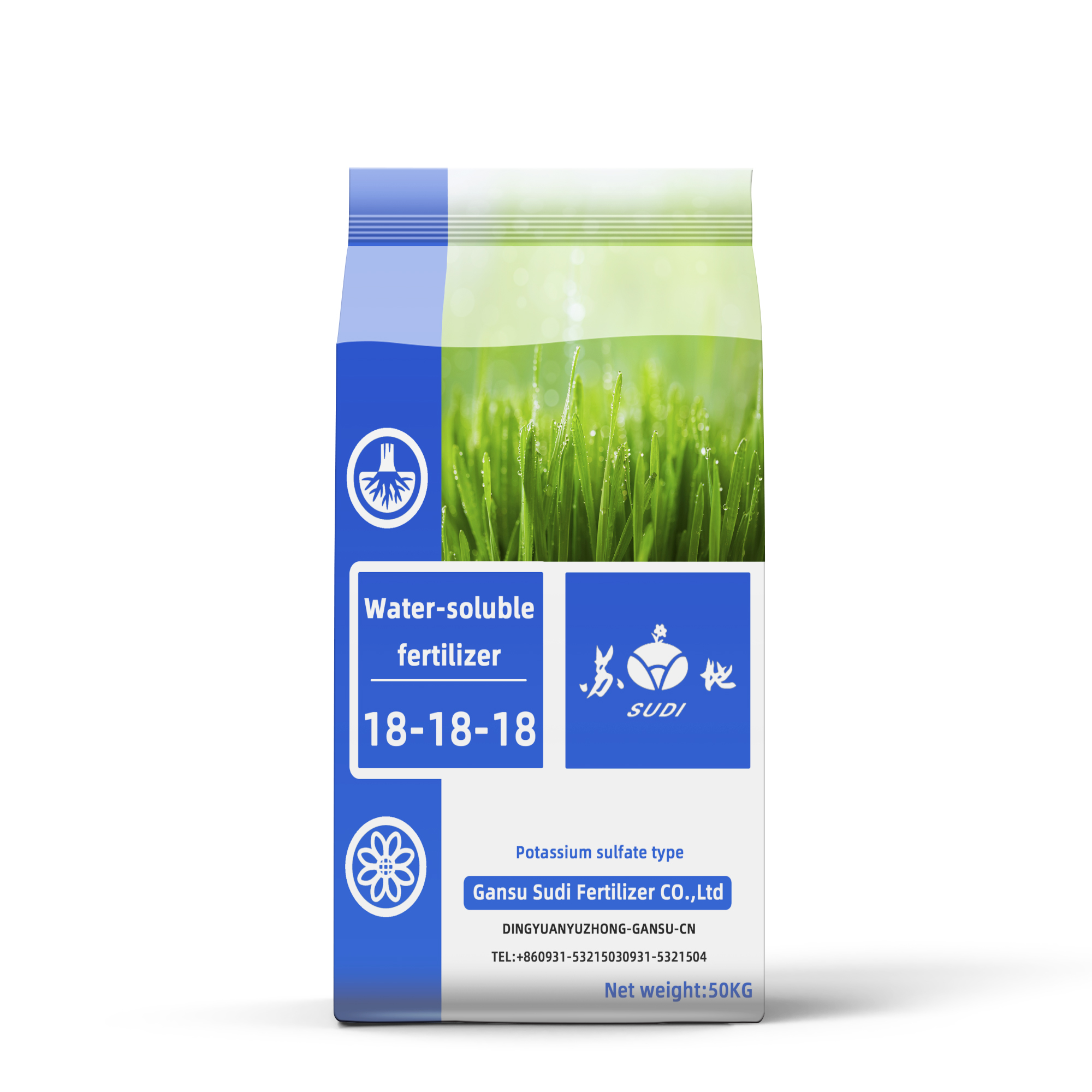
You must select the right fertilizer grade carefully. Not all soluble powders behave the same way under pressure. We differentiate between "Ag-grade" and "Greenhouse-grade" formulas. Ag-grade fertilizers often contain insoluble materials. Manufacturers use clay binders or anti-caking agents to keep the product flowing in large spreaders. These binders will clog drip lines immediately. You must use Greenhouse-grade formulas exclusively. They offer 100% solubility in cold water. Only this highly refined grade is safe for standard drip emitters. Using the correct water soluble fertilizer for drip irrigation prevents catastrophic system failures.
Your plants require different foods at different times in their life cycle. During early development, foliage expansion is your primary goal. We recommend applying a balanced NPK fertilizer like a 20-20-20 blend. This provides equal parts nitrogen, phosphorus, and potassium for vigorous vegetative growth. Later, the plant shifts its energy toward fruiting or flowering. Nitrogen requirements drop significantly during this reproductive phase. You must transition to a high potassium fertilizer instead. This deliberate shift improves crop weight and flower density. It prevents you from pushing excess nitrogen into the plant when it needs structural support.
Chemical incompatibility ruins many fertigation systems every year. You cannot mix certain elements in the same concentrated stock tank. Calcium fertilizers react violently against sulfate or phosphate fertilizers. Calcium ions carry a double positive charge. Sulfate ions carry a double negative charge. If they mix in high concentrations, they bind aggressively. They form solid gypsum or calcium phosphate instantly. This chemical precipitation looks like cloudy milk or white sand. It will cement your drip lines shut permanently. Always keep calcium separate from sulfates and phosphates.
Many growers want to use organic liquid fertilizers in their setups. We must provide an honest, skeptical assessment here. Organic emulsions often cause severe bio-fouling in drip lines. Fish emulsion and liquid kelp contain heavy organic matter. They feed the bacteria living inside your warm irrigation tubing. This bacteria multiplies rapidly and creates a thick, slimy biofilm. In contrast, clean synthetic mineral salts do not feed bacteria. They stay fully dissolved and pass through the system easily. We highly advise against using thick organic liquids in standard micro-irrigation systems.
You cannot simply pour fertilizer into an unpressurized water reservoir. You need dedicated hardware to push nutrients into pressurized lines safely. The market offers two primary solutions for everyday growers.
We consider Venturi injectors the best entry-level solution. A Venturi uses a simple pressure differential to operate. Water restricts slightly as it passes through a tapered pipe section. This restriction creates a strong vacuum effect downstream. The vacuum sucks the liquid fertilizer directly into the flowing line. They boast a very low cost. They contain no moving parts to break or replace. However, they remain highly sensitive to water pressure fluctuations. They offer less precise dosing compared to advanced mechanical pumps. We recommend Venturi systems for small-to-medium home gardens. They also work well for baseline agricultural setups possessing stable, consistent water pressure.
Proportional injectors or dosers represent the modern commercial standard. These units operate as water-motor driven pumps. The flow of water physically powers an internal piston. This piston injects an exact ratio of fertilizer continuously. It works perfectly regardless of flow rate or pressure changes in the main line. They offer incredibly high precision. They are highly scalable and famously reliable. The main drawback is the higher upfront capital investment. They dominate high-yield market gardens. Commercial operations rely on them exclusively. They ensure precise drip irrigation nutrients management across hundreds of acres.
Table: Comparison of Fertilizer Injector Types
Feature | Venturi Injector | Proportional Doser |
|---|---|---|
Power Source | Water Pressure Differential | Volumetric Water Flow |
Initial Cost | Low to Moderate | High Investment |
Precision Level | Variable (Pressure Dependent) | Highly Accurate |
Moving Parts | None | Internal Piston Motor |
Never inject a new fertilizer formulation blindly into your system. You must always perform a preliminary jar test to mitigate risk. Fill a clear glass jar using your specific irrigation water source. Mix in your chosen fertilizer powder at the intended concentration. Stir it well and wait 24 hours. Check the jar under a bright light the next day. Look closely for any cloudiness, suspended flakes, or settling sediment. If sediment appears at the bottom, the mixture is chemically unsafe for your drip system.
You must understand basic dilution ratios to calculate your injection rates. Commercial injectors commonly use ratios like 1:100 or 1:200. A 1:100 ratio means one part fertilizer mixes into one hundred parts water. You must calculate your stock tank concentration carefully based on this metric. Determine your desired parts per million (PPM) at the emitter first. Then, multiply that target PPM by your injector ratio. This mathematical step tells you exactly how many grams to dissolve in the stock tank. Accuracy here prevents accidental crop burn.
You must follow a strict operational sequence during every feeding. We call this the "Water-Fertilize-Water" rule. Adhering to this sequence guarantees long-term system health.
Irrigate with pure water first. This pressurizes your lines fully. It also wets the root zone soil perfectly, preparing it for nutrient absorption.
Inject the fertigation water soluble fertilizer into the system. Let it run until the predetermined dose finishes completely.
Flush the lines heavily with pure water. This ensures no corrosive salts remain inside the tubing. The sun bakes black tubing quickly. If salty water remains inside, the water evaporates and leaves sharp salt crystals behind. Flushing pushes all nutrients out of the emitters safely.
Good maintenance prevents catastrophic clogging down the road. You must install dedicated flush valves at the end of all drip laterals. Open these valves manually once a month during the growing season. Let the water run at full velocity for three to five minutes. This high-speed flow purges loose debris easily. It flushes out any lingering biofilm or soft mineral scale. Routine flushing acts as your cheapest insurance policy against emitter failure.
Mineral buildup happens naturally over time, especially in arid regions. Hard well water leaves calcium carbonate deposits inside the tiny emitters. You should inject mild agricultural acids periodically to combat this. Citric acid or phosphoric acid works beautifully for this task. The acid lowers the irrigation water pH temporarily. It dissolves minor mineral buildup safely without harming the plastic components. Always flush the system thoroughly with clear water after an acid wash.
Filtration is absolutely mandatory for any fertigation setup. You must install a dedicated screen or disc filter. Place this filter strictly downstream of your fertilizer injector. We recommend using a minimum 120-150 mesh screen. The filter catches any accidental particulates escaping from the stock tank. It traps undissolved flakes before they reach your fragile emitters. Check and clean this filter screen weekly to maintain proper water pressure.
Utilizing water-soluble fertilizers in a drip system is a highly efficient practice. However, it requires intentional planning and proper hardware investment. You must also commit to rigorous maintenance routines. You cannot afford to skip the mandatory flushing cycles. By following these established rules, you will maximize your crop yields safely and protect your equipment.
We advise auditing your current system’s flow rate today. Perform a basic jar test using your preferred nutrient line. Take note of any cloudy reactions. Finally, select an injector type matching your budget and required precision. Take action now to upgrade your irrigation efficiency and transform your crop production.
A: No. Standard granular fertilizers contain heavy clay binders. They also feature insoluble materials to prevent clumping. These additives will instantly clog your microscopic drip emitters. Granular formulas are strictly designed for traditional soil broadcasting. Always use 100% soluble greenhouse-grade powders for fertigation.
A: Standard water-soluble mineral salts will not degrade the tubing. Polyethylene handles agricultural chemicals exceptionally well. However, you must protect the plastic from long-term salt exposure. Ensure the system is flushed with clear water after every single application to prevent salt crystallization.
A: The frequency varies by crop and soil type. However, "micro-dosing" generally proves more effective than one massive weekly dose. Micro-dosing involves applying a very weak nutrient solution during every normal watering cycle. This approach keeps soil nutrient levels perfectly stable and prevents leaching.
A: We highly discourage this for standard drip systems. Compost tea contains massive amounts of biological particulate. This organic matter causes rapid bio-fouling and clogging. You can only use compost tea if you install specialized, large-orifice emitters alongside extensive, heavy-duty filtration systems.

