
Please Choose Your Language


Views: 0 Author: Site Editor Publish Time: 2026-10-01 Origin: Site


Farmers and procurement managers often face a common dilemma when sourcing crop nutrients. Both options present balanced NPK profiles, but their differing concentration levels dramatically impact application rates, input budgets, and overall crop safety.
While both formulas share an identical 1:1:1 ratio, their physical volume and chemical intensity vary significantly. Buyers must carefully evaluate their existing spreading equipment, unique soil conditions, and financial constraints before placing a bulk order. Misjudging these factors often leads to wasteful over-application or dangerous fertilizer burn.
This article provides a comprehensive technical and financial framework to guide your decision. You will discover exactly how to choose between a standard 15-15-15 compound fertilizer and a higher-concentration alternative. We will analyze nutrient density, application constraints, and environmental compliance to ensure you optimize your upcoming growing season.
Agronomists rely on standard labeling conventions to understand fertilizer contents. You must deconstruct the label to grasp the core differences. The numbers printed on any agricultural bag represent specific percentages by weight. They indicate Nitrogen (N), Phosphorus (P2O5), and Potassium (K2O). A balanced formula offers these three macronutrients in equal proportions.
However, the total active ingredients differ greatly between these two options. Comparing 15-15-15 vs 18-18-18 fertilizer means analyzing a 45% active mix against a 54% active mix. You might wonder what makes up the remaining weight. In a 15-15-15 blend, 55% of the bag consists of non-NPK materials. In an 18-18-18 blend, this drops to 46%.
These remaining percentages are not simply useless dust. They contain vital carrier materials and conditioners. Manufacturers often include secondary elements like sulfur, calcium, or magnesium. These additives improve soil structure. They also bind the primary nutrients together, ensuring excellent granule stability during transit. High-quality fillers prevent the product from shattering into fine dust before it reaches your fields.
Nutrient Density Breakdown: 15-15-15 vs 18-18-18
| Formulation | Nitrogen (N) | Phosphorus (P2O5) | Potassium (K2O) | Total Active Nutrients | Fillers / Carriers / Secondary Elements |
|---|---|---|---|---|---|
| 15-15-15 | 15% | 15% | 15% | 45% | 55% |
| 18-18-18 | 18% | 18% | 18% | 54% | 46% |
Solubility and release profiles also change as concentration increases. Higher concentration formulas require denser manufacturing processes. This density can alter solubility rates. Granule breakdown speed dictates how quickly nutrients become plant-available. A heavily packed 54% active granule might dissolve at a slightly different rate than a 45% active granule. You must factor this dissolution timeline into your seasonal application schedule.
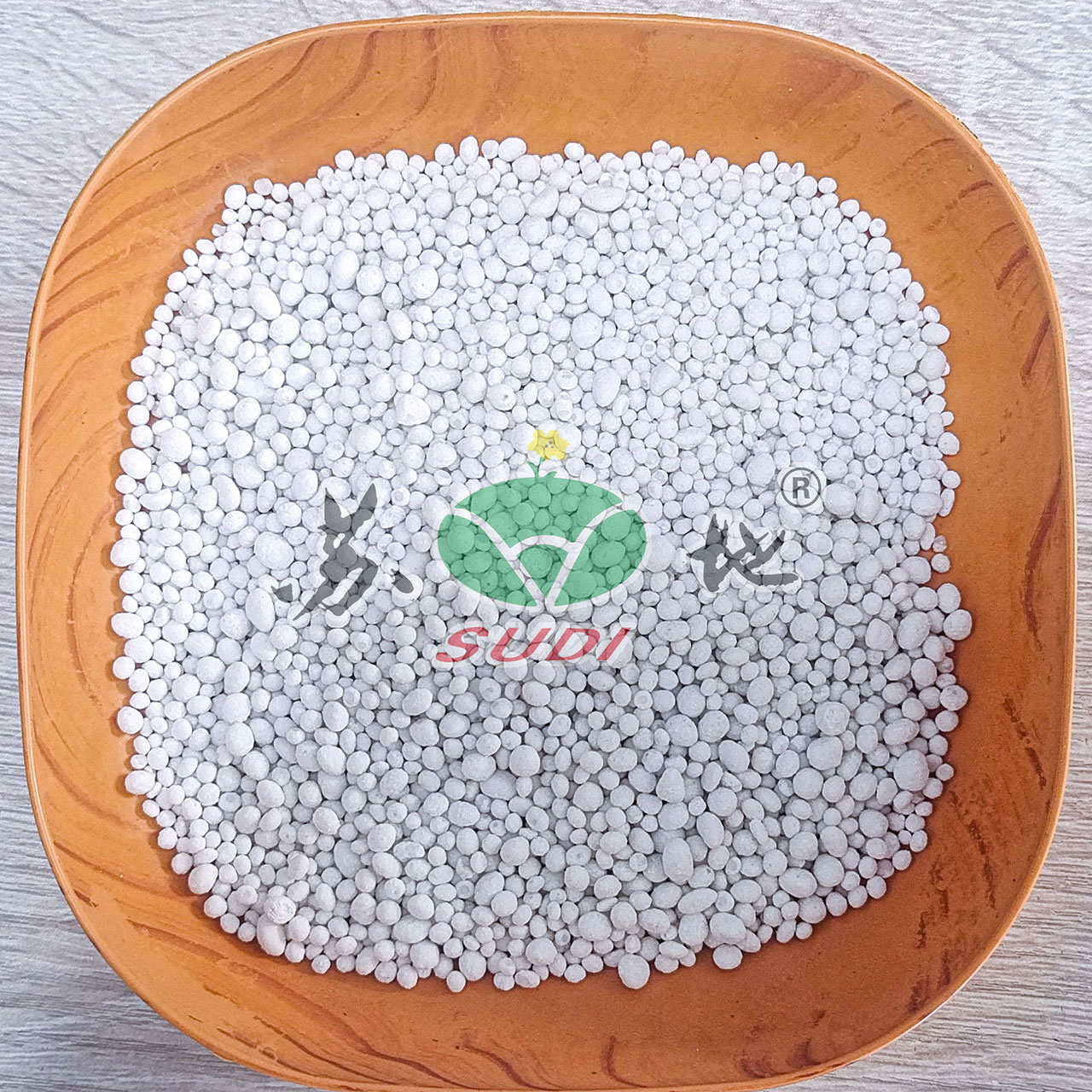
Procurement teams often make a critical mistake when buying bulk nutrients. They look exclusively at the bag price. You must build a framework for calculating returns based on active nutrient cost. Do not judge value by the bulk ton alone.
The 18-18-18 formulation frequently carries a higher sticker price per ton. Yet, it often costs less per acre. You achieve this lower acreage cost through reduced application volumes. Because each granule holds more active nitrogen, phosphorus, and potassium, you spread fewer pounds over the same land area. Smart buyers divide the price per ton by the active nutrient percentage. This reveals the true cost of raw nutritional power.
Logistical advantages heavily favor high-concentration formulas. Farming requires massive material movement. Moving dead weight drains operational budgets rapidly. The 54% active blend offers remarkable logistical efficiency.
You transport significantly fewer bags to meet your agronomic targets. Your warehouse requires less square footage to house the inventory. In the field, tractor operators make fewer stops to refill spreader hoppers. Fewer hopper fills mean less downtime. Less downtime translates directly into lower fuel consumption and reduced labor hours. When managing thousands of acres, these incremental handling savings compound rapidly.
Operational risks escalate alongside nutrient density. You must address the primary agronomic threat: the salt index. Synthetic fertilizers consist of soluble salts. When placed in the soil, they draw moisture away from plant roots. This osmotic stress causes root damage and leaf desiccation.
The 18-18-18 formulation presents a higher potential for phytotoxicity. This root and leaf burn poses a serious threat to sensitive crops. Seedlings are especially vulnerable to high salt concentrations. A slight miscalculation in your spreader settings can scorch an entire field.
Conversely, 15-15-15 offers a more forgiving margin of error. Agronomists often prefer it as a safer starter fertilizer. The extra filler material dilutes the salt effect slightly. It provides a gentler nutrient introduction for young, developing root systems.
Switching between concentrations requires precise mathematical adjustments. You cannot swap these products at a 1:1 ratio. Doing so guarantees poor agronomic outcomes.
The Conversion Formula
This exact mathematical baseline prevents expensive mistakes. You need roughly 56 fewer pounds per acre when utilizing the denser formulation.
However, spreader calibration realities complicate this transition. You face a practical challenge when dialing back spreader settings. You must restrict the gate opening to drop less product. Older or less sophisticated broadcast spreaders struggle with very low flow rates. If the gate opening is too small, the machine may fail to throw granules evenly. This leads to a phenomenon called striping. Your field will show dark green bands of heavy growth separated by pale, unfertilized gaps.
Furthermore, emphasize soil testing prerequisites. Neither formula should be applied blindly. You must base your procurement decision on a recent, scientifically validated agronomic soil test. Confirm that your field genuinely requires a balanced 1:1:1 ratio. Many modern soils only need a single-nutrient amendment. Applying a balanced blend when your soil already has high phosphorus wastes money and triggers environmental hazards.
Modern agriculture operates under intense environmental scrutiny. Nutrient stewardship is no longer optional. It dictates long-term farm viability. Your choice of formulation directly impacts your environmental risk profile.
Regulatory considerations apply equally to both blends, but strict compliance mechanisms favor cautious application. Local environmental regulations govern nutrient limits strictly. Turfgrass phosphorus bans affect landscaping professionals. Agricultural nutrient management plans restrict seasonal tonnage for row crop farmers.
When you utilize the denser option, the volume applied must be meticulously documented. If an operator accidentally applies the old 15% rate while using the 18% product, they will instantly exceed legal acreage limits. Precision record-keeping prevents regulatory fines and protects local watersheds.
Choosing the correct bag requires matching chemical properties to your exact operational realities. Review these operational guidelines to finalize your sourcing strategy.
When to Spec 15-15-15 Compound Fertilizer:
When to Spec 18-18-18 fertilizer:
The choice between these two balanced formulations is not about one being agriculturally superior to the other. Instead, the decision hinges on identifying which product aligns best with your specific operational logistics, application equipment precision, and environmental risk tolerance. Both deliver identical proportions of vital macronutrients, but they demand vastly different handling strategies.
Weigh the logistical benefits of high concentration against the safety margins of standard blends. If your machinery can handle precise, low-volume distribution, the denser option often wins financially. If you lack modern equipment or manage fragile crops, the standard blend remains the safest choice.
Before proceeding, we recommend conducting a comprehensive soil test. Pair those results with a localized cost-per-nutrient analysis to confirm your savings. Base your final bulk order on hard data rather than habitual purchasing patterns.
A: No. Applying 18-18-18 at the 15-15-15 rate will result in a 20% over-application of nutrients. This mistake risks severe plant burn, wastes your budget, and increases environmental runoff. You must reduce the total physical volume applied to match your target nutrient rate.
A: Neither is typically recommended for standard lawn maintenance. Turfgrass requires high nitrogen but very little phosphorus. However, if a professional soil test indicates a severe phosphorus or potassium deficiency, 15-15-15 is generally safer for DIY application due to its lower burn risk.
A: It depends on the manufacturer. Some fillers are completely inert, utilizing limestone or sand solely for weight and spreadability. Others include highly beneficial secondary elements like sulfur, calcium, or magnesium. You should always check the manufacturer's secondary nutrient label before purchasing.
A: Both have similar shelf lives if kept completely dry. However, highly concentrated fertilizers can sometimes be more hygroscopic. They attract moisture from the air more aggressively. Strict climate control in storage is slightly more critical for 18-18-18 to prevent caking and clumping.

